Let’s Open the Conversation: What is the YPS Agenda and why is it Important in Colombia?
Global Beginnings, Local Transformations: How YPS Arrived in Colombia
On December 8, 2015, the United Nations Security Council adopted Resolution 2250, which established the global framework for the Youth, Peace and Security (YPS) Agenda. Through it, for the first time, young people were officially recognized as key actors in peacebuilding and conflict resolution in their territories. This resolution became the most relevant precedent for the protection of youth, framing them not as victims or perpetrators, but as fundamental actors within their communities.

Building on this global framework, Colombia has been a pioneer in creating dialogue spaces within the framework of the YPS Agenda. Since 2019, the First International Symposium on the Role of Youth in Peace Processes, organized jointly with Qatar and Finland, laid the foundations for the construction of a National Action Plan (NAP) on YPS in the country. This process reached a historic moment on May 15, 2025, when Colombia became the first country in the Americas to announce the start of the consolidation and creation of NAP on YPS.
This progress is highly significant in the Colombian context, where peacebuilding and peace-sustaining dynamics have been deeply marked by an internal conflict that, for decades, has affected more than 3 million young people, cutting across multiple generations who have suffered – and continue to suffer – the consequences of armed violence, killings, kidnappings, forced recruitment, and involvement in illicit economies
The NAP on YPS being consolidated in the country represents a unique opportunity to respond to this reality through a participatory and inclusive vision. The process brings together actors from formal institutions and community spaces, all working toward the foundations of lasting peace in the country. Nonetheless, the path traveled and future visions reaffirm that a truly representative NAP will be possible only if the transformative potential of young people is recognized and they are guaranteed an active role at every stage of the process.
From Listening to Action: Our Research in Colombia
As Colombia takes its first steps toward developing its NAP, Fundación LATIR and BogotArt led a national research process to ensure that young people’s voices shape the plan from the outset. Supported by a small grant from UNOY*, this process brought together diverse youth perspectives and ultimately contributed to the consolidation of the Colombian Coalition on YPS.
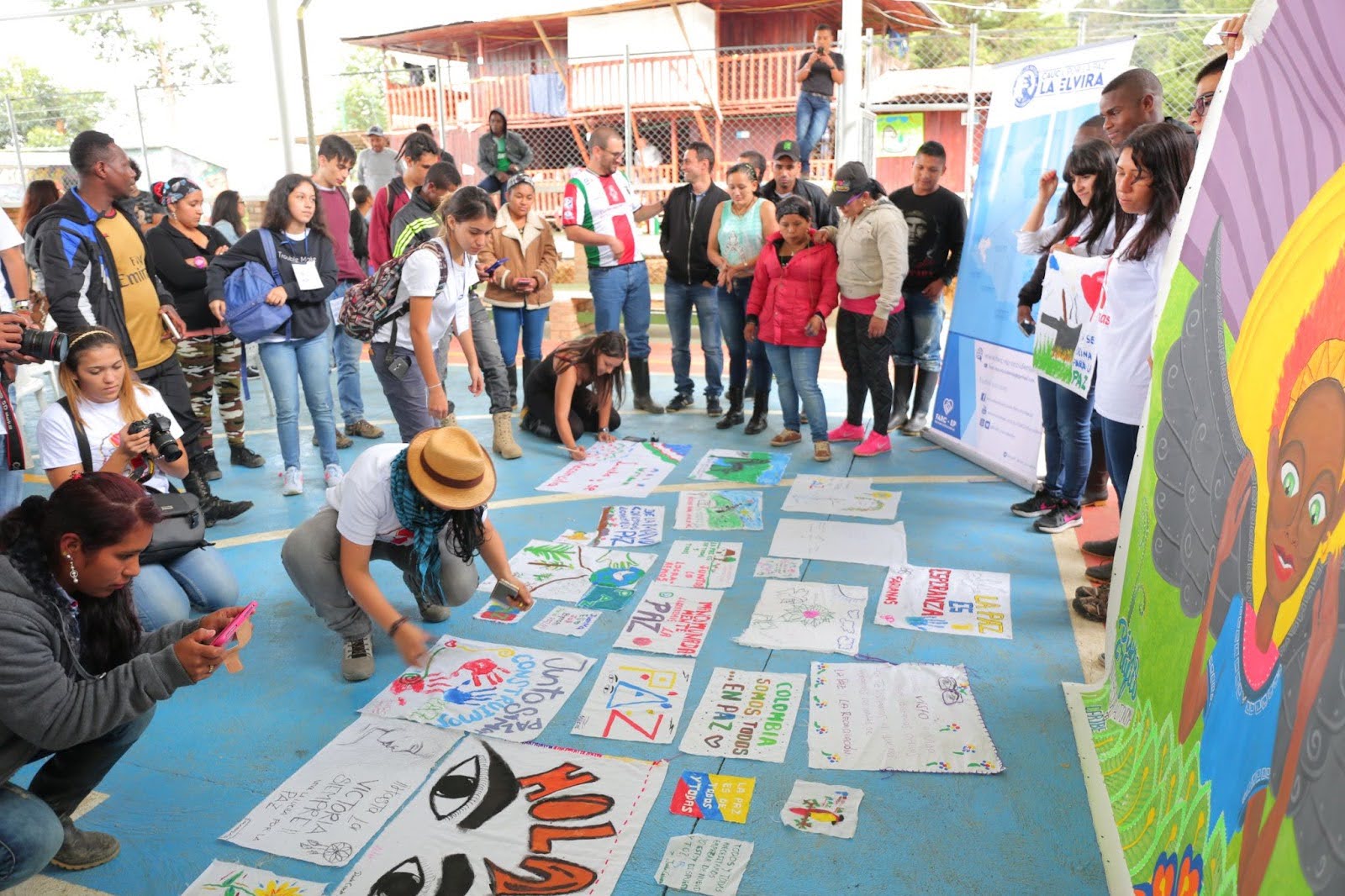
The process combined participatory research and collective reflection. From early methodological planning focused on amplifying rural and diverse youth voices to regional dialogues and reflection exercises, each phase was designed to transform lived experiences into context-specific policy recommendations. In this exercise, young people from diverse regions and backgrounds – rural, ethnic, peace signatory, LGBTIQ+, and other historically marginalized communities – shared their experiences, challenges, and proposals regarding the YPS Agenda, emphasizing the need for differentiated implementation routes, prevention strategies through employment and education, and protection mechanisms for young leaders in their communities.
The process was further strengthened by contributions from strategic actors such as UN agencies, the European Union, the United States Institute of Peace, and academia. These institutions, which share the institutional background and vision necessary to articulate the civil society movement with diverse actors, helped increase visibility and engagement with the agendas of each of these stakeholders. Their participation ensured that youth-led findings were connected to ongoing policy discussions, enabling the research to inform decision-making beyond civil society circles.
The findings were presented at the UN House in Colombia, with the support of UNFPA, in a space that brought together the Vice Ministry of Youth, UN agencies, civil society organizations, the private sector, and young people. This setting reaffirmed the importance of taking action to ensure the comprehensive development of youth – who, from now on, are the present of our nation – expanding their visions and perspectives to contribute to an inclusive and meaningful NAP that advances national transformation. The full research report is available here and you can read the policy brief here.
Sharing Learnings: Findings and Recommendations from Colombia to the World
Among the perspectives identified, young people shared a powerful message: peace is not only the absence of conflict but goes further, becoming an environment built day by day, where people can freely develop in different dimensions. As one participant expressed:
“For me, peace is not just the absence of conflict; peace is a space where everyone can live free and happy, without fear of anything, where there is education, where there is employment, where there is water – absent in the faucets of my territory but abundant in rivers and the sea.
Peace must open up decision-making spaces for all of us so that these are inclusive. It is also necessary that institutions be free from any type of corruption and free of officials who only work for money and personal interests.”
– Participant, YPS Virtual Consultation, 2025
In this framework, we consider that in the national context – and even globally – the promotion of preventive measures such as training in socio-emotional skills and community mediation has proven to significantly reduce violent incidents. Combining this with vocational guidance programs and new opportunities for youth employment can prevent young people from being drawn into illicit economies while creating safer and more hopeful communities.
This will only be possible through the consolidation of a cross-cutting policy that promotes networks in charge of mapping, monitoring, and integrating the multiple actors that influence peace and security dynamics, including community and youth movements, civil society organizations, governmental and non-governmental institutions, international cooperation agencies, and private companies. From their different perspectives, all of them can drive peace in the regions based on a common benefit for all.
What Comes Next: A Growing Movement
The beginning of the NAP in Colombia is only the first step in a broader process that will continue to strengthen in the coming years. The real challenge now is to ensure that it does not remain on paper but becomes a living tool, capable of transforming the realities of young people across the country. That means guaranteeing its finalisation and implementation with clear budgets, participatory monitoring mechanisms, and youth presence in every space where decisions about their lives are made.
Colombia’s approach to YPS is paving the way for stronger regional collaboration, offering lessons that other countries can adapt to their own NAPs. Young people around the world are watching how Colombian youth, civil society and institutions are building this plan together. This is helping to create a regional network that brings together learnings, good practices, and common strategies to address shared challenges such as violence, social exclusion, or lack of youth participation. What lies ahead is the consolidation of a youth movement that is not limited to the borders of one country but grows as a regional and global voice. From Colombia, youth organizations and allies are calling on governments, international partners, and the private sector to keep building this vision together.
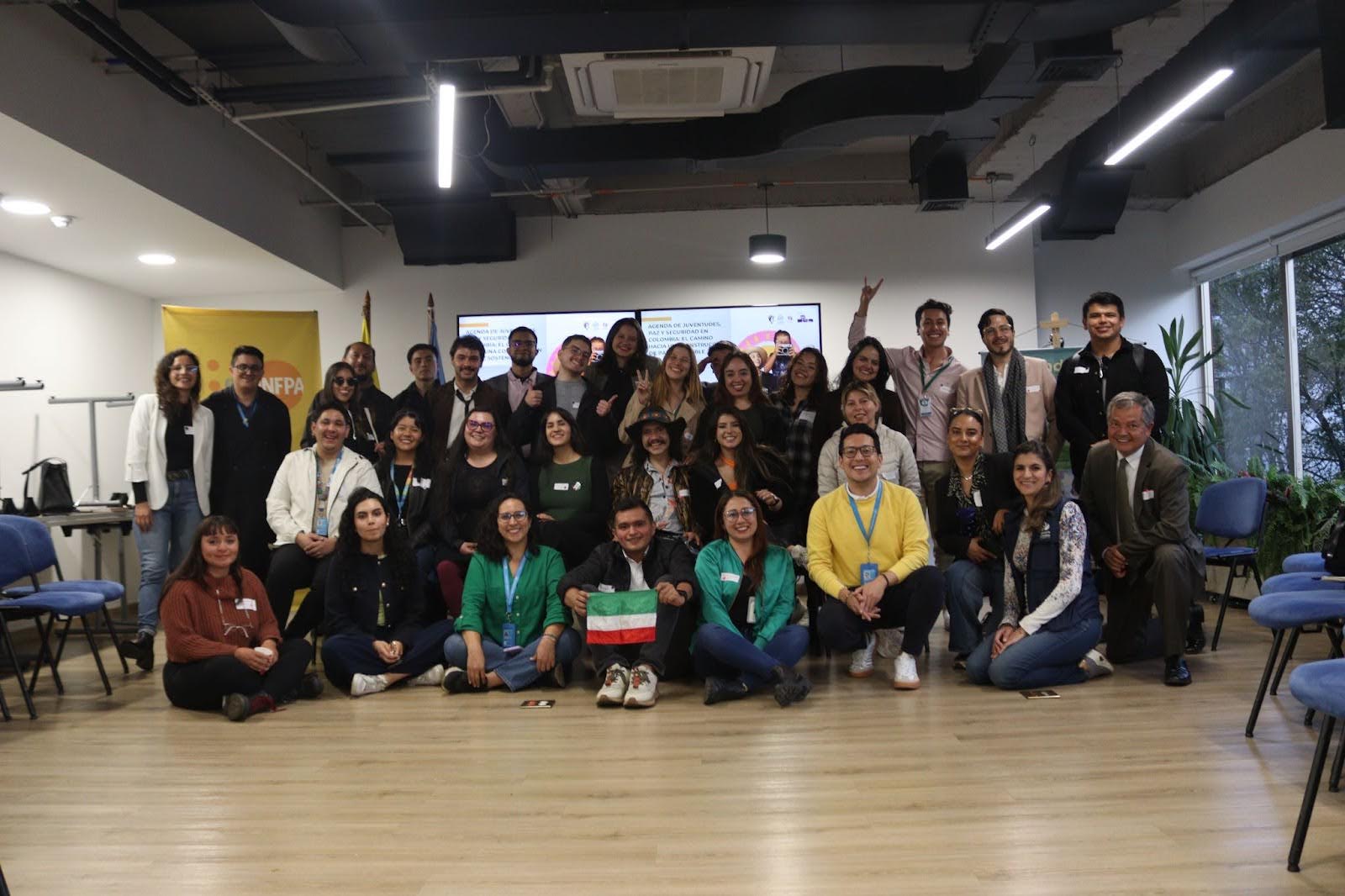
As the first country in Latin America to announce a National Action Plan for the YPS Agenda, Colombia opens a path where new youth voices emerge, resisting, dreaming, and building reconciliation. We imagine a future where young people are not viewed as victims of violence but protagonists of peace, civic participation, and the present that shapes a fairer future.
From this perspective, we understand peace as the ground where everything else can grow: quality education, gender equality, reduction of inequalities, and stronger institutions. That’s why Colombia’s young people are not only consolidating a national plan, they’re contributing to build a solid regional bloc that influences the global agenda in the years to come.
*This research was funded through the Financial Support for UNOY Members (FSUM) programme, which supports local youth-led initiatives through accessible mini-grants.
About the Authors:
Santiago Gutiérrez and Felipe Tamayo work from UNOY member Fundación LATIR, and are a part of the Colombian Coalition on Youth Peace and Security