The road to Resolution 2250: UNOY’s story
“Do you remember the moment that Resolution 2250 was passed?” I ask.
Across from me, Matilda’s Zoom square lights up. “I remember being in the Security Council hall. The whole Coalition was there. It was very exciting.” She pauses for a moment, thinking back to 10 years prior, when she had worked for UNOY as co-director. “I remember wearing this shirt that my grandmother had sewn.”
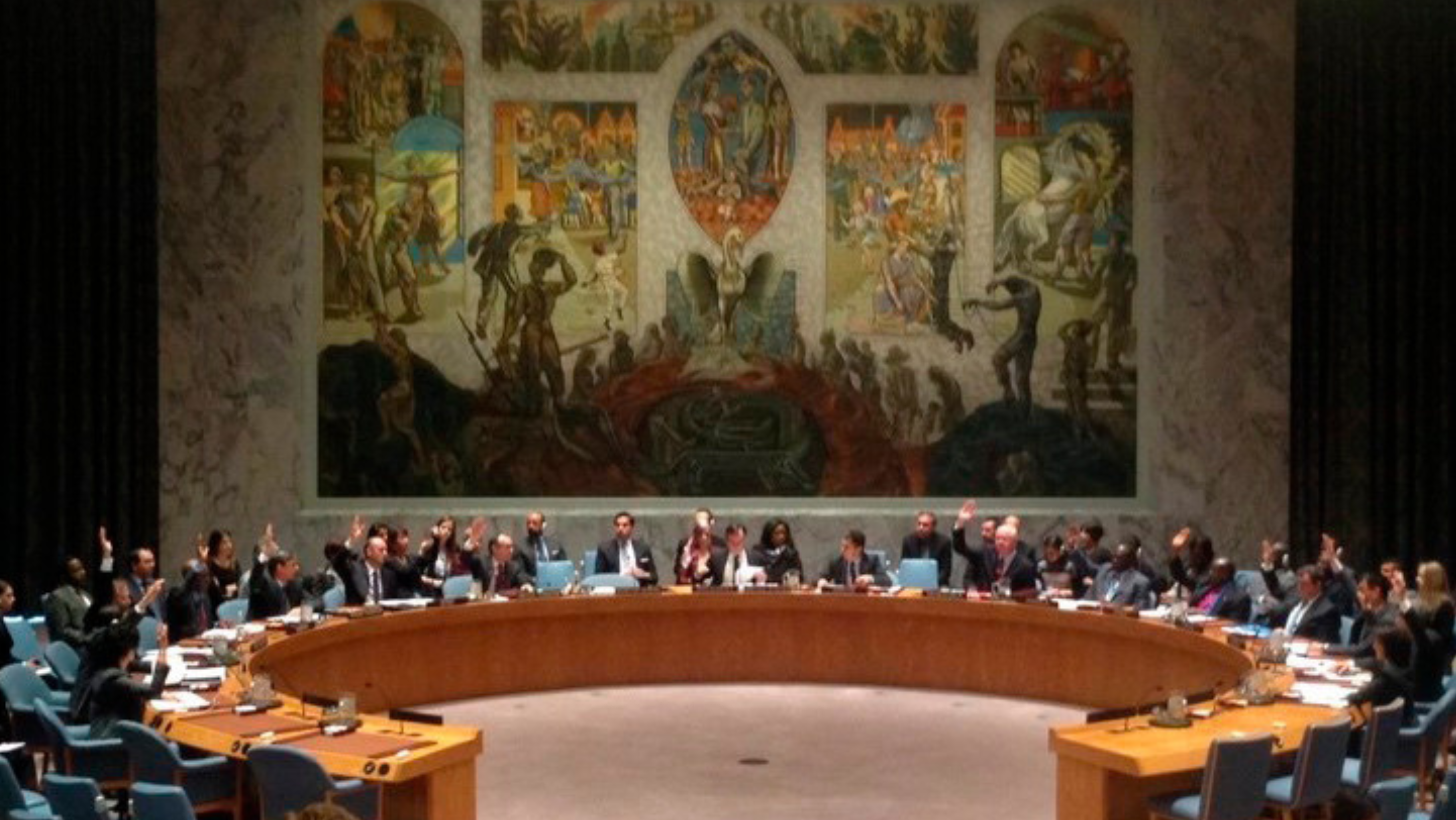
After years of advocating for recognition of young people’s contributions to peace, that recognition had finally arrived. On 9 December 2015, Resolution 2250 on Youth, Peace and Security (YPS) was unanimously adopted by the United Nations Security Council (UNSC), formally acknowledging the role young people play in building and sustaining peace.
We traced UNOY’s advocacy back to this pivotal moment, and spoke with five young people who helped lead UNOY’s efforts for the adoption of the Resolution ten years ago. Matilda Flemming, Sölvi Karlsson, and Ludmila Andrade advocated at the global level as part of the UNOY International Secretariat. Raphael Nkurunziza and Mridul Upadhyay advanced YPS locally and nationally in Burundi and India. This is how young people shaped a global agenda.
Early Advocacy Efforts
In the early 2010s, there was limited interest in including young people in high level decision-making processes around peace and security, with discussions lacking a youth voice. Discourse around young people was often stereotypical, painting youth either as victims or perpetrators of violence. Rising concerns about violent extremism and radicalisation exacerbated this, with young people being seen as risks and potential threats.
“Discussions happening on peacebuilding were all lacking a youth voice.” – Matilda Flemming
“That’s why UNOY stepped into that space,” Sölvi, co-director at the time, reflects. “To create a new way of thinking and perceiving youth”. He shares the questions that shaped UNOY’s approach. “Where does change come from? It comes from both bottom up and top down, right?”
UNOY members working at the grassroots level fought for recognition of the work that young people were doing. Meanwhile, UNOY’s International Secretariat advocated for youth inclusion at a global level and worked to build allies within the UN and civil society, the start of what would later become known as the Global Coalition on YPS. “We were knocking on all the doors that we could and talking to everybody,” says Ludmila.
Despite limited traction, “a good amount of patronizing” (Matilda) and “this challenge of just being taken seriously” (Sölvi), the tide was turning.
2015: Increased Momentum and a Global Forum on YPS
In 2015, momentum quickened. The Security Council held a debate on the role of young people in countering violent extremism. Matilda remembers that, despite “a lot of very stereotypical things said about young people… it was also an opportunity for some member states to reflect on the importance of youth participation.”
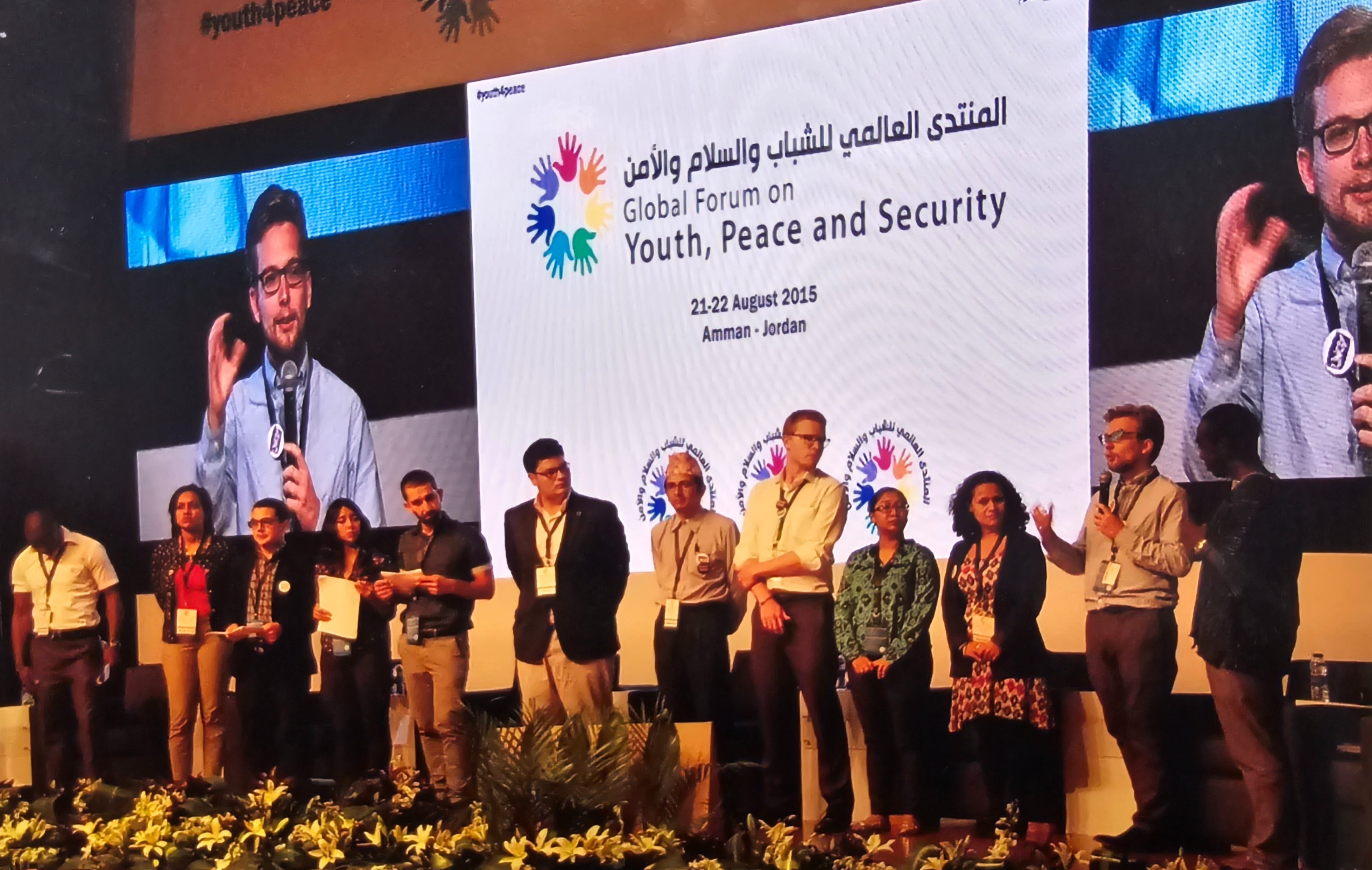
The Kingdom of Jordan held a seat in the Security Council, and was willing to champion the resolution. A forum was planned in Amman for August 2015, with UNOY brought on as a co-organiser.
UNOY was responsible for selecting young people to attend the forum, working to process 11,000 applications from around the world. Ludmila, who had joined UNOY as an intern just 2 months prior, reflects, “it was a massive piece of work.”
Sölvi led a group of young people who were in charge of drafting the Amman Youth Declaration, to be adopted by the government of Jordan during the forum. As part of the application form, young people were asked about their perspective on the role youth play in peace and security. Sölvi says, “we came into the forum with basically the input of over 10,000 young people.”
At the forum, the team worked day and night to finalise the declaration. Matilda remembers “stuffy conference rooms without much energy or oxygen in them” and Ludmila recalls how the team stayed up until 4 a.m. finalizing the document. At 9am the next day, the declaration was presented to the Jordanian Minister of Foreign Affairs, who committed to take it to the Security Council.
The declaration was done; a call directly from young people to the international community. “I think it’s one of those achievements where UNOY managed to make a difference” says Ludmila. The Amman Youth Declaration “put the YPS agenda on the map,” she adds, noting that much of its language can be found in Resolution 2250. She emphasises that this milestone was made possible by the collaboration at the international level between civil society, UN actors and supportive governments.
The Adoption of UNSCR 2250
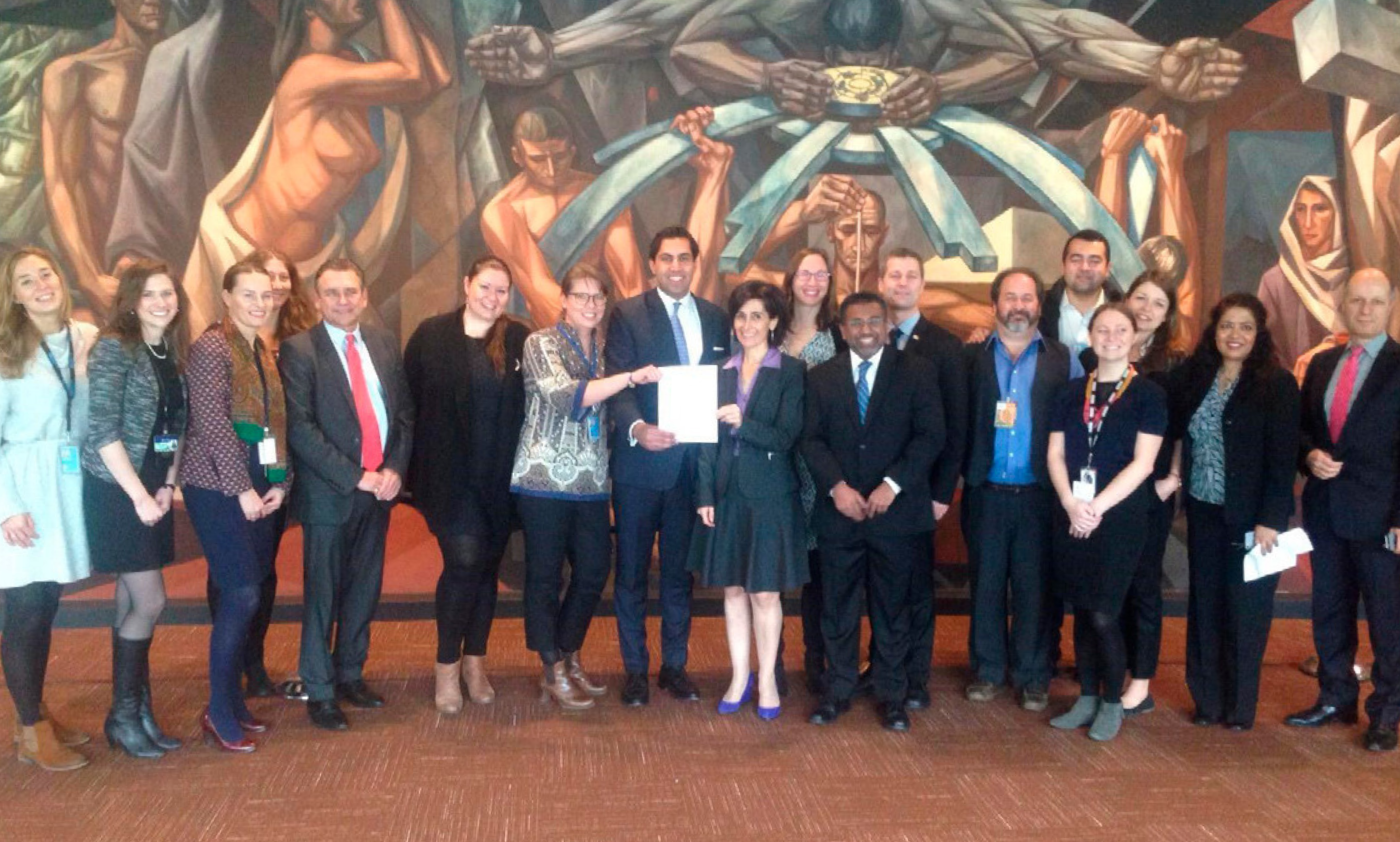
After the Amman Forum, it went quiet. Matilda says, “I remember sitting through the autumn and waiting… okay, do we have any news? And there was no news for quite a long time.” Then, at the start of December, things started to move. Two days before the resolution was passed, Matilda flew to New York to join other coalition members for the Security Council meeting that would institutionalise the YPS agenda. The rest of the UNOY team followed the livestream from their office in the Netherlands.
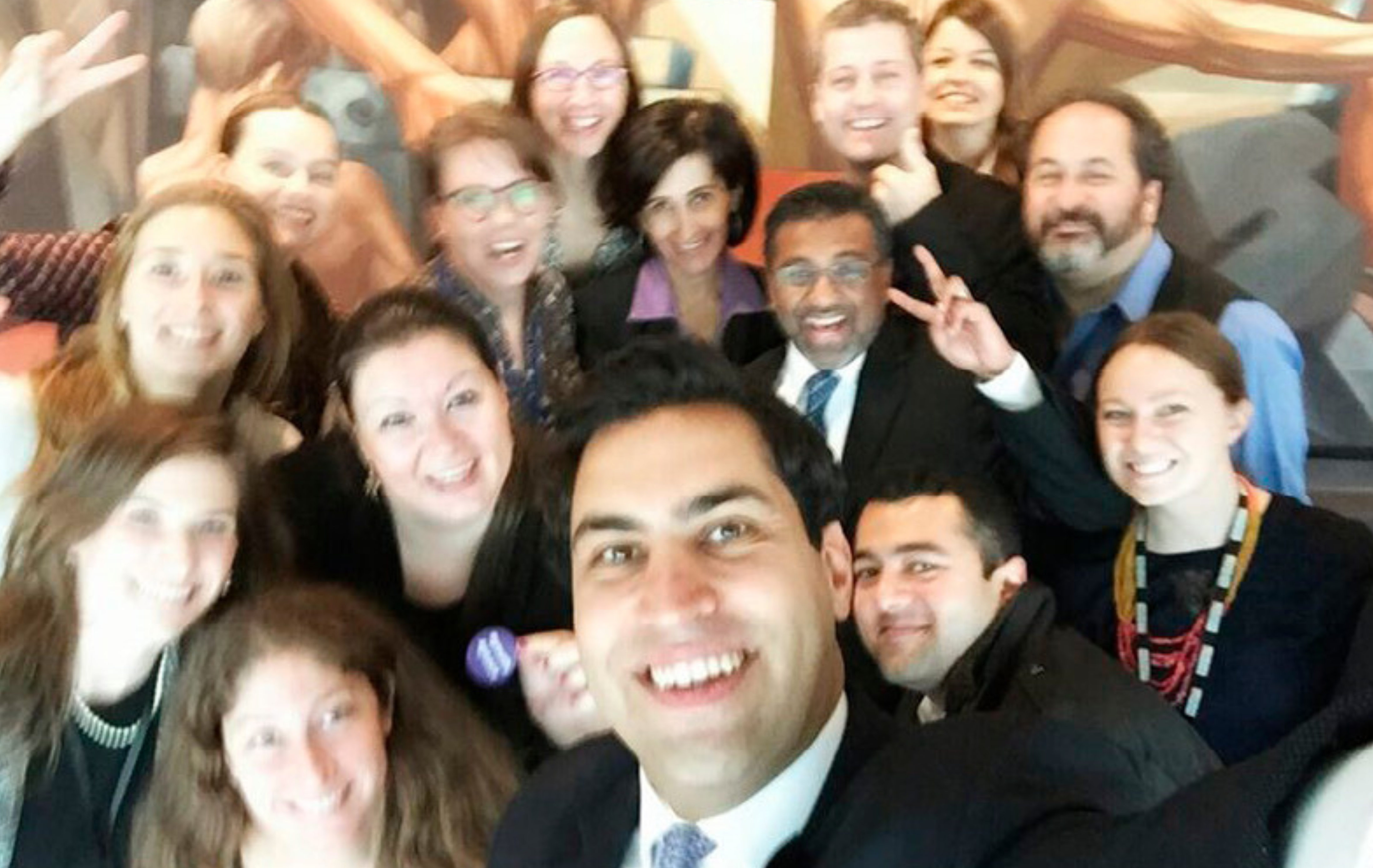
“I don’t really remember the moment as such,” Matilda shares. “But … after it was approved, we got out in the corridor outside. A million photos [were] being taken. And everybody’s sort of holding this piece of paper. It’s like, yeah, it happened. Here’s the proof.”
Proof that the role young people play in peace and security is crucial. Proof that challenged the concentration of decision-making power and demanded change. And a testament to the power of collaboration for peace.
“When you find the right partnerships and individuals to work with, you can really change the world.” – Matilda Flemming
The impact of this formal recognition was immediate.
Mridul had noticed the absence of peacebuilding initiatives for young people in his community, as well as the lack of spaces for dialogue on youth peacebuilding in India. Learning of the resolution, Mridul realised: “for the first time in the world, young people’s positive role is being accepted and there are calls to support it.” The everyday, often voluntary, work that young people had been doing in their communities, “that itself had become the Youth, Peace and Security Agenda.” The very next day, he and his co-founders registered the organisation, Youth for Peace International.
In the months leading up to the Resolution, Raphael and his team at Youth Empowerment and Leadership Initiative (YELI) had tried to implement activities amid violent demonstrations in Burundi. Many young people swept up in the protests were killed. Raphael recalls widespread misinformation and manipulation: “we found out that young people were not informed about the consequences of what was happening.” Raphael immediately started using the Resolution as “a tool” to advocate for government recognition of young people’s peacebuilding efforts and to strengthen the capacities of youth working for peace at the national level.
Ludmila reflects on the role of UNOY: “that’s why the work of UNOY is so important; to do this translation between what grassroots young people need and these high spaces, to make this bridge.”
Immediate implementation
Soon, UNOY’s advocacy shifted towards implementation of the agenda. Looking back, Matilda recalls her thoughts at the time: “now it’s up to governments to make sure that this also happens.” With the resolution in place, advocates hoped for a change in the attitudes towards young people, and a shift in the funding landscape.
“One thing is to have a policy frame, but another is to make sure that there’s funding to implement it, that there’s the will to implement it” – Sölvi Karlsson
The Resolution called for a progress study, which UNOY saw as an opportunity to create a new frame of reference on youth and peacebuilding. Young people could finally change the narrative on youth, and back this new language with credible research on the realities of youth-led peacebuilding.
A priority for UNOY was, “how do we make sure that this global agenda also becomes a regional agenda, national agenda,” shares Solvi. Soon, UNOY established member-led advocacy teams, with Mridul and Raphael taking the lead in Asia and Africa.
Reflecting on progress in Asia, Mridul notes, “there was no conversation happening on the Peace and Security Agenda.” UNOY members in the region needed to join forces to advocate with “a collective voice, a collective identity.” Slowly, stakeholders began to recognise youth peacebuilding work, and youth-focused spaces and opportunities increased. Awareness, excitement, and collaboration among young people increased, but funding remained scarce, making it difficult to sustain advocacy efforts.
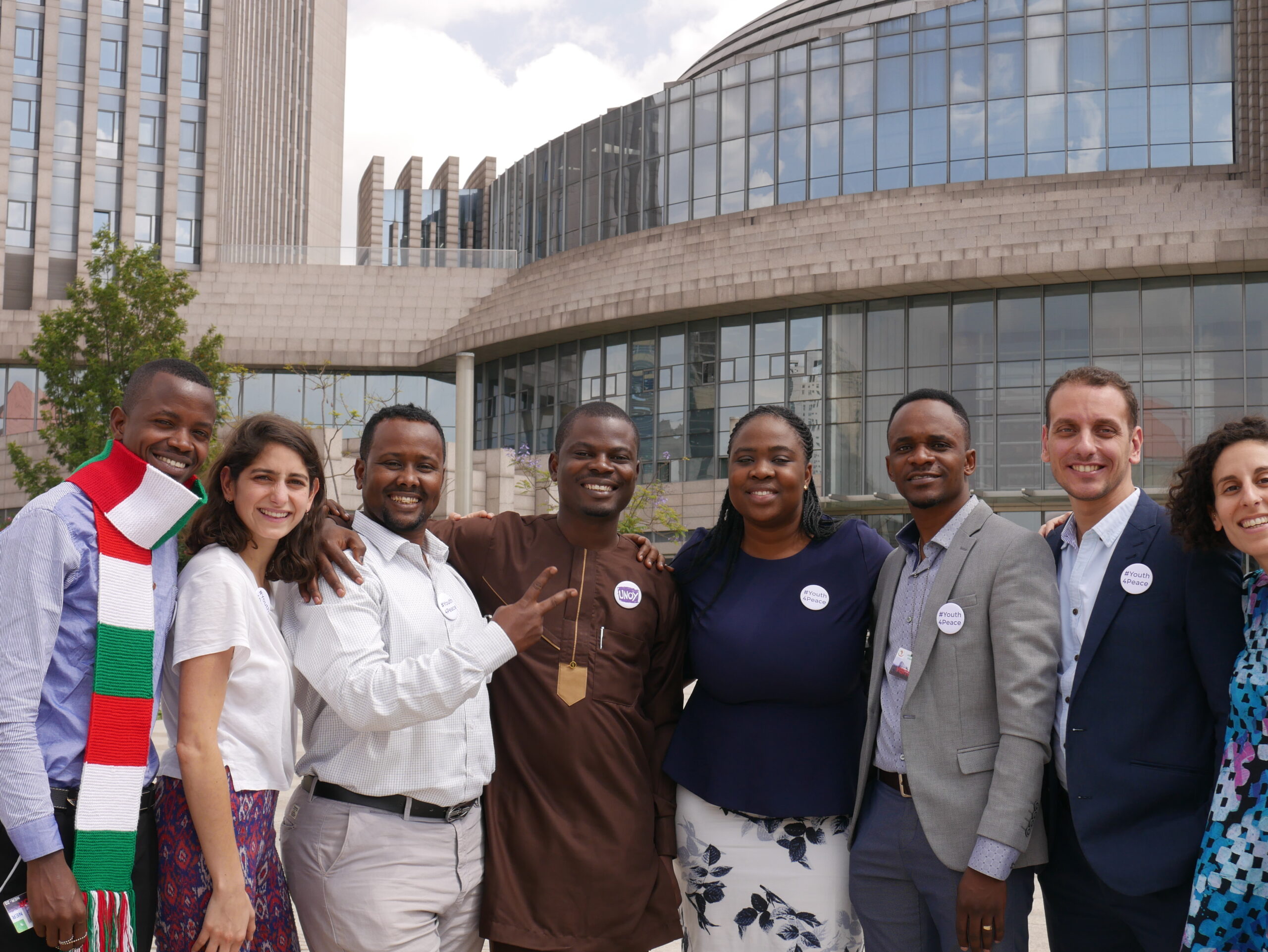
In Africa, young people met the same challenge. “It’s very hard to engage young people for years while they are working voluntarily,” says Raphael. While Resolution 2250 “gave the legitimacy that we needed,” they quickly realised the need to educate stakeholders and institutions on how to make inclusion meaningful. Raphael turned to the UNOY network for support, sharing tips and strategies with other young advocates. Connecting with peers helped the African Youth Advocacy Team stay motivated: “There was that kind of excitement coming out when they [heard] what [was] being done in Nigeria, Zimbabwe, Somalia, Kenya, in Sierra Leone.” Despite the obstacles, UNOY members found strength in solidarity.
A decade later
A decade after the adoption of Resolution 2250, the YPS Agenda looks very different from the landscape the early advocates stepped into. But whilst young people are now widely recognised as peacebuilders, recognition has not guaranteed meaningful implementation. Power still sits with large institutions and funding gaps persist. As Sölvi reflects, “We have not gone nearly far enough in shifting resources so that they’re put directly in the hands of youth.”
Resolution 2250 was a milestone, not a finish line. The next decade must push further, embracing a bottom-up approach where international actors adapt to the language, risks, and realities of youth. As Ludmila argues, “what you do internationally should be just strategic to support the local.” Growing institutionalisation of YPS risks drifting from the realities of local peacebuilders, who must continue to own and shape the Agenda.
Despite the challenges, the heart of the YPS Agenda remains strong. It has always been driven by collaboration, courage, creativity, and the stubborn belief that peace can be shaped from the ground up. Across the UNOY network, hundreds of young people continue to push forward, often without recognition, and at personal risk. Ludmila reminds us, “the Agenda internationally can become more trendy, less trendy, more of a hot topic or not. In the end of the day, young people will keep doing the work that they’re doing.”
To young peacebuilders everywhere: your work matters. Be bold. Trust your expertise. Stand your ground. Even when the path is uneven, keep moving. As Rapahel says, “you are both the today and the future.”