What is pride and how does it influence peacebuilding today?
Pride Month is celebrated every year in the month of June. Thus, UNOY Project Officer Fatma Escalante, with the support of Saraban Tahura Sara from Inclusive Bangladesh, Paula Camino, member of UNOY Pool of Trainers, and Claudia Strambini from Service Civil International (SCI), dedicated our new blog to the meaning and importance of Pride Month and delved into the interconnection between peacebuilding and LGBTQIA+ movements.
Introduction
Imagine holding the hand of the person you love and being mocked, ridiculed, discriminated against, or worse, criminalised or even killed.
Imagine not being able to wear the clothes that speak to you.
Imagine not being able to express who you really are.
This is the reality of many lesbian, gay, bisexual, transgender, queer, intersex, asexual, and gender non-conforming (LGBTQIA+) people around the world, which is often exacerbated in times of conflict. This is the case, for example, of transgender individuals in Ukraine, where the war has brought new difficulties in accessing medication and changing their legal gender.
The inclusion of LGBTQIA+ perspectives in peacebuilding work offers new ways of understanding peace and security, especially in conflict-related areas
Nevertheless, for years, LGBTQIA+ individuals have risen to resist violence, discrimination, and prejudice. This fight is, in many places around the world, recognised and celebrated during the month of June, usually referred to as “Pride Month”. Pride has become a significant movement for young queer peacebuilders who aim to fight violence and promote equality, inclusivity, and create spaces where every person can express their authentic selves. Young LGBTQIA+ activists can enhance the understanding of gendered power dynamics and consider the needs of the queer community in peacebuilding.
The inclusion of LGBTQIA+ perspectives in peacebuilding work offers new ways of understanding peace and security, especially in conflict-related areas. Visibility, recognition, and solidarity are crucial in the advancement of LGBTQIA+ equality and, for this reason, we asked some of our network organisations and a member from our Pool of Trainers to share their insights and experiences in this field.
What is Pride and how did it originate?
Although LGBTQIA+ activism has been present long before and all around the world, Pride commemorates the Stonewall Uprising that took place on June 28, 1969 in the United States of America. This rebellion was a series of events where LGBTQIA+ folks protested against police brutality. As homosexuality was considered a criminal offence, police raids and harassment were a common occurrence in the United States during that time, which led the LGBTQIA+ community to fight back. This movement sparked activism and raised awareness within the LGBTQIA+ community, and a year later, in 1970, the first Pride march took place in New York City to celebrate the one-year anniversary of the Stonewall Rebellion.
Today, more than 50 years after the Stonewall Uprising, Pride has had a global influence and continues to be a crucial movement for the LGBTQIA+ community. From protests, marches, parades, to workshops and community work, the month of June is filled with a diverse array of events with the purpose of recognizing both the triumphs and the ongoing struggles of the LGBTQIA+ community.
Pride has also acquired different meanings. For some, it might be a time of celebration and joy while, for others, it may be a harsh reminder of the persisting violence and inequality against the community.
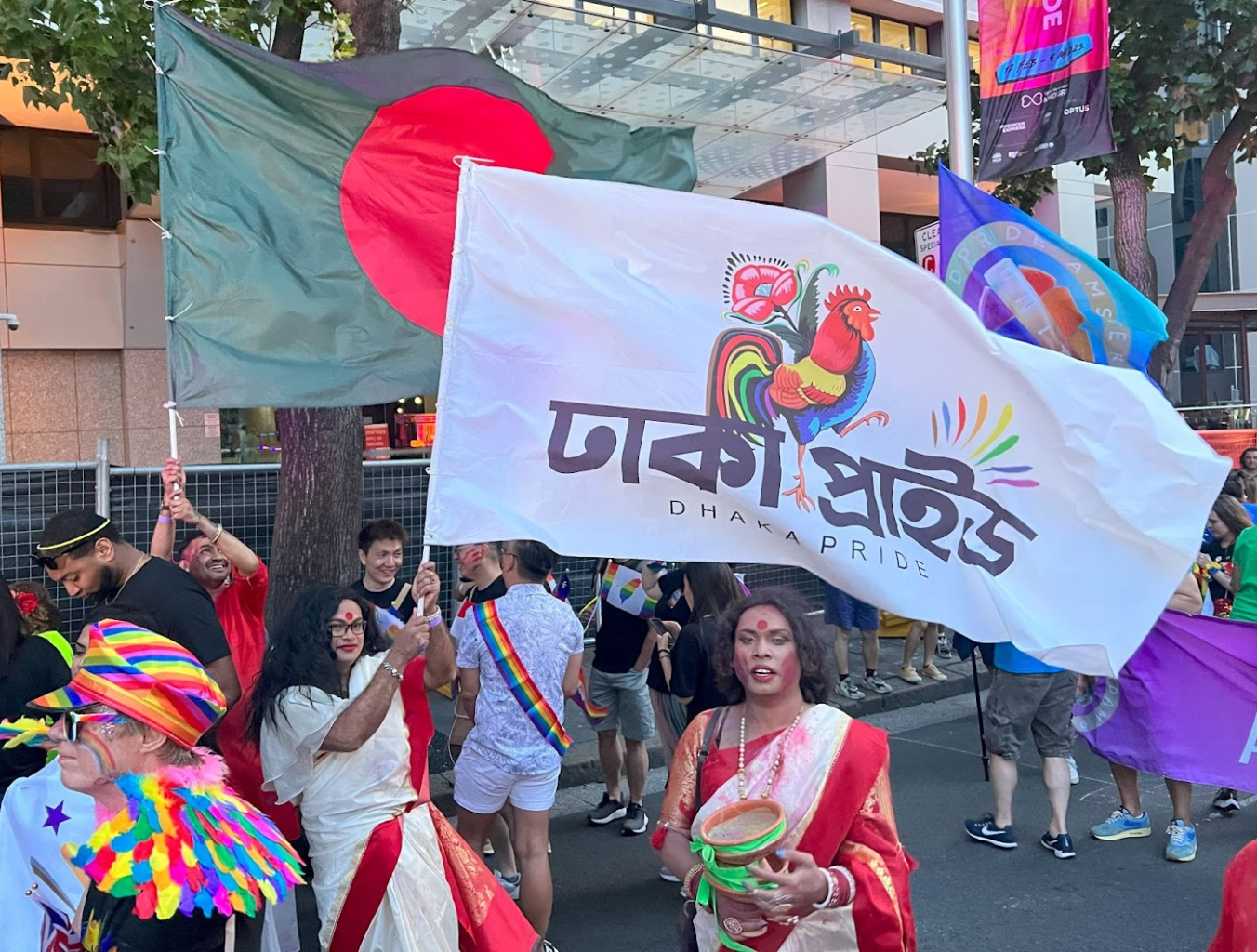
Saraban Tahura Sara, a transgender activist from UNOY member organisation Inclusive Bangladesh, sees Pride “as a celebration of diversity, acceptance, and the ongoing fight for social justice and equal rights for people who identify as lesbian, gay, bisexual, transgender, queer, intersex, or have any other marginalised sexual orientation or gender identity.” Similarly, for Claudia Strambini from UNOY member organisation Service Civil International based in Belgium, “Pride and LGBTQIA+ activism means resisting violence and building a world of solidarity, inclusion, justice, and peace.”
Whether it is celebratory or as an act of resistance, it is important to recognise its impact in the past, present, and future.
Why is it important for young people to fight for the rights of the LGBTQIa+ community?
Violence, harassment, and human rights violations against LGBTQIA+ happen every day.
According to Human Dignity Trust, as of 2023, 66 jurisdictions around the world criminalise private, consensual sex between men and 41 countries between women. Twelve countries impose a death penalty for private, consensual same-sex activity, and 14 countries criminalise the expression of transgender identities. These statistics reveal a worrying threat to LGBTQIA+ people’s fundamental human rights and liberties, such as freedom of opinion and expression, right to life and liberty, and right to marriage and family.
Discrimination against the LGBTQIA+ community goes beyond criminalisation and prosecution, and it often intersects with age. Young queer people do not only experience harsh attitudes and legislations, but it may limit their access to healthcare, employment insecurity, bullying or harassment in the workplace, which could force them into precarious work. Another interrelated factor is that people from the LGBTQIA+ community are at a higher risk of experiencing poor mental health, such as higher rates of depression, anxiety, and suicidal tendencies.
It is for this reason that fighting for LGBTQIA+ rights is highly important. As Claudia from UNOY member organisation Service Civil International shared, such structural inequalities and prejudices have a negative impact in the everyday life of LGBTQIA+ individuals, often resulting in marginalisation. In the words of Saraban from Inclusive Bangladesh, “human rights are universal and ought to be guaranteed to everyone, regardless of their sexual orientation or gender identity.”
Pride movements and events are a powerful practice to raise awareness and deconstruct harmful narratives. For instance, Paula Camino, a member of our Pool of Trainers shared that “Pride is crucial because it sends a fundamental message that LGBTQIA+ people are welcome in society. It tells folks—especially young people—that their identities are welcome, that they deserve to be visible and that their rights are a priority. Pride events symbolise a larger commitment to combat discrimination and foster a sense of belonging and empowerment.”
How is Pride influencing peacebuilding today?
Pride and peacebuilding are interconnected in fundamental ways.
First, Pride can serve as a pathway to address and understand the underlying causes of conflict against the LGBTQIA+ community. As Saraban mentioned, this is a crucial step in the peacebuilding agenda as violence and discrimination against LGBTQIA+ people often causes conflict or exacerbates already existing tensions. Therefore, in her words: “adopting LGBTQIA+ rights […] sends a strong message that peace is more than just the absence of violence; it also includes justice and equality. It encourages a broader understanding of human rights and acknowledges the intersectionality of identities, creating an atmosphere in which everyone can contribute fully and equally to society.” By defending the rights of the LGBTQIA+ community in peacebuilding, reducing violence and fostering respect for diversity can be achieved.
Secondly, both Paula and Saraban highlighted the significant role that Pride can have in the context of peacebuilding as a movement that creates safe spaces and support systems. Creating welcoming environments where all identities and expressions are accepted and celebrated does not only allow people to be who they are without fear of being judged or discriminated against, but also empower and encourage them to advocate for their needs and rights.
Peace is more than just the absence of violence; it also includes justice and equality. It encourages a broader understanding of human rights and acknowledges the intersectionality of identities
Last, but not least, the Pride movement can inspire peacebuilding organisations to find alternative modalities of mobilisation, such as projects and initiatives that address gender-based discrimination. For instance, Claudia’s organisation, Service Civil International, has been working to promote antimilitarism, non-violence, human rights, social justice, and international understanding to build positive peace since 1920. They see structural inequalities, stereotypes and prejudice that affect people with non-normative gender and/or sexuality as violence and a threat to peace and therefore work to deconstruct such structures. As a result, they developed the project “Gendered Realities” which resulted in the creation of the toolkit “Free to be You and Me”. The toolkit provides comprehensive information on gender and sexuality, along with practical guidelines and easy-to-use tools to help group leaders address the topic of gender and sexuality in their activities. This project has now been applied in different countries and has led to the production of other toolkits where gender equality is considered. This demonstrates that peacebuilding projects can have a long-lasting impact in the advancement of LGBTQIA+ equality.
Conclusion: Beyond Pride
As we have seen throughout this blog, the Pride movement serves as a celebration of diversity as well as a resistance towards violence and discrimination against the LGBTQIA+ community. It is important to recognize that young queer peacebuilders have been the main actors in challenging narratives, shifting conversations, and fighting for peace.
Pride is long-lasting and ever-present. It goes beyond the month of June. LGBTQIA+ people exist and fight every day, and for this reason, it is necessary to give them the recognition and value they deserve.
Are you interested in learning more?
Check out this glossary to understand more about identities and think about how young peacebuilders can include them in their projects.
And Read UNOY’s Gender Toolkit A Practical Guide to Gender Transformative Approaches for Youth Peace Organisations
References:
https://www.humandignitytrust.org/lgbt-the-law/map-of-criminalisation/
https://guides.loc.gov/lgbtq-studies/stonewall-era
https://www.amnesty.org/en/what-we-do/discrimination/lgbti-rights/
https://www.them.us/story/first-timers-guide-to-pride
https://www.amnesty.org/en/latest/campaigns/2015/10/5-reasons-why-prides-matter/
https://www.amnesty.org/en/latest/campaigns/2019/06/stonewall-riots-50-year-anniversary/
Hagen, Jamie J. “LGBTQ Perspectives in Peacebuilding.” The Palgrave Encyclopedia of Peace and Conflict Studies, 2021.
Authors:
Fatma Escalante, Projects Officer at UNOY Peacebuilders
Saraban Tahura Sara, Inclusive Bangladesh
Paula Camino, member of UNOY Pool of Trainers
Claudia Strambini, Service Civil International (SCI)