Esperanto kaj migrado: pensoj el internacia junulara seminario / Esperanto and Migration: Reflections from the International Youth Seminar
Esperanto kaj migrado: pensoj el internacia junulara seminario
Tiu ĉi artikolo estas originale verkita en Esperanto. Esperanto estas planlingvo kreita en 1887 por esti aparte facile lernebla kaj tiel roli kiel lingvo de internacia komunikado, favorante pacon inter popoloj kaj lingvaj komunumoj.
Resumo
Tiu ĉi artikolo raportas pri junulara trejnado pri Homaj rajtoj, migrado, rifuĝintoj kaj azilpetantoj organizita de Tutmonda Esperantista Junulara Organizo (TEJO) en Italio. Ĝiaj partoprenantoj povis lerni pri la nuna migrada situacio en Eŭropo, pri kiel agadi helpeme en tiu konteksto kaj la pasintaj agoj de la esperantista komunumo.
Superrigardo de la evento
Ekde la 27-a de Marto ĝis la 2-a de Aprilo, TEJO organizis, danke al la subteno de la Eŭropa Junulara Fonduso de la Junulara Departamentejo de la Konsilio de Eŭropo, trejnadon en kiu mi havis la ŝancon partopreni: “Kreante pontojn per Interkomprenigo: Homaj Rajtoj kaj Migrado en la ĉi-jarcenta Eŭropo”. Ĝi okazis en Serrada di Folgaria (Provinco Trento), en Italio. La graveco de tiu temo evidentiĝis eĉ antaŭ la alveno de la partoprenantoj, ĉar unu el ili, kies gepatroj estas enmigrintoj, ne estis rajtigita eniri sian flugon, malkiel lia pli blankhaŭta amiko kiu vojaĝis kun li kaj tute ne havis problemon. Ili do ambaŭ alvenis unu tagon poste kaj pro tio maltrafis kaj la interkonan parton kaj la enkondukon de la seminario.
Kvankam TEJO kutime ricevas pli da kandidatiĝoj por siaj frenezaj amuzaj projektoj kiel muzikaloj aŭ vojaĝkonkursoj ol por tiuj, kiuj postulas tutan semajnon da libera tempo ekster studoj kaj/aŭ laboro por lerni kaj cerbumi pri la plej seriozaj, malfeliĉigaj problemoj de nia epoko, tiaj ĉi projektoj estas kompreneble tiuj, kiuj plej gravas. Ili ja montras Esperanton en ago kiel ilon por paco kaj ponton inter kulturoj, kaj ili ebligas al junuloj engaĝiĝi en packonstruan agadon. Aparte notindas la juneco de la partoprenintoj, inter 17 kaj 26 jaraĝaj, kvankam la aĝlimo estis inter 16 kaj 35. Eĉ gimnazianoj vojaĝis pli ol mil kilometrojn por tiu interkultura lerniga interŝanĝo.
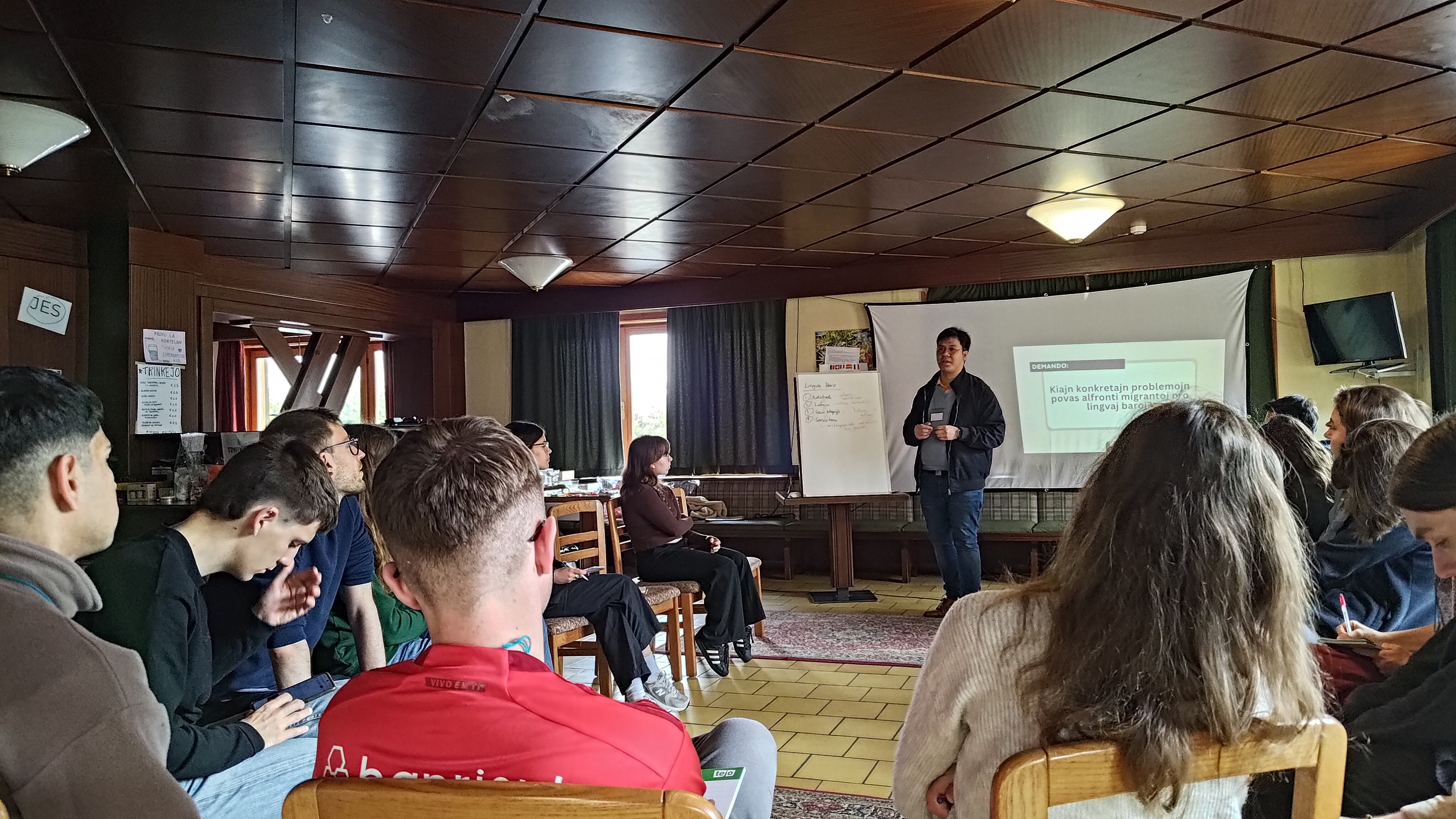
La ideo ne estis lasi nin junulojn pasive sidi en klasĉambro, sed ebligi al ni lernu unu de la alia pere de neformalaj edukaj metodoj, aktive serĉu kaj partoprenu por preti apliki la konojn en nia propra komunumo post la reveno. Tiel ni povis kompari la situaciojn inter la diversaj eŭropaj landoj: ĉu vi ekzemple sciis ke en Pollando estis grava skandalo pri trafiko de vizoj fare de konsulaj oficistoj al Azianoj kaj Afrikanoj en 2023? Post la malkovro de tiu afero, la vizpetintoj perdis ĉion ĉar ili vendintis ĉion kion ili povis por aĉeti vizon kiu ne plu validis. Tiu afero estis aparte embarasa por la ekstremdekstra registaro, kiu ĉiam defendis severan kontraŭ-enmigradan politikon kaj konstruis grandegan ŝtalmuron ĉe la Belorusia landlimo por ke migrantoj restu ekstere. Dume Eŭropa Unio testas en Strasburgo (Francio) aŭtomatan sistemon por plifortigi la monitoradon de azilpetantoj anstataŭ helpi ilin. Fingrospuroj de ĉiu azilpetanto kaj “kontraŭleĝa migranto” ekde 6 jaraĝo estos kolektataj – ju pli aŭtomataj proceduroj iĝas, des pli facilas forsendi homojn.
La rolo de Esperanto
Eble oni tamen sin demandos kial okazigi la seminarion en Esperanto kaj ne en pli ofte parolata lingvo kiel la angla, la franca aŭ la hispana. Veras ke internaciaj junularaj organizoj, kiuj ne uzas la anglan, tre malmultas. La ideo estas ke Esperanto, kiel lingvo de neniu lando aŭ popolo specife, multe pli taŭgas por la bezonata interkultura etoso. Lingvo ne disigeblas de kulturo, do uzi la anglan signifas ankaŭ iel uzi la pensmanieron kaj kulturajn referencojn de Usono kaj aliaj anglalingvaj landoj. Ĉiuj, kiuj spertis kursojn de la angla en la lernejo, verŝajne memoras ke oni samtempe lernis pri la britaj kutimoj, historio kaj geografio. Homoj kiuj devas uzi alian lingvon ol sian denaskan por komunikiĝi ofte havas problemon por senti sin rajtigitaj paroli dum ili faras eraretojn, havas akĉenton kaj uzas malidiomajn vortumojn. Por tio, Esperanto multe helpas precize ĉar neniu scipovas gin “perfekte” (eĉ la malmultaj denaskuloj faras erarojn!). Ĝi bonvenigas akĉentan diversecon kaj uzon de malsamaj vortumoj.
Kaj kompreneble, la lingva baro kaj malegalecoj laŭ gepatra lingvo kaj lingvaj kapabloj, problemoj pri kiuj esperantistaj organizoj delonge atentigas, estas gravaj obstakloj kiujn rifuĝantoj renkontas dum sia vojo. Ni, partoprenintoj de la seminario, havis la okazon ekkompreni tion dum la unua eksperimento de “Pasaĵoj”, la Esperanta adapto de Passages, – konsciiga eduka rolludo pri la sorto de azilpetantoj, kreita de la Alta Komisiito de Unuiĝintaj Nacioj pri Rifuĝintoj. Unu el la faciligantoj alparolis nin en la greka, lingvo kiun neniu partoprenanto komprenis, kaj en la “oficialaj” dokumentoj kiujn ni ricevis estis skribitaj nur hazardaj kombinoj de literoj.
Agoj de la Esperanta komunumo
La seminario ankaŭ ebligis al la agado de la Esperanta komunumo por migrantoj kaj rifuĝintoj montriĝi. Ni kune malkovris, ekzemple, la ekziston de la projekto “Espero” fondita en 1997 en Bosnio el la Esperanto-Ligo de Bosnio kaj Hercegovino dum la murdaj Balkanaj militoj kiuj ruinigis la regionon dum deko da jaroj post la forfalo de Jugoslavio ekde 1991. Dum jardeko, tiu projekto ebligis kolekti 30 tunojn da varoj (nutraĵoj, higienaj objektoj, medicina materialo, ktp.) por rifuĝintoj kaj rekonstrui hospitalon kaj akvoduktan sistemon.
Dum la lastaj jaroj, menciindas ankaŭ la instruado de Esperanto al rifuĝintoj en Tuluzo kiel integriga aktivaĵo, kadre de la junulara projekto “Plej bonaj praktikoj en lingvoinstruado” (2018) kunordigita de Ĉeĥa Esperanto-Junularo. Aldone, UEA (Universala Esperanto Asocio), TEJO kaj ILEI (Internacia Ligo de Esperantistaj Instruistoj) starigis helposervon por la ukrainaj rifuĝintoj tuj post la komenco de la milito, danke al kiu ili povis gasti ĉe aliaj esperantistoj kaj ricevi subtenon.
Se vi interesiĝas pri tiaj seminarioj sed ne parolas la lingvon, TEJO organizas ankaŭ studsesiojn, kunlabore kun la Eŭropaj JunularCentroj de Konsilio de Eŭropo, kaj en Esperanto kaj en la angla per simultana interpretado. La lasta okazis en Budapeŝto en Novembro 2023 kaj ĝi temis pri interkultura dialogo kaj senperforta komunikado.
Pri la aŭtoro
Ciril’ Ŝulc estas franca volontulo en la oficejo de TEJO (Tutmonda Esperantista Junulara Organizo) en Roterdamo.
Esperanto and Migration: Reflections from the International Youth Seminar
This article was originally written in Esperanto. Esperanto is a constructed language created in 1887 to be particularly easy to learn and thus to act as a language of international communication,favoring peace between peoples and linguistic communities.
Summary
This article reports on a youth training on human rights, migration, refugees and asylum seekers, organized by the World Esperanto Youth Organization (TEJO) in Italy, during which participants could learn about Europe’s current migration situation, ways to make an impact and past actions related to migration within the Esperanto community.
Event overview
From March 27 to April 2, TEJO organized, with the support of the European Youth Foundation of the Youth Department of the Council of Europe, a training session titled: “Creating bridges through Understanding: Human Rights and Migration in 21st century Europe”. I had the opportunity to participate in this seminar, which took place in Serrada di Folgaria (Trentino), in Italy. The importance of this topic was made evident even before the arrival of the participants, as one of them, a child of immigrants, was denied boarding on his flight, unlike his lighter-skinned friend who traveled with him and faced no issues. As a result, they both arrived a day late, missing both the ice-breaking activities and the seminar’s introduction.
TEJO typically receives more applications for fun projects, such as staging musicals or organizing travel competitions, than for those that require a whole week of free time outside of studies and/or work to learn and brainstorm about the most pressing issues of our time; however, projects like these are, of course, the ones that matter the most. They show indeed how Esperanto can act as a tool for peace and a bridge between cultures, and how it enables young people to get involved in peace-building activities. Despite the age limit being between 16 and 35, participants’ ages ranged from 17 to 26, showing the commitment of young people to participate in this intercultural exchange, for which even high school students traveled more than a thousand kilometers.
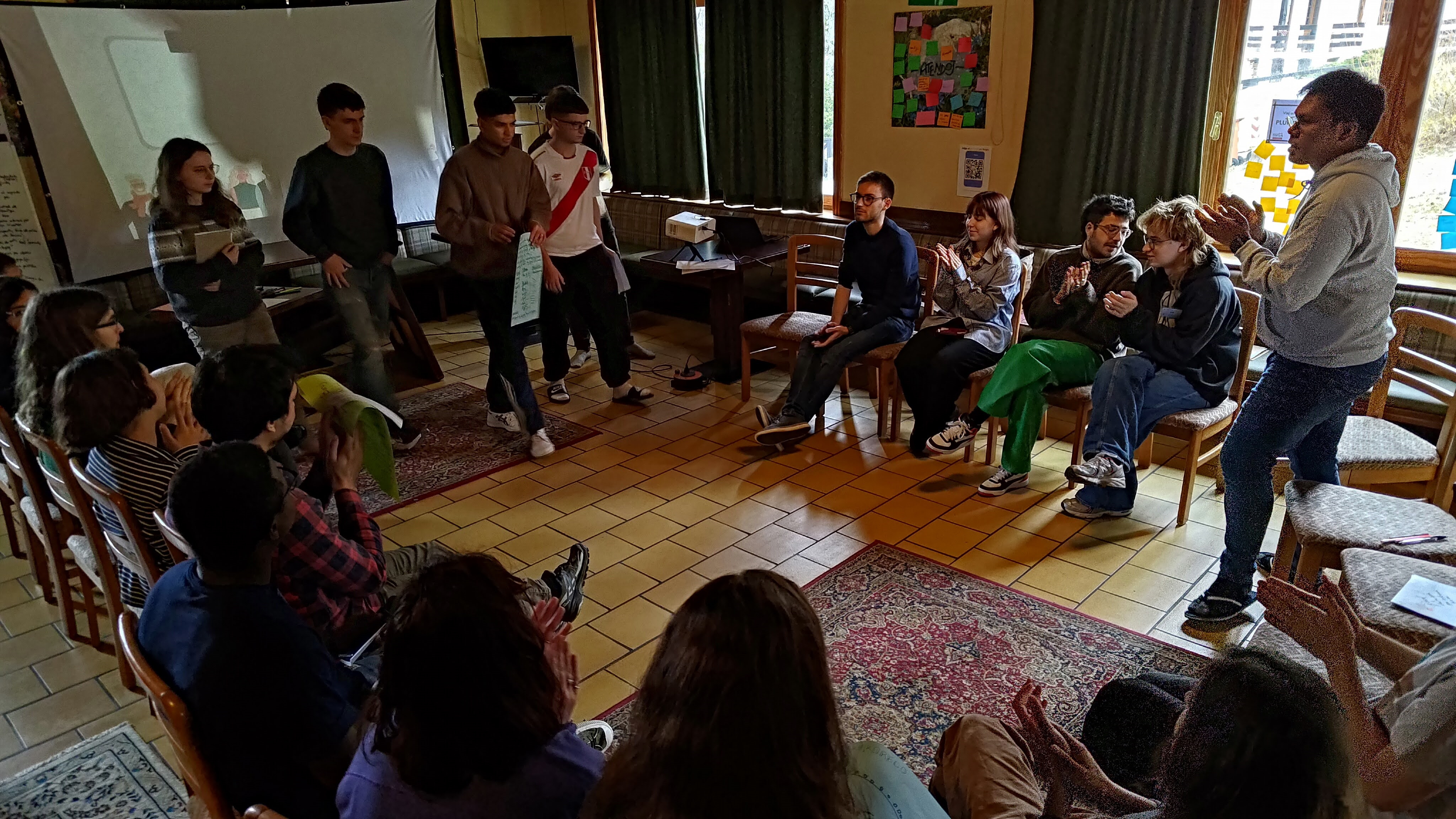
The idea was not to let us young people sit passively in a classroom, but for us to teach each other and learn from others through non-formal education methods, to actively search and participate, in order to be ready to apply this knowledge in our own communities. In this way, we were able to compare the situations between various European countries: did you know, for example, that in Poland there was a major scandal regarding the trafficking of visas by consular officials to people from Asia and Africa in 2023? After this matter was exposed, some people lost everything because they had sold all they could to obtain a visa that turned out to be no longer valid. This affair was especially embarrassing for the far-right government which always stood up for harsh anti-immigration politics and built a huge steel wall on the Belarus frontier to keep migrants out. Meanwhile, the European Union is currently experimenting with an automatic system in Strasbourg (France) to strengthen the monitoring of asylum seekers instead of helping them. Fingerprints from every asylum seeker and “illegal migrants” starting from 6 years old will be collected – the more automatic procedures get, the easier it gets to send people away.
The role of Esperanto
One might wonder why the seminar was held in Esperanto, rather than in a more widely spoken language like English, French or Spanish, especially since there are not many international youth organizations that do not use English. The idea is that Esperanto, as a language of no country or people in particular, is much more suitable for the required intercultural setting. Language cannot be separated from culture, so using English often implies adopting the mindset and cultural references of the United States or other English-speaking countries. Everyone who has experienced English courses at school probably remembers that at the same point they learned about British customs, history and geography. People who have to use a non-native language to communicate often struggle to feel legitimate to speak as they make mistakes, have an accent and use non-idiomatic expressions. For this reason, Esperanto helps a lot, precisely because nobody knows it “perfectly” (even the few native speakers make mistakes!). It embraces accent diversity and the use of different phrasings.
And of course, language barriers and inequalities which proceed from native language and language proficiency, problems that Esperanto organizations have been drawing attention to for a long time, are significant obstacles for migrants and refugees. We, the participants of the seminar, had the opportunity to understand this during the first experiment of “Pasaĵoj”, the Esperanto adaptation of “Passages” an awareness-raising educational role-play about the lives of asylum seekers, created by the United Nations High Commissioner for Refugees. One of the facilitators addressed us in Greek, a language that none of the participants understood, and the “official” documents that we received only contained random sequences of characters.
Actions from the Esperanto community
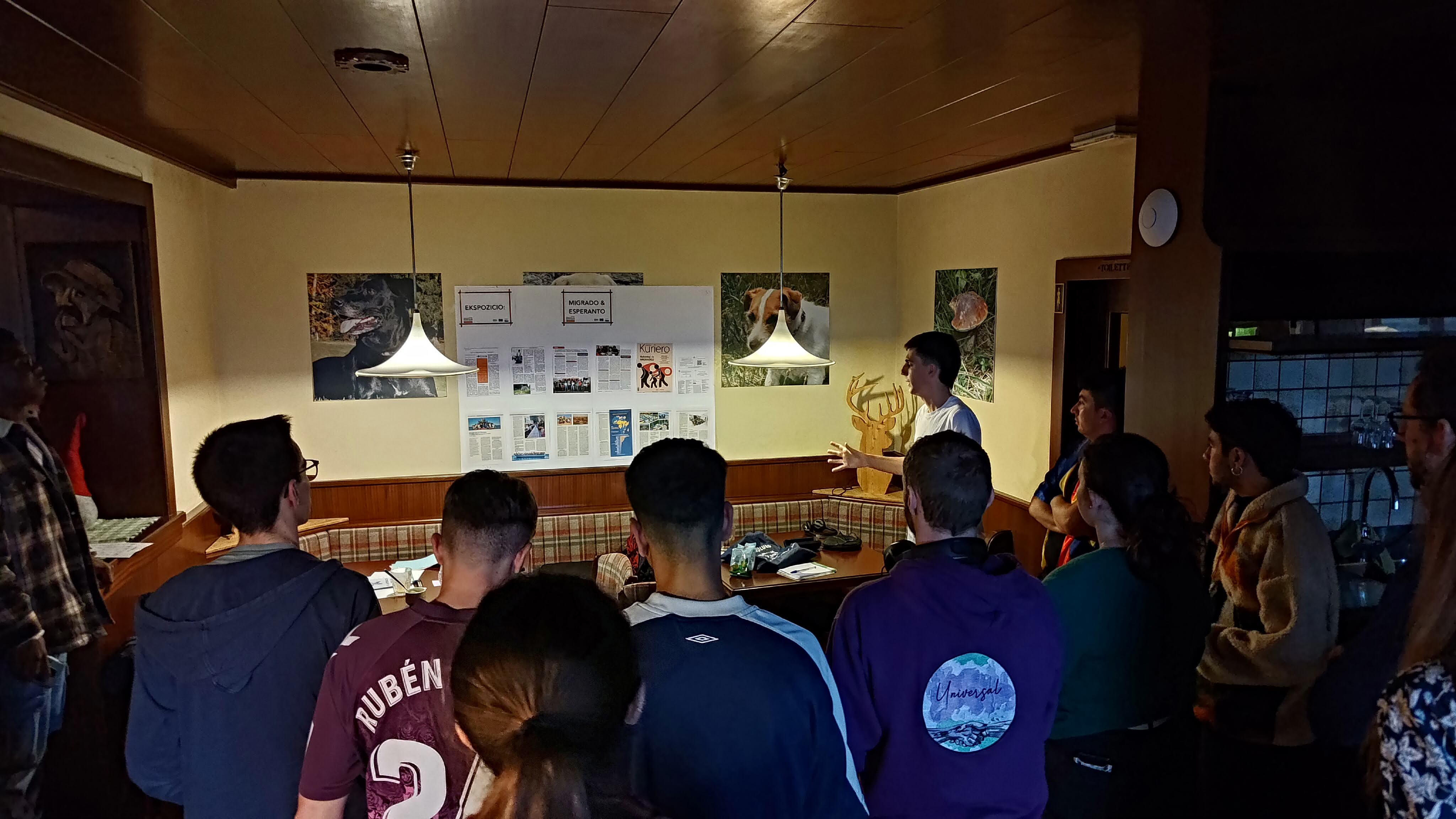
The seminar also highlighted the Esperanto community’s efforts to support migrants and refugees. Together we learned, for example, about the “Espero” project founded in 1997 by the Esperanto League of Bosnia and Herzegovina during the murderous Balkan wars that devastated the region for ten years after the fall of Yugoslavia in 1991. Over a decade, this project helped collect 30 tons of goods (food, hygiene items, medical material, etc.) for refugees and helped rebuild a hospital and water supply system.
More recently, Esperanto has been taught to refugees in Toulouse as an integration activity, within the framework of the youth project “Best practices in language teaching” (2018) coordinated by Czech Esperanto Youth. Moreover, UEA (Universal Esperanto Association), TEJO and ILEI (International League of Esperanto Teachers) set up a support service for Ukrainian refugees immediately after the start of the war, helping them find accommodation with Esperanto speakers and receive support.
If you are interested in such seminars but do not speak Esperanto, TEJO also organizes study sessions in collaboration with the European Youth Centers of the Council of Europe, with simultaneous interpretation in Esperanto and English. The most recent one took place in Budapest in November 2023 and focused on intercultural dialogue and non-violent communication.
About the author
Ciril’ Ŝulc is a French volunteer for TEJO (World Esperanto Youth Organization) in Rotterdam.