Weaving Peace Agendas in Colombia
In recent years, the international agendas on WPS and YPS have gained increasing relevance as frameworks for promoting more just, inclusive, and peaceful societies. Both agendas recognize that building sustainable peace requires expanding who participates in decision-making and how security dynamics are understood. While United Nations Security Council Resolution 1325, adopted in 2000, paved the way for recognizing the role of women in peace processes and the differentiated impacts that armed conflicts have on them, Resolution 2250 on YPS, adopted in 2015, positioned young people as key actors in violence prevention and social transformation.
Implementation in Colombia
In Colombia, where peacebuilding remains an ongoing challenge, these agendas find fertile ground to dialogue and strengthen one another. In 2024, the country enthusiastically welcomed the adoption of the National Action Plan on WPS (NAP-1325, as it is commonly known in Colombia), developed through a participatory and collaborative process between the state and civil society. Currently, Colombia is advancing in the formulation of its National Action Plan on YPS (YPS-NAP), which would make it the first country in the Americas to adopt this public policy instrument.
From Fundación Latir, as co-leaders of the Colombian YPS Coalition, a platform that brings together around 70 youth organizations, we have supported and promoted this process while emphasizing the need to incorporate a strong gender perspective within the YPS-NAP. While Resolution 2250 recognizes youth as key political actors, there is still a risk of treating youth as a static and homogeneous category, without acknowledging that young women face differentiated risks and specific forms of violence.In a country where a significant number of victims of the armed conflict are adolescents and young people, it becomes urgent to highlight how gender inequalities further aggravate the vulnerability of young women.
As noted in a previous analysis (Zorro, 2026), gender is a structuring axis of social experiences, as it entails the differentiated assignment of roles, responsibilities, and spaces. Traditionally, men have been associated with the public sphere, while women have been linked to the private sphere, care work, reproduction, and emotional support. These gender roles are internalized from childhood and shape identity and life trajectories. For young women, persistent gender inequalities in society translate into greater barriers to accessing public decision-making spaces, lower political recognition, and greater vulnerability to forms of violence related to control over their bodies, sexuality, and reproductive roles. Furthermore, gender and age intersect with other factors such as social class, rurality, and ethnic identity, creating multiple layers of vulnerability.
In the Colombian context, young women face specific risks, including a disproportionate exposure to physical, sexual, psychological, economic, and institutional violence. Data from Bogotá’s Purple Line, a support hotline for women, between 2019 and 2025 show that the highest number of reports of gender-based violence correspond to young women between the ages of 20 and 34. Even more alarming, data from the Bogotá Women’s Observatory indicate that the age group with the highest assessed risk of femicide is also young women, with the risk decreasing after the age of 40. These figures are linked to structural factors such as emotional and/or economic dependency, relationships marked by control and violence, early motherhood, and gender socialization patterns that place women in positions of subordination.
As mentioned earlier, Resolution 1325 primarily focuses on the impact of armed conflict on women and on their participation in conflict prevention, resolution, and post-conflict reconstruction. Historically, its emphasis has been linked to contexts of war and transition. However, this perspective can be limited if we fail to recognize that violence against women does not begin or end with armed conflict. As illustrated above, there exists a continuum of violence that permeates everyday life, even in contexts that are formally considered “at peace”: domestic, sexual, economic, symbolic, institutional, and digital violence persist and transform over time. While this may seem obvious, it is not always reflected in public policy design.
For this reason, we highlight the importance of ensuring that National Action Plans on YPS recognize and address these structural and persistent forms of gender-based violence, which disproportionately affect young women. Integrating this perspective implies adopting a preventive and transformative approach to peacebuilding. In this sense, Colombia’s YPS-NAP represents a historic opportunity to expand and deepen the protection of young women beyond scenarios strictly associated with armed conflict.
For young women, persistent gender inequalities in society translate into greater barriers to accessing public decision-making spaces, lower political recognition, and greater vulnerability to forms of violence related to control over their bodies, sexuality, and reproductive roles.
Intergenerational dialogue connecting the YPS and WPS Agendas
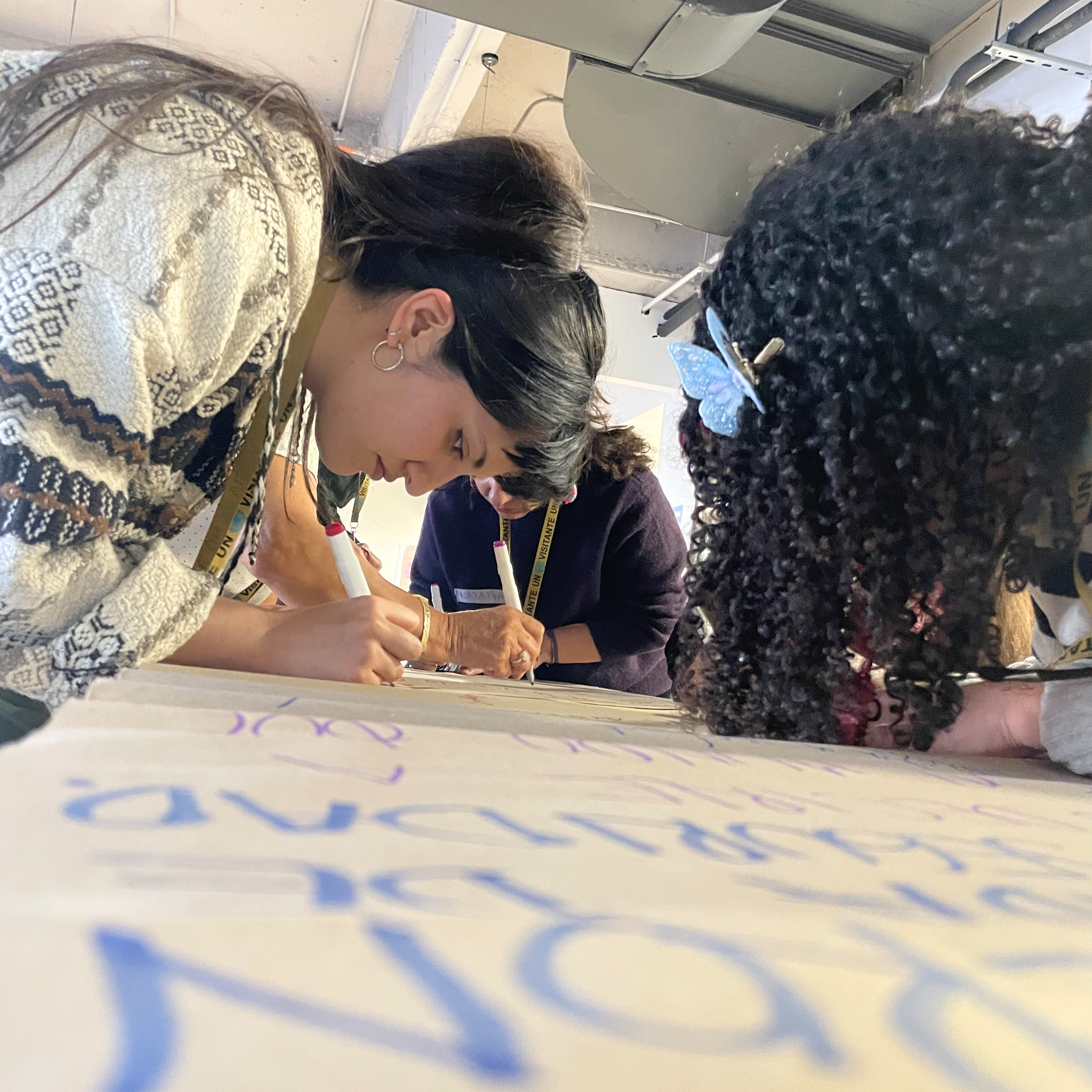
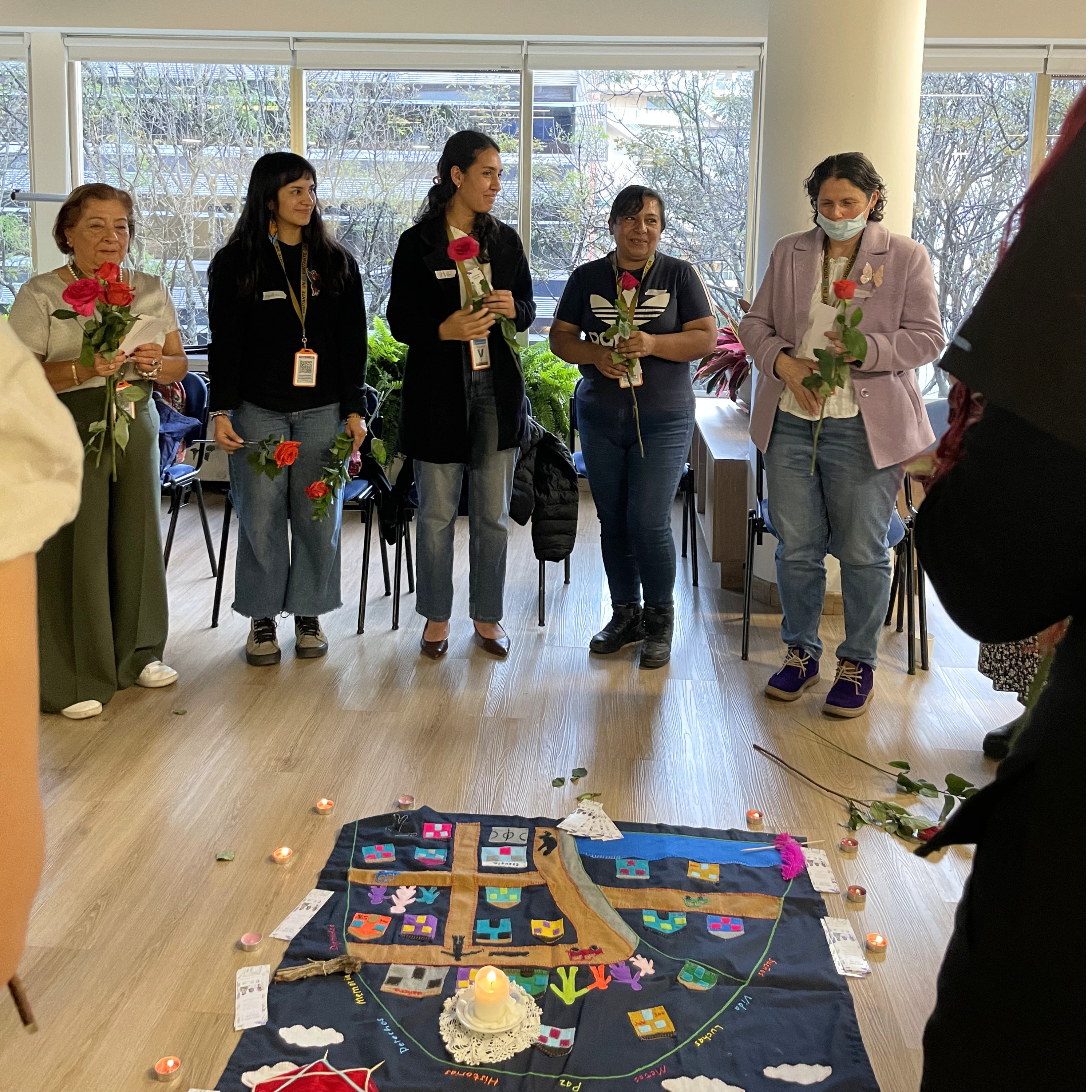
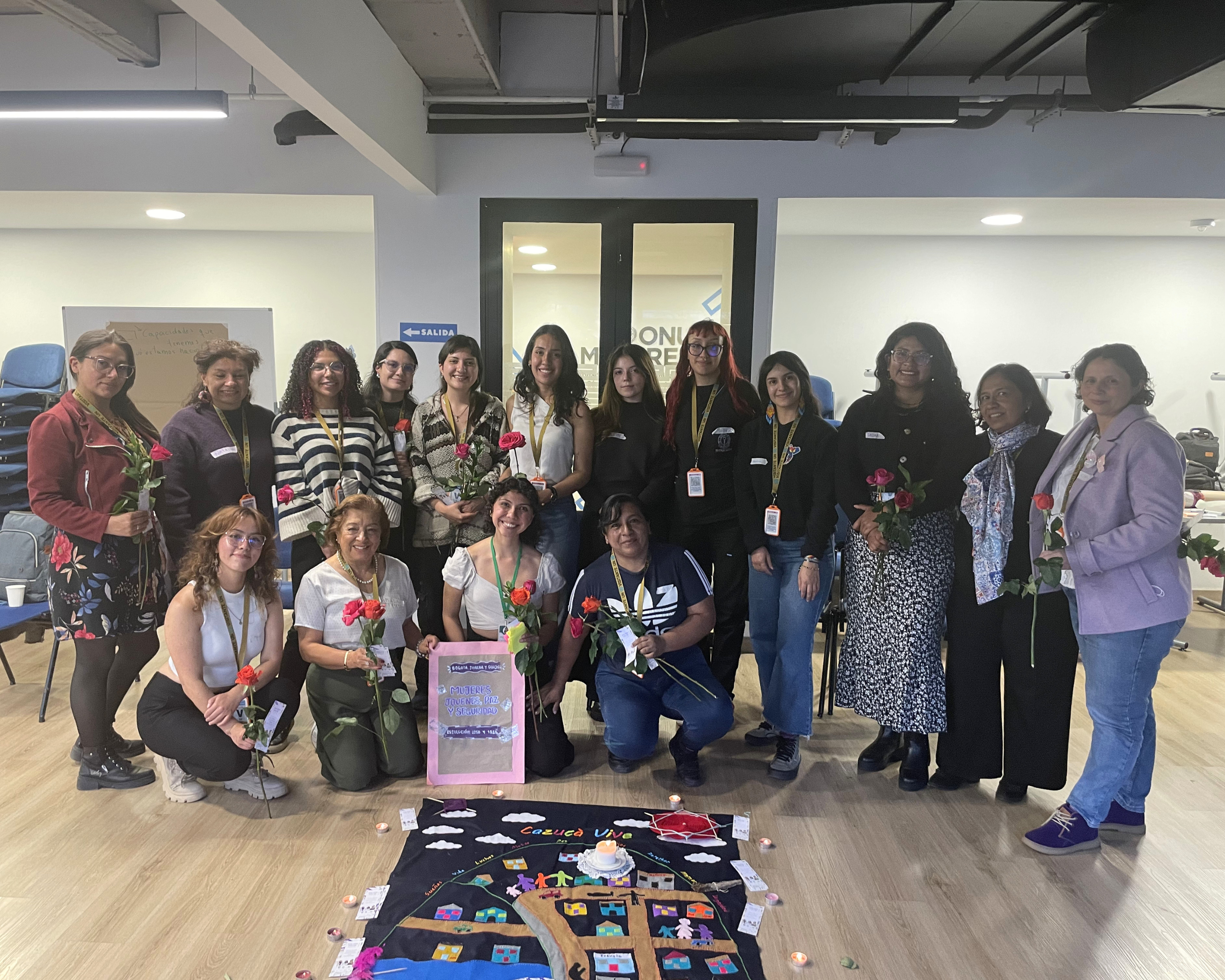
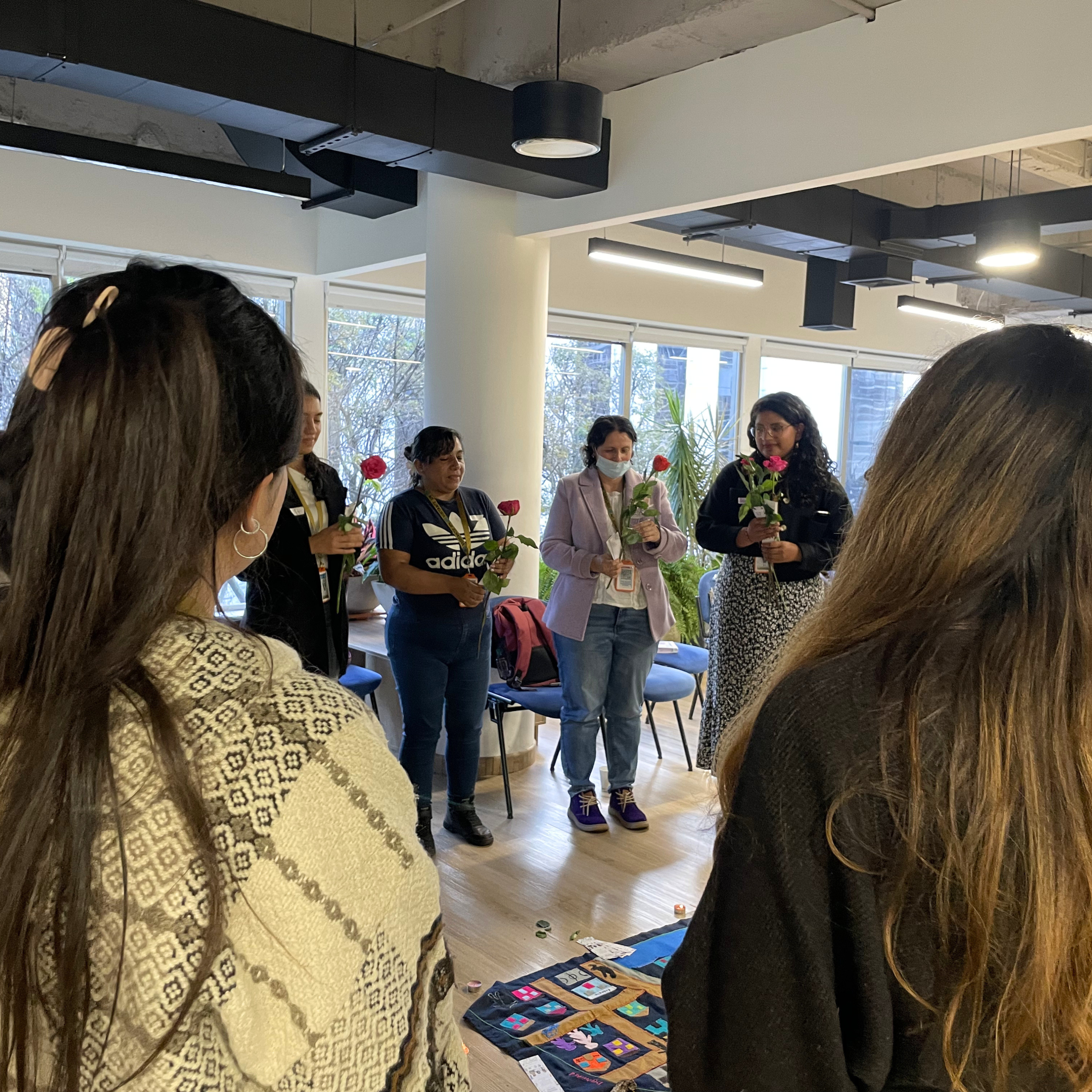
This context demonstrates how both agendas can and should interact in complementary ways. Fundación Latir, together with the Colombian YPS Coalition, in partnership with Fundación Escuelas de Paz and with the support of the United Nations Population Fund (UNFPA), organized an intergenerational dialogue on February 19, 2026. The event brought together women who participated in the development of Colombia’s WPS National Action Plan and young women interested in learning more about the YPS agenda, including those involved in the formulation of the YPS-NAP.
This intergenerational and cross-agenda space proved extremely powerful. It allowed participants to share trajectories, lessons learned, tensions, and strategic visions between those who have long sustained the WPS agenda and those currently advancing the YPS agenda in the country.
Recommendations for alignment of YPS and WPS
The dialogue generated several key insights on how to strengthen the articulation between these two agendas.
- First, it highlighted the importance of recognizing and building upon the accumulated experience of the WPS Agenda. Resolution 1325, adopted in 2000, has more than two decades of implementation, and globally 116 countries and territories had adopted National Action Plans as of 31 December 2025 (UN Women, 2025). This means that a significant body of experience, lessons learned, challenges, and good practices already exists. By contrast, the YPS Agenda, launched in 2015, is relatively recent, and Colombia is the first country in the Americas to develop a YPS-NAP. In many ways, we are pioneers—but also newcomers—with much to learn from previous experiences.
- Second, the meeting emphasized the importance of incorporating an intergenerational perspective within both agendas, recognizing the role of new generations in sustaining and advancing the work carried out so far.
- Participants also acknowledged that, despite decades of struggle and the significant progress achieved by women’s movements, important gaps remain in women’s effective participation in decision-making spaces.
- Another key insight was the recognition that young women continue to face many of the same forms of violence historically denounced by women’s movements, demonstrating the persistence of a continuum of violence that spans across generations.
- A further outcome of the dialogue was the repeated identification of the need for sustained resources to effectively implement both agendas. Both young and adult women agreed that without adequate funding, many initiatives, networks, and processes led by women struggle to remain sustainable over time.
- Finally, participants stressed the need to expand the conversation to include children within peace and security agendas. Peacebuilding should not be limited to youth and adults but must also recognize the needs and perspectives of girls and boys.
Conclusion
In conclusion, weaving these two agendas together represents a powerful opportunity for building sustainable peace. It is essential to continue promoting inter-agenda and intergenerational spaces for dialogue and reflection, as this experience demonstrated that both national action plans (1325 and 2250) can mutually reinforce one another in their implementation. Women have historically been peacebuilders in Colombia—from community-based initiatives that sustained life amid armed conflict to political advocacy in negotiation and institutional spaces. Youth, for their part, are not only inheritors of these efforts but also guarantors of their continuity. In a country shaped by cycles of violence and fragile transitions, peace must necessarily be intergenerational.
To strengthen the intersection between the WPS and YPS agendas, we propose to first, create a joint oversight committee for both the NAP-1325 and the YPS-NAP to ensure that gender-specific youth indicators are met and that resources are shared efficiently. And second, to establish permanent spaces for knowledge transfer. Learning from the accumulated experience of the WPS agenda can strengthen the implementation of the YPS National Action Plan, while the transformative energy of youth can revitalize and update the WPS agenda.
Youth, for their part, are not only inheritors of these efforts but also guarantors of their continuity. In a country shaped by cycles of violence and fragile transitions, peace must necessarily be intergenerational.
References
Zorro, M. A. (2025).The gender approach in Colombia’s National Action Plan on Youth,
Peace and Security (YPS): an urgent need to respond to the specific risks faced by young women. Documento temático preparado para el Second Progress Study on Youth, Peace and Security. Documento no publicado.
UN Women. (2025). National action plans on women, peace and security.
https://asiapacific.unwomen.org/en/focus-areas/peace-and-security/national-action-plans
Zorro, M. A. (2026). The gender approach in Colombia’s National Action Plan on Youth, Peace and Security (YPS): An urgent need to respond to the specific risks faced by young women. https://drive.google.com/file/d/13Kg9YGMjvvMTx7cuxHCPEc1Cs6mCr9NQ/view
About the Author
María Alejandra Zorro (Fundación LATIR) is a psychologist with a Master’s degree in Women’s and Gender Studies from the University of Granada. She works at the intersection of youth, peace and security, and gender equality, with a strong focus on feminist and psychosocial approaches to peacebuilding. She is part of Fundación LATIR, where she supports the Colombian Coalition on Youth, Peace and Security, leading processes related to youth participation, policy advocacy, and capacity-building. Her work focuses on strengthening youth leadership—particularly young women—as key actors in peacebuilding and social transformation.