Weaving futures of resistance: How a youth centre fosters peace education through arts, sports and STEM in rural Honduras
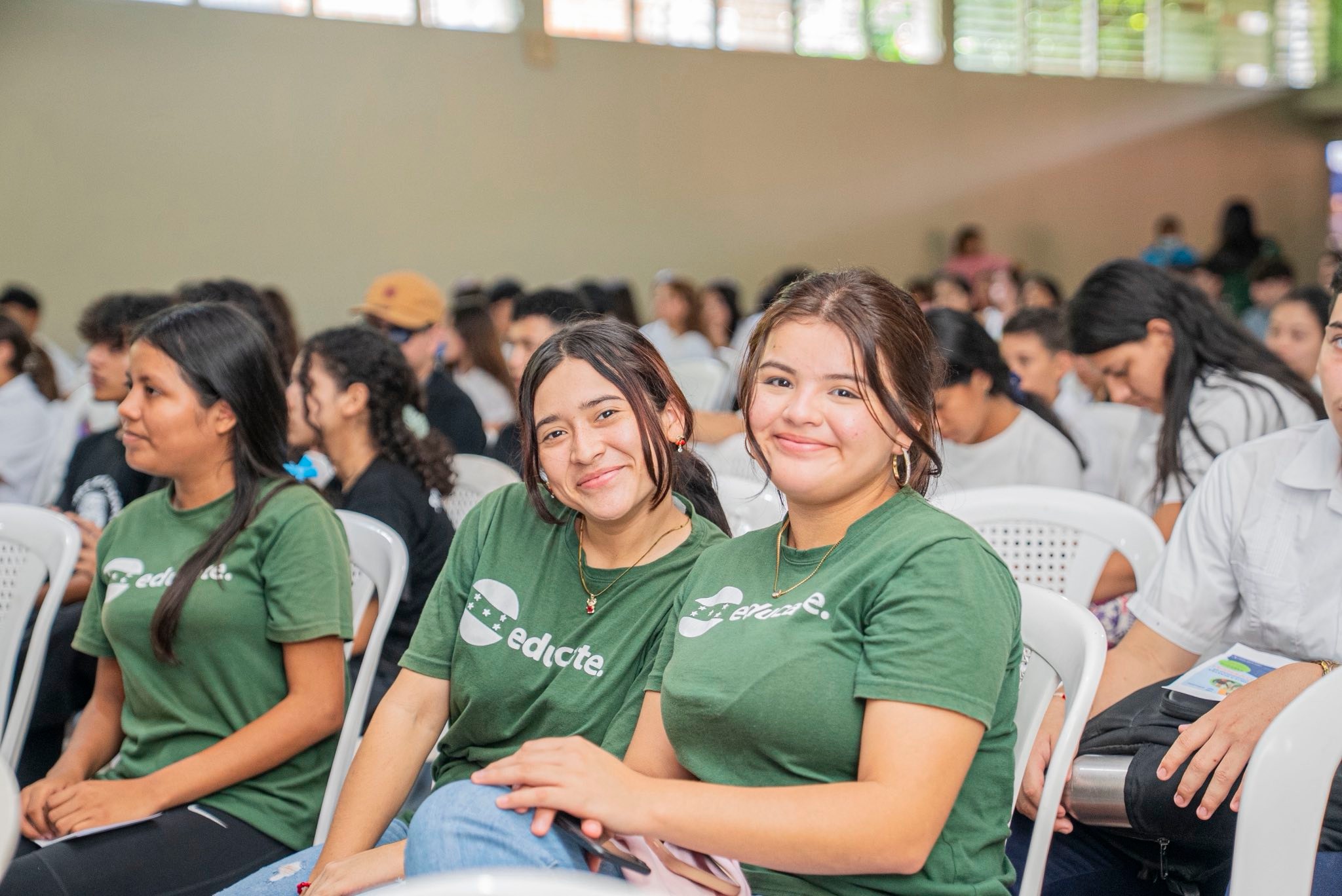
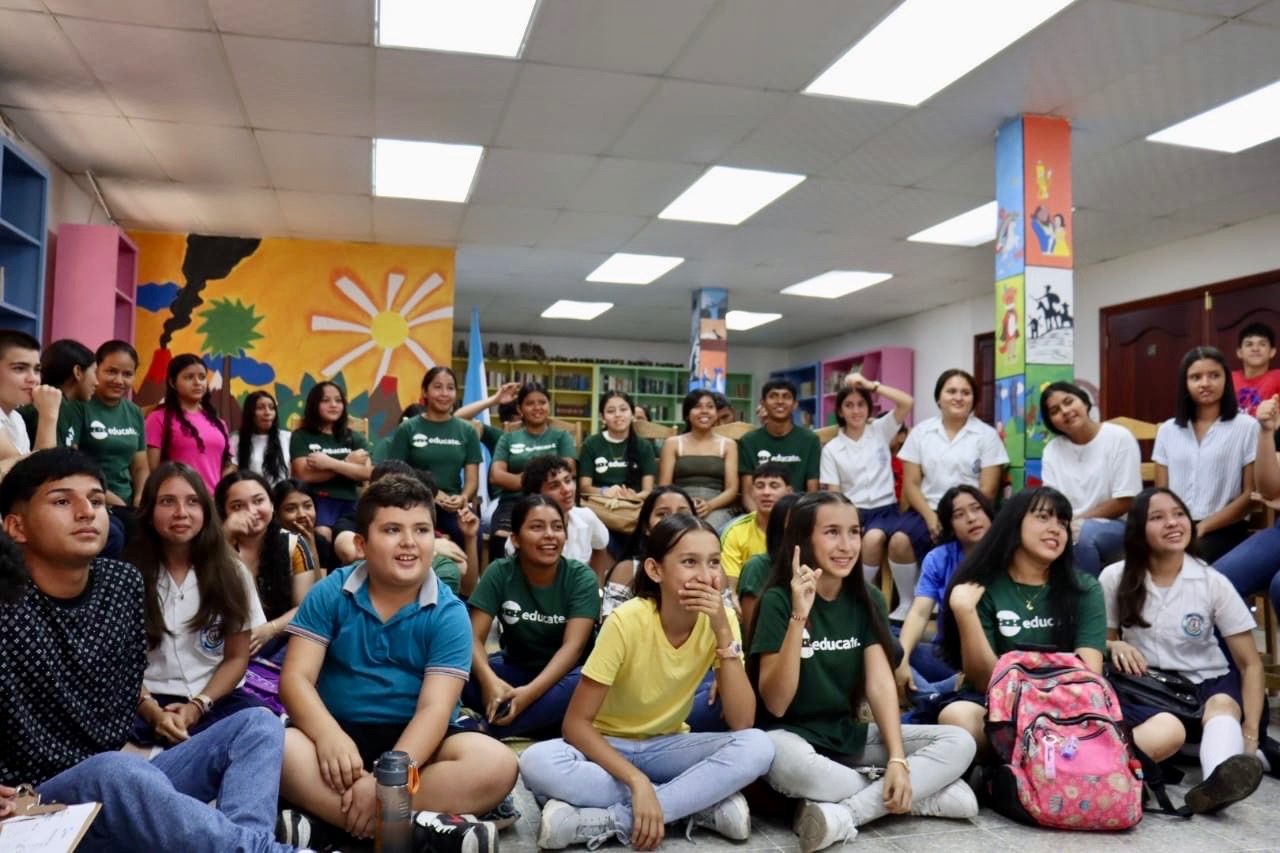
Young people in blue and green T-shirts spill through the doorway and into the multicoloured interior where bookshelves, murals and bulletin boards line the walls. Energy is high today, with over eighty young people having gathered at the Youth Centre for our first peacebuilding workshop.
educate.’s Youth Centre lies in the rural town of Trinidad, in the coffee growing mountains of Santa Bárbara, Honduras. In rural Honduras, 80% of the population live in poverty and just 29% of youth between 15 and 17 attended school in 2023 according to Human Rights Watch – a reality educate. is working hard to change. Through a holistic model of support, educate.’s team work to empower rural children and young people through education, including a scholarship programme, individual accompaniment, access to mental health services, a network of community libraries, and weekly engagement in youth programmes and workshops that centre youth as leaders.
The country has one of the highest homicide rates worldwide. While in rural areas this violence is often less obvious, it pervades the way young people are able to live their lives. Despite youth being amongst the most affected by violence in Honduras – 53% of victims of homicide in the country in 2024 were under the age of 35 – young peoples’ voices continue to be undervalued in community and institutional spaces. The prevailing view is that young people are either victims of violence, or perpetrators thereof. At best, they are seen as the passive recipients of policies – certanly not agents of them. On the rare occasion that a space is opened for youth voices to be included in public institutions, it is the privileged few from wealthier neighbourhoods who are accepted into these spaces, rarely those from the rural villages or marginalized barrios.
In 2025, educate. was a proud recipient of one of UNOY’s FSUM* grants, which made possible our first youth peacebuilding project: Tejiendo Futuros: Educación para la paz y el empoderamiento de las juventudes rurales (Weaving Futures: Education for peace and the empowerment of rural youth). With this project, for three months our youth programmes – which focus on communications, visual arts, sports, and STEM – gained a cross-cutting focus: youth-led peacebuilding.
1. Telling stories through photography
educate.’s youth communications programme Joven Comunica focuses on storytelling through writing, photography and video. With this project, the group decided to create a collective analogue photography exhibition using a “photovoice” methodology that allowed participants to use cameras as tools to express their stories and perspectives. They focused the exhibition around a question: what does it mean to be a rural young person in Honduras today?
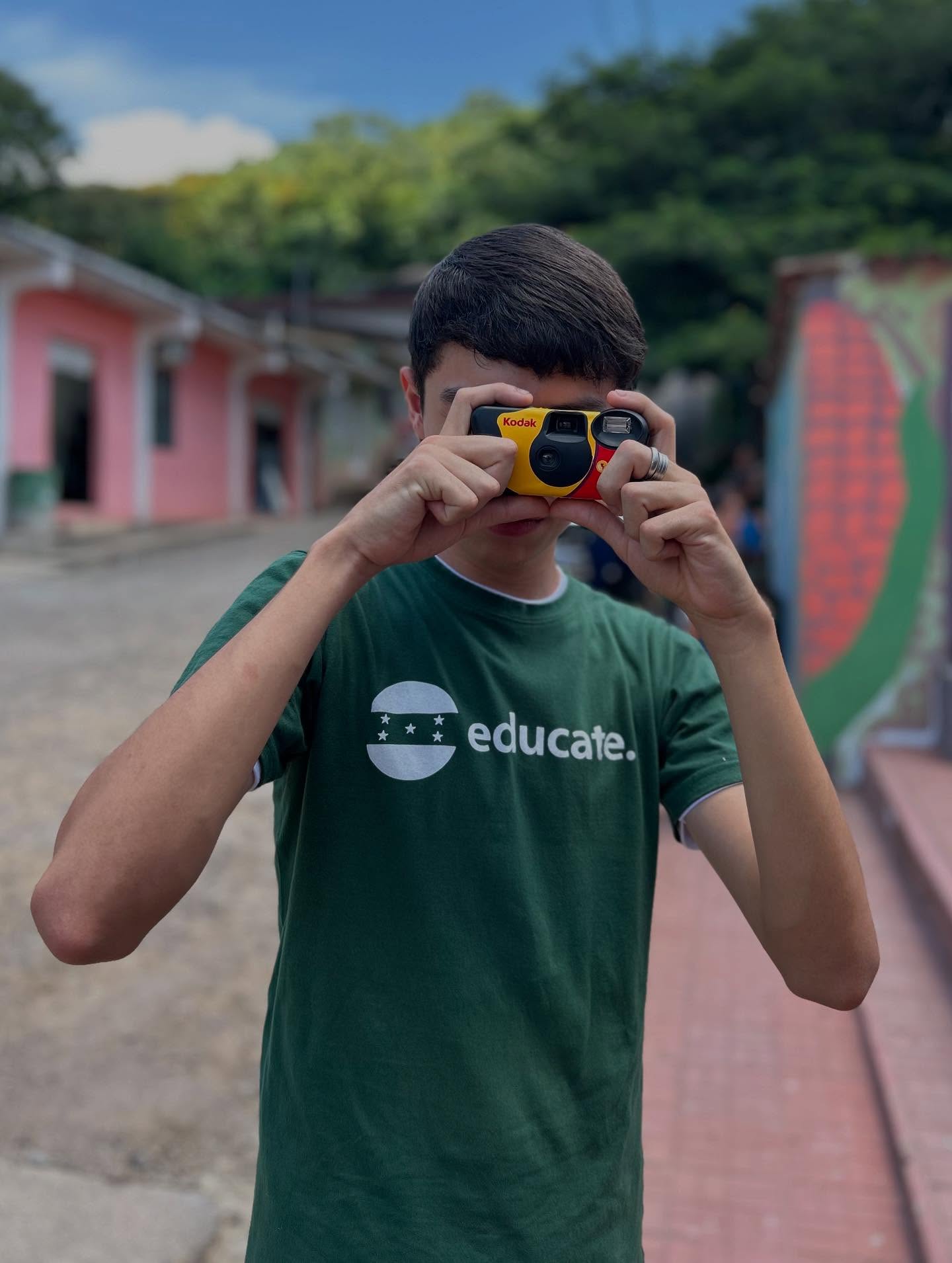
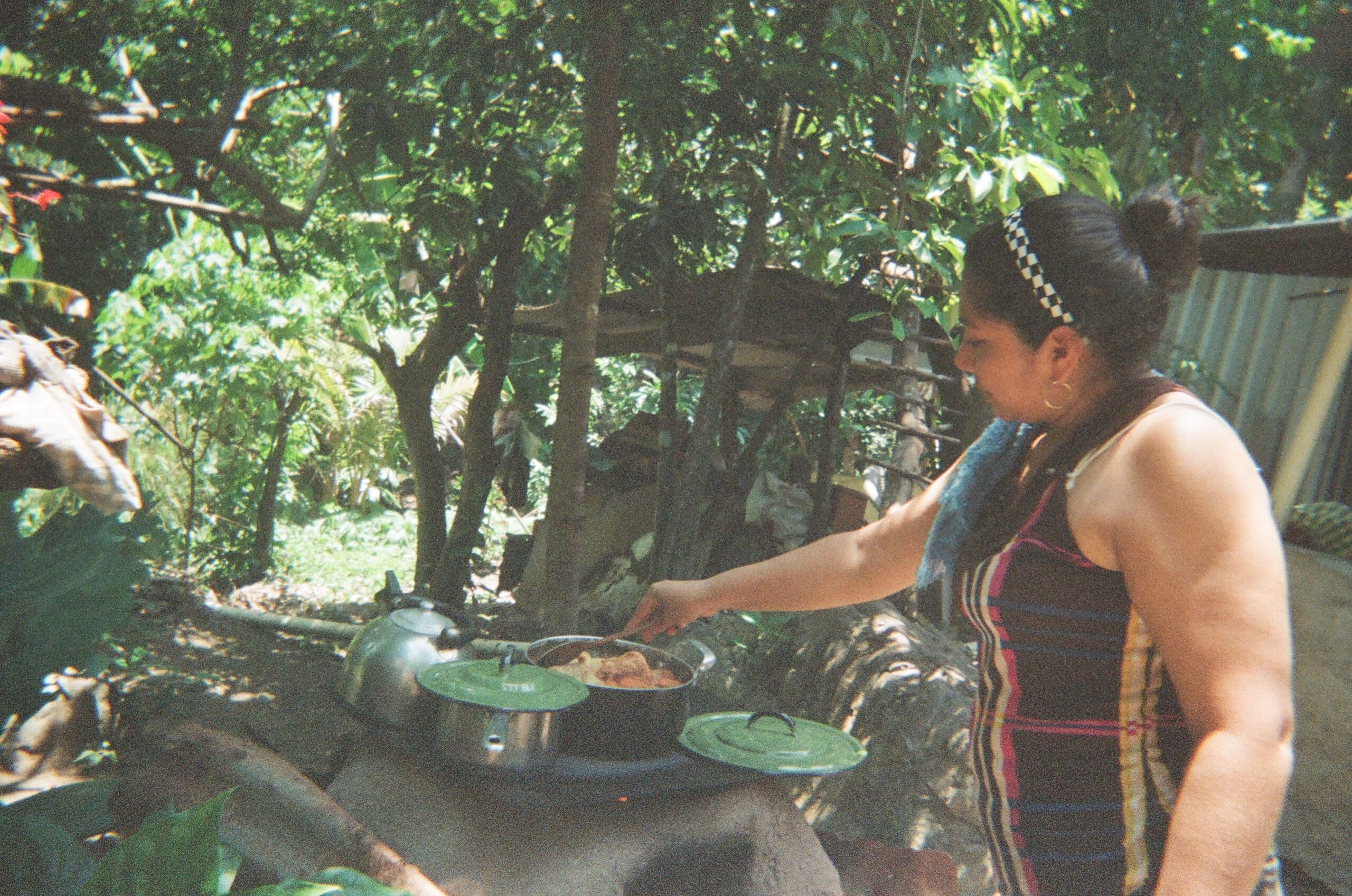
“These kinds of projects are very important because we learn about the importance of peace in society and in our communities,” said Jessica, 22, one of the programme leaders and a university student in educate.’s scholarship programme. “What I liked most was going out to take photographs. Even I myself didn’t know about all the needs in my community, and to go out and take photos that can have an impact and change other people’s opinions, that impacted me.”
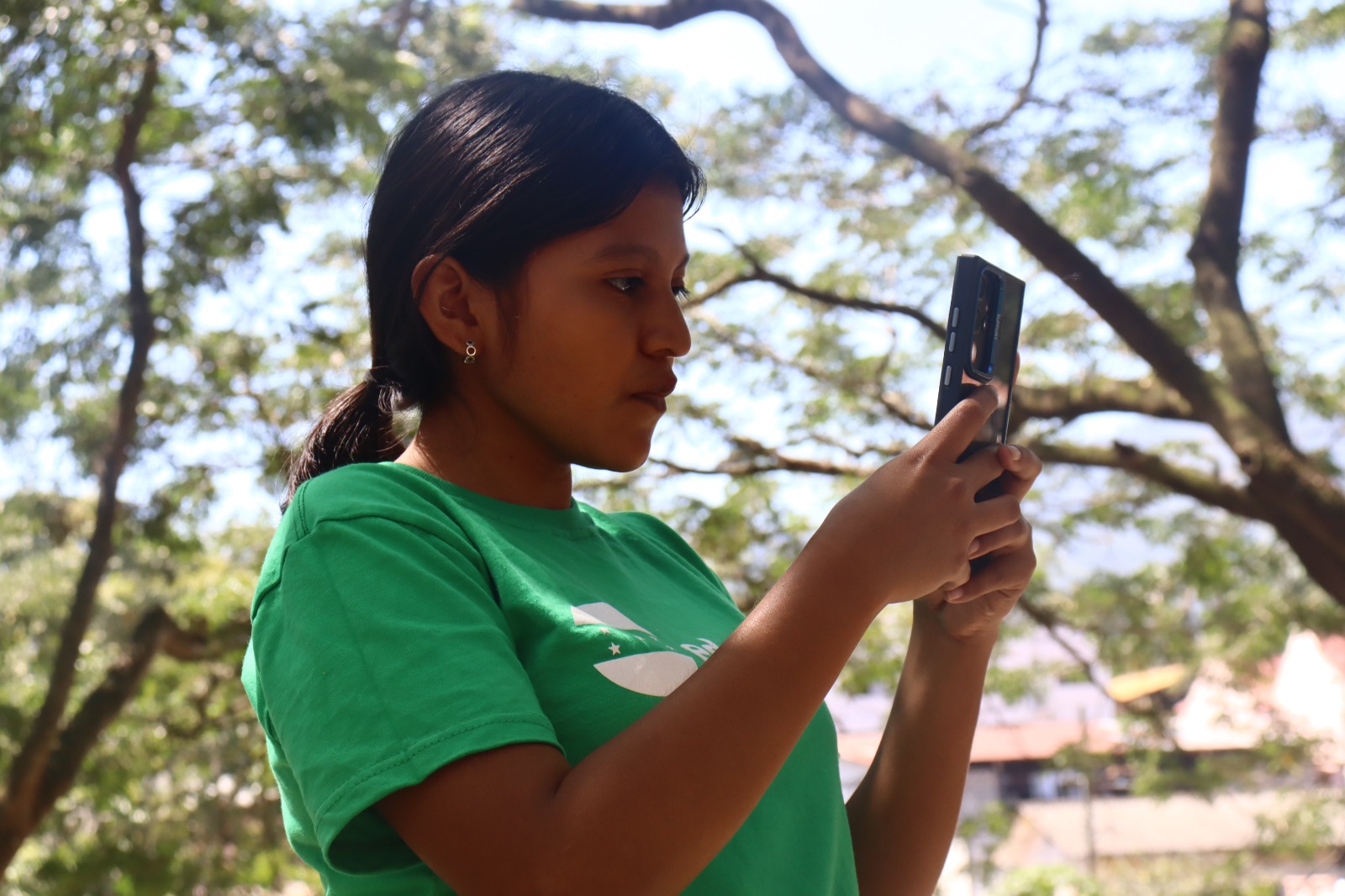
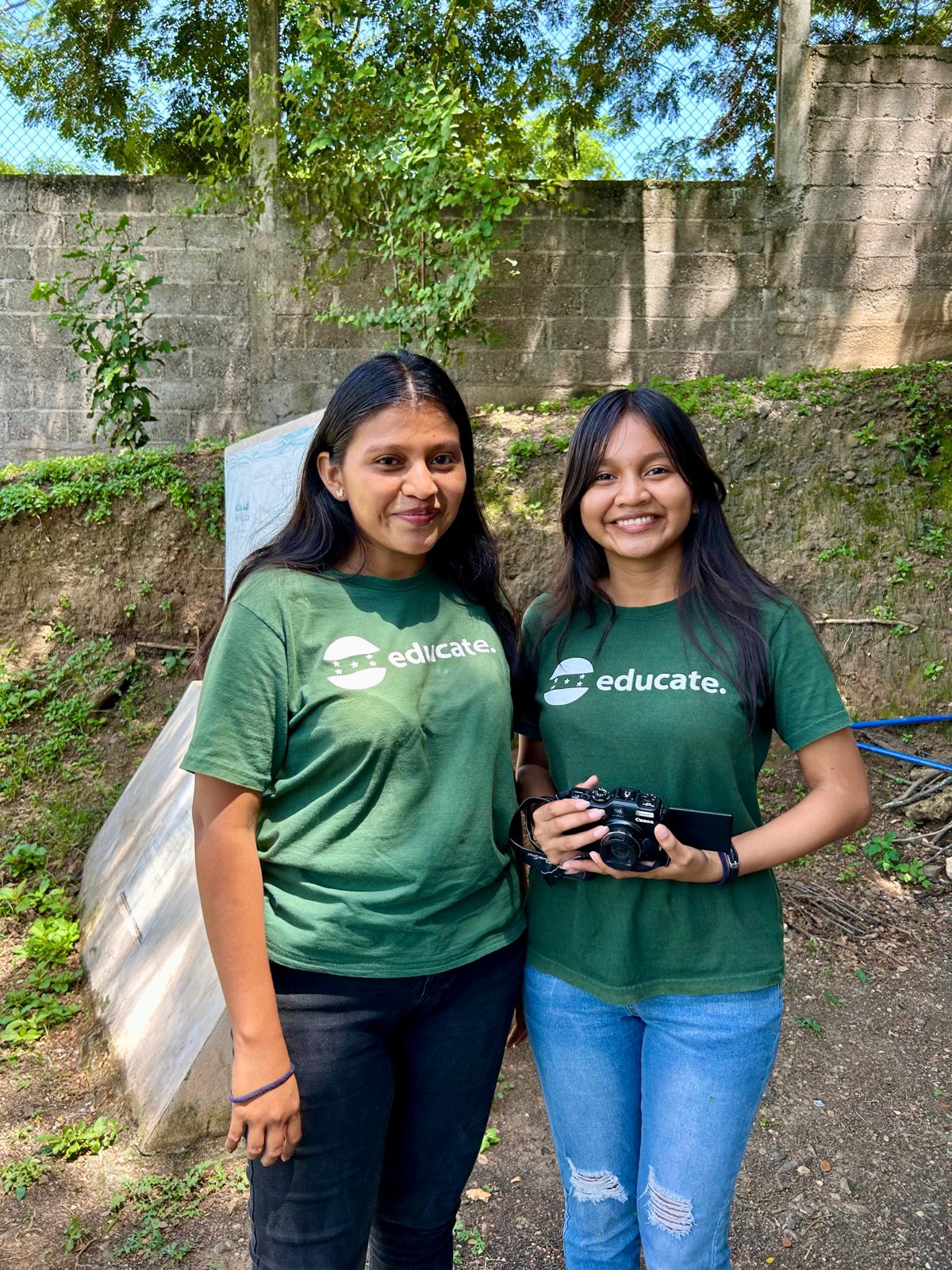
After a series of workshops from a local journalist, each participant received a single-use film camera to take home, and spent three weeks capturing the stories of their community. The photos that came out of this process ranged from quiet shots of family meals, to dried up rivers littered with rubbish, smiling siblings heading to school in their uniforms, and hammocks being woven outside students’ homes.
Jessica later led the group in co-authoring an article that was published, along with a selection of the photos, in a national youth newspaper.
2. An ‘artivist’ mural
At the entrance to the community park where educate.’s Youth Centre is located, participants from our art programme EducArte created a 21 meter long mural that highlights the role of youth as agents of social and political transformation.
In Latin America, street art has long been an effective tool for fostering engagement in social movements. For young people, muralism can give expression to experiences of struggle and messages of resistance, in the face of prevailing narratives that seek to marginalise their voices. This mural initiative was led by youth from start to finish: from sketching their mural design ideas, to building a composition, preparing the wall, painting, and leading the inauguration event.
“I chose to participate in the art programme because I’ve always loved painting,” said Ana, 12, a seventh grader who joined the programme this year. “It allows me to express what I feel. Plus, I’ve made more friends here. It’s a space where I feel very safe, I participate in everything, and I’m friends with everyone.”
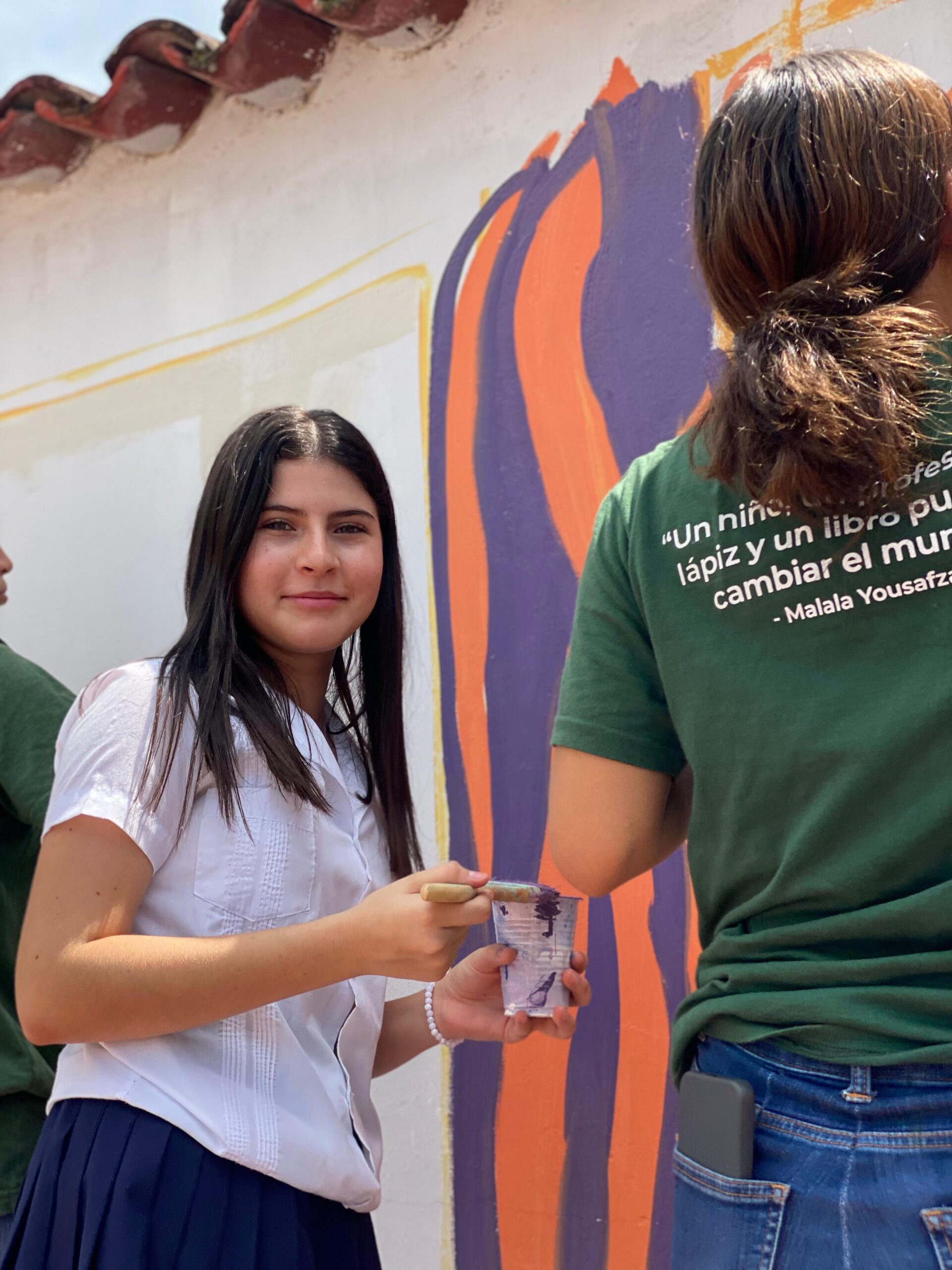
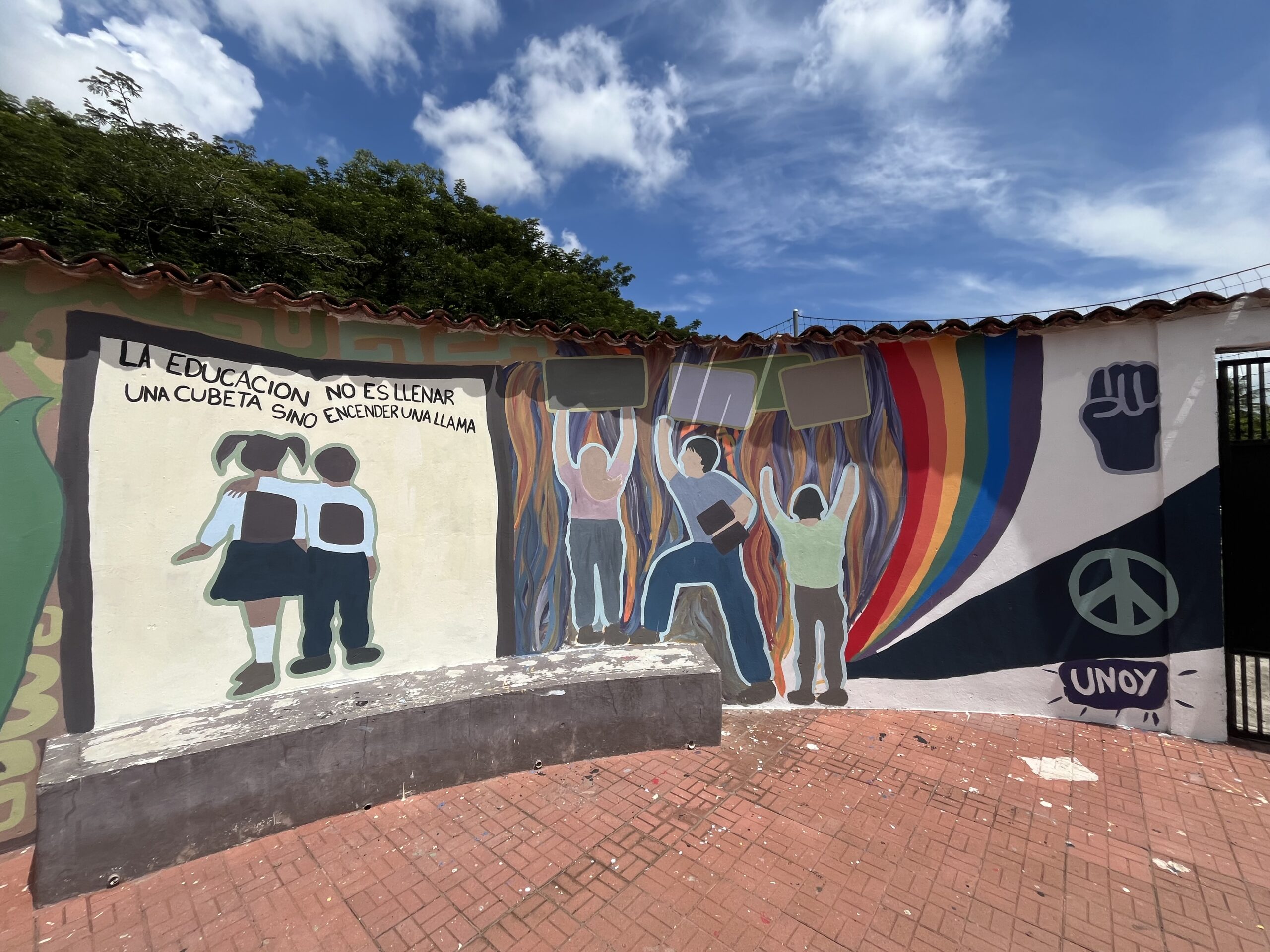
At the inauguration, the participants presented their mural and spoke about what each part represented: from the depictions of the 1954 banana workers’ strike, the Mayan ruins, and the maize crop, to the youth march, protest flags, and the person holding up a mirror reflecting a sunny day in the midst of a dark conflict zone, to the final section representing educate.’s youth programmes. The stretch of wall, formerly blank, is now filled with visions of peace and youth leadership, creating an inspiring entrance to the park and Youth Centre beyond.

3. Robotics and hands-on STEM education
While activities were ongoing outside, learning was also happening inside the Youth Centre’s walls. Here, 28 young people were taking part in a robotics camp, recycling electronic waste products into robotics prototypes and learning about how these prototypes could be used to create community solutions to real problems.
Every year, our programme Tecnología con Propósito (Technology for Purpose) is the first one to fill up, as spaces are limited and interest is high. It is the only programme in the municipality that engages rural youth in hands-on STEM education, and on average at least half of youth who participate have never had the opportunity to work on a computer before (while local high schools do have computer labs, these are reserved for students in their final two years).
Over the course of the 10 months that the programme runs each year, most sessions are focused on computer skills, but this project provided an opportunity for something new: learning how technology can be applied directly to peacebuilding in their communities through robotics. As participants gained an understanding of key principles of electricity, hydraulics, and programming, and built the three robot prototypes (a hydraulic arm, an electric car, and a robotic arm), they also applied their learnings to community solutions. “I didn’t know how to work with electricity, so I learned a lot about that,” said Eimy. “I love technology, and we’ve learned how to create things that can really help solve problems in the community.”
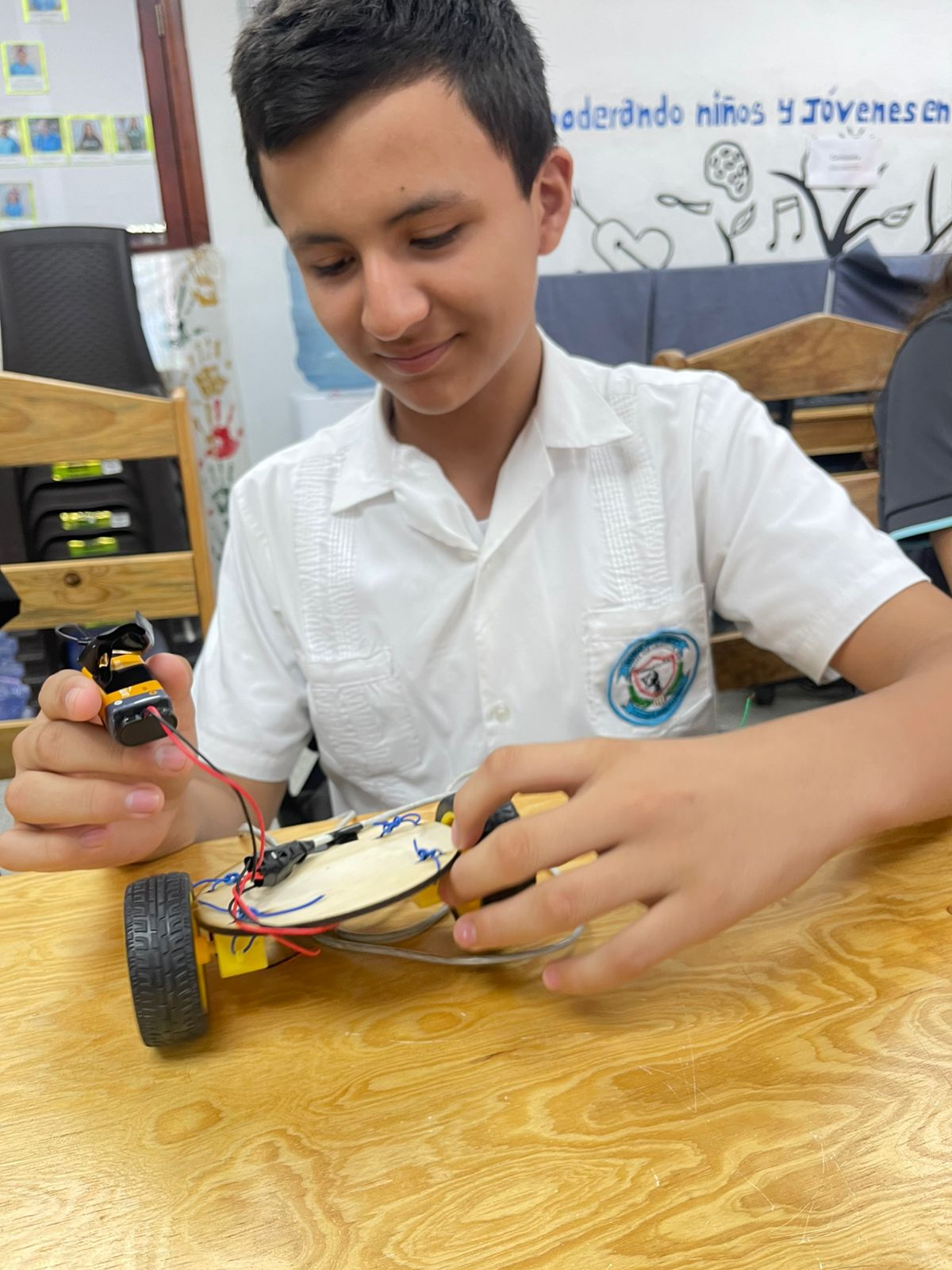
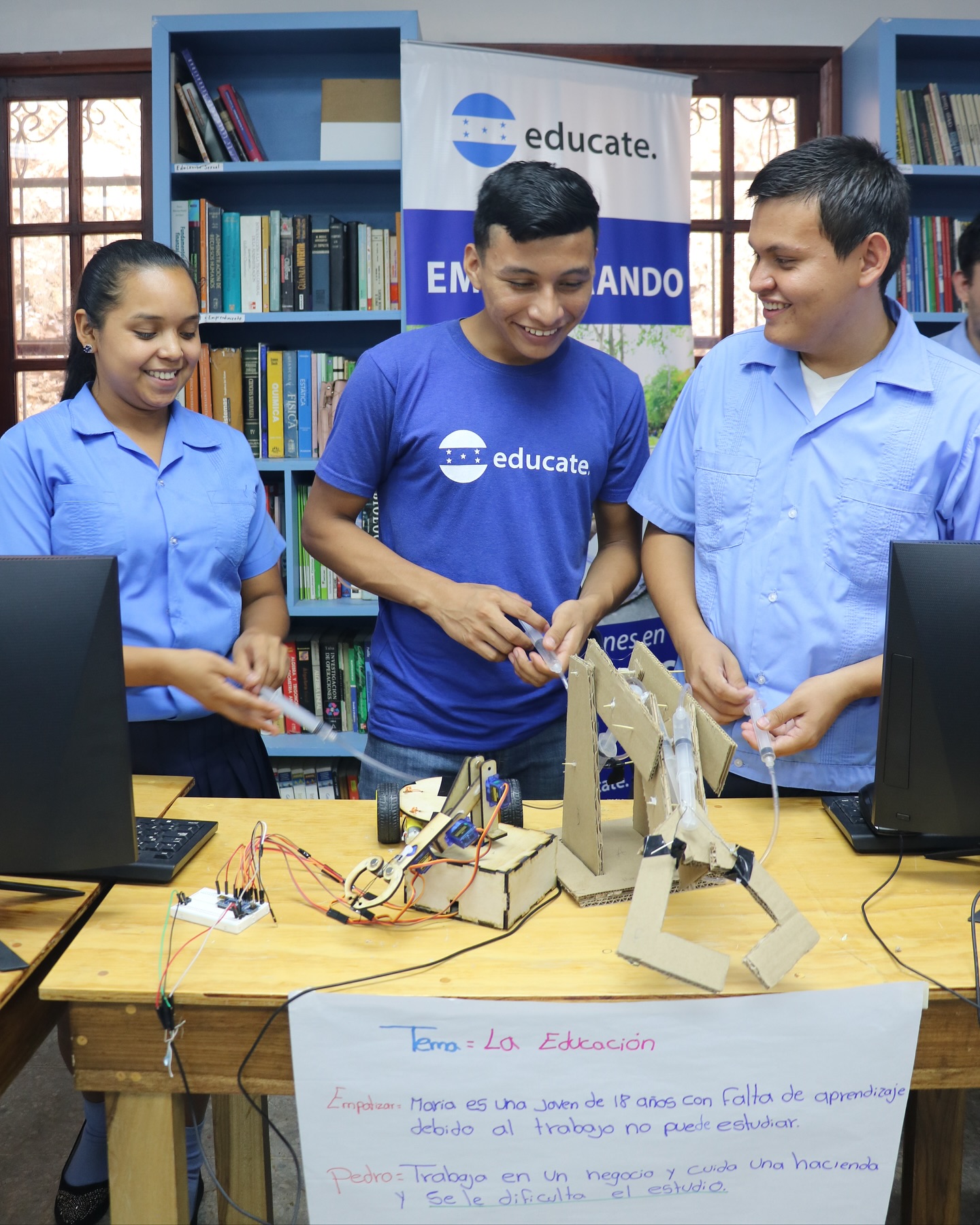
At the fair at the end of the project, each group presented how their robot prototypes could help create a solution to an issue they identified in their community, with proposals ranging from water management to electricity grid expansion.
4. Rural sports days foster social cohesion
Our sports programme UniDeportes is educate.’s largest programme, with 40 youth participants taking part every Saturday. Most Saturdays include sports activities on the football pitch outside the Youth Centre, where sport acts as a tool for building leadership and other skills. Over the years we have seen football act as a powerful tool for fostering social cohesion and a sense of belonging amongst young people from diverse communities, as well as for breaking down gendered divides.
As part of this project, the UniDeportes leaders organized two sports days in the communities of La Zona and La Cebadilla, villages in the mountains surrounding Trinidad. “We didn’t just do sports training sessions, we also learned how to behave as leaders and how to organize activities for children in other communities,” explained Yeyson, 21, a young man who had been out of school before being recommended for a scholarship by a teacher at the local evening school. He has since become a leader within the programme, particularly acting as a role model for younger boys.
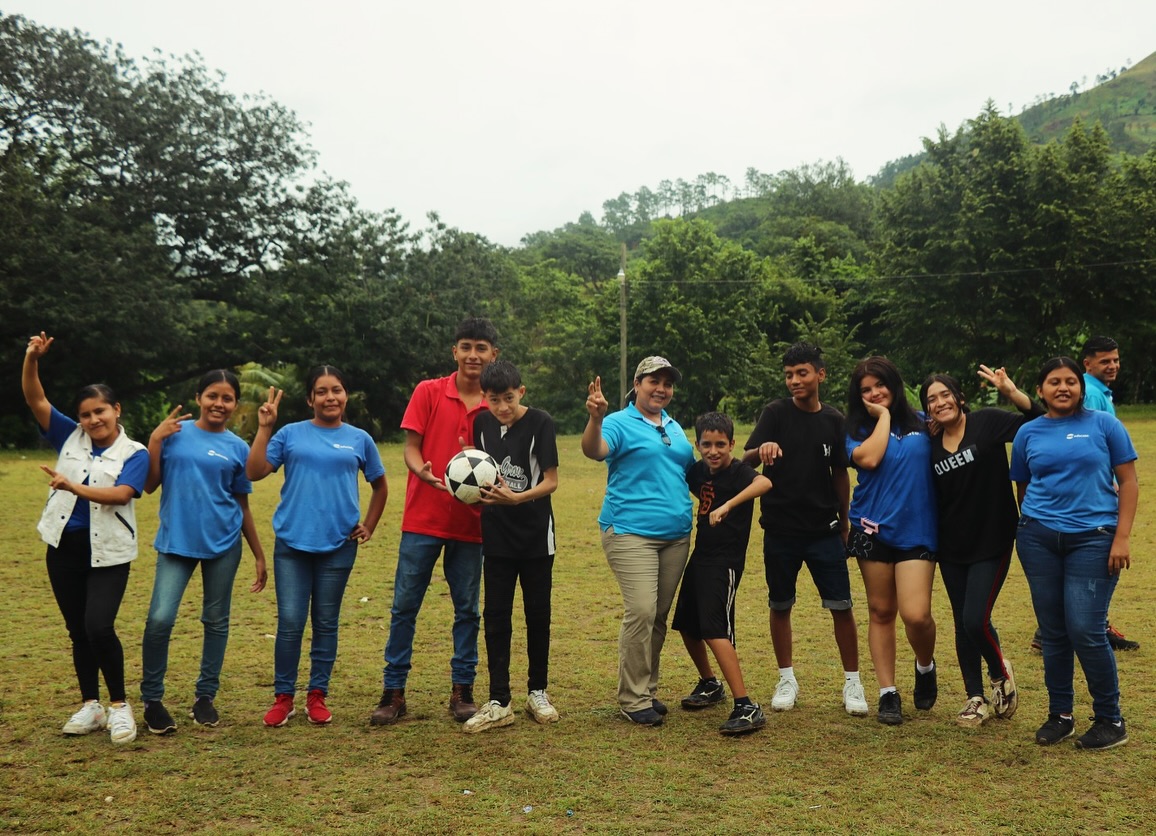
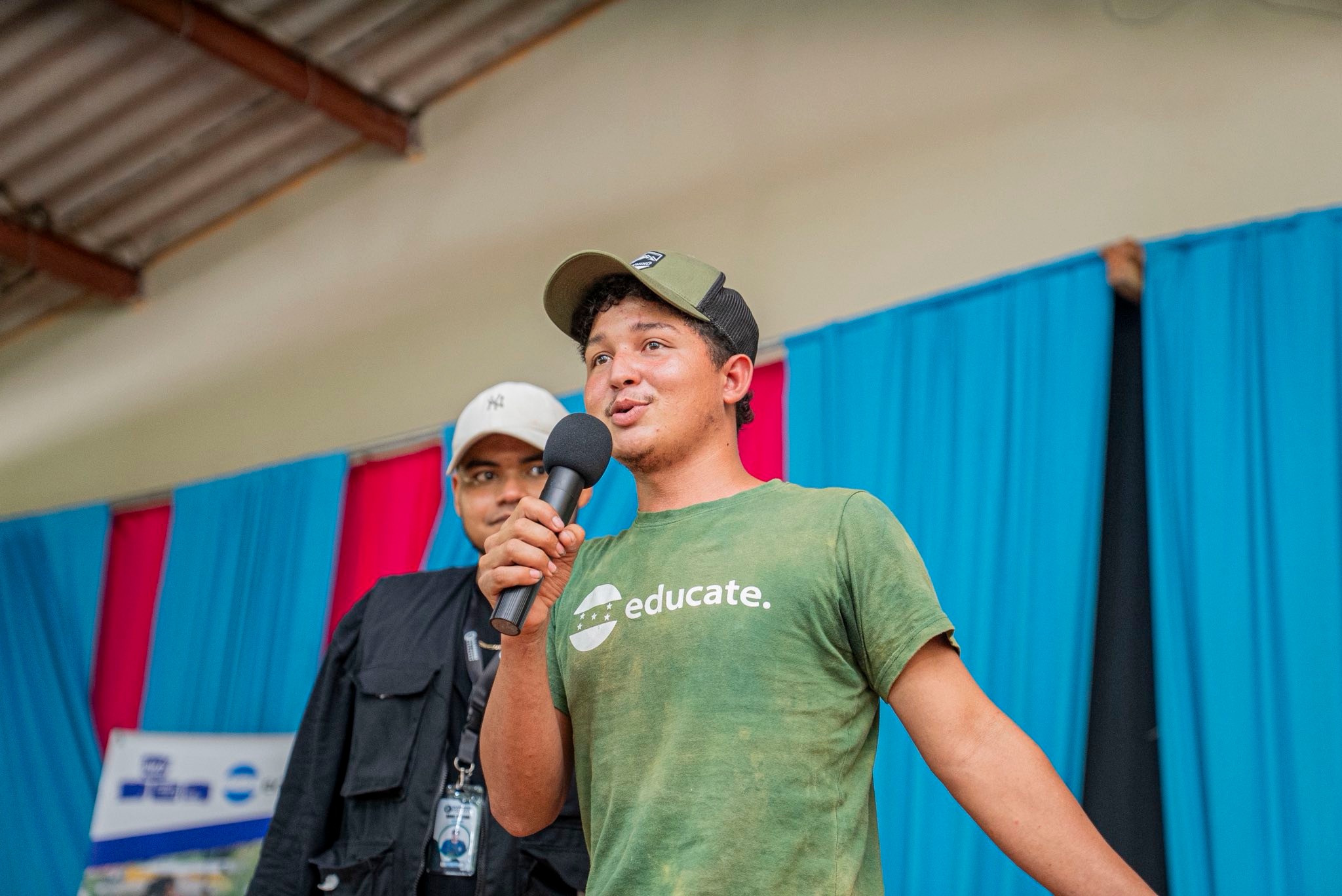
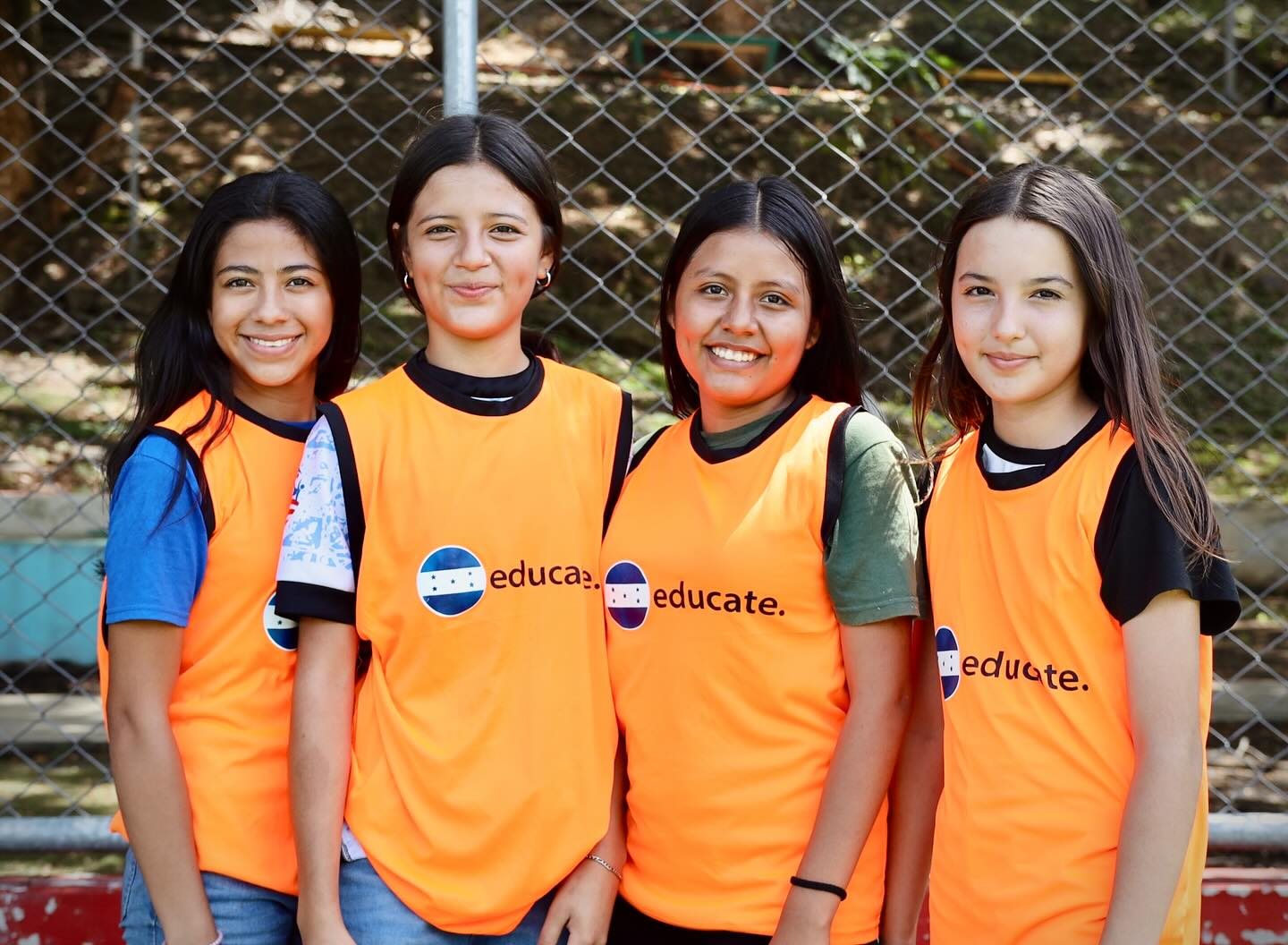
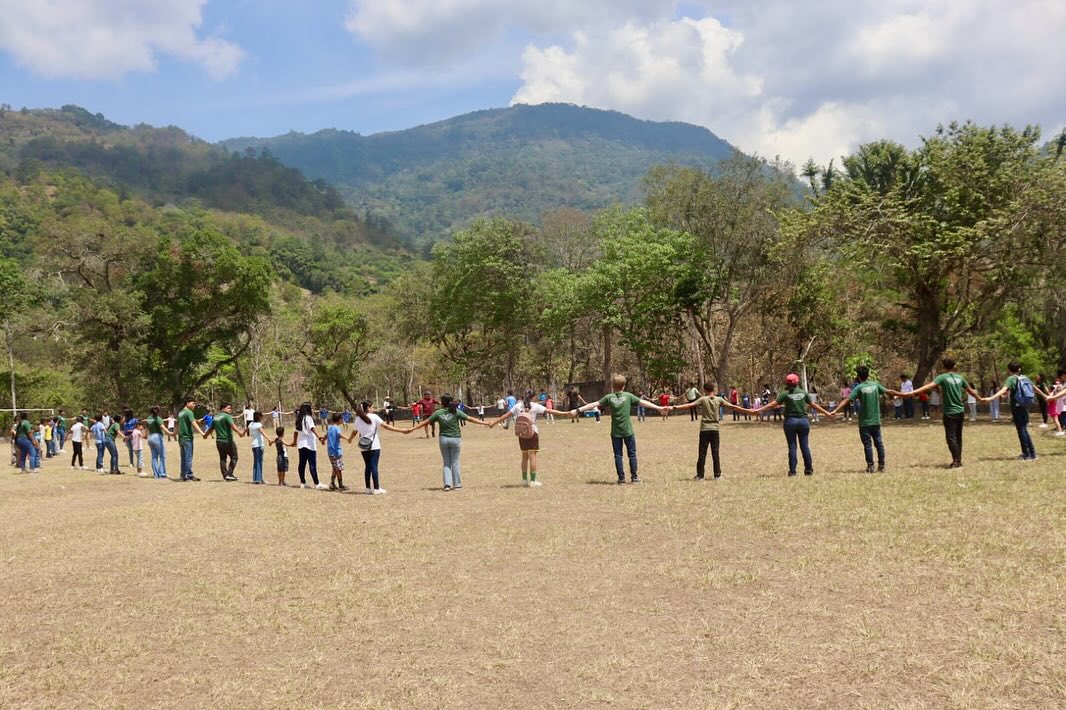
167 children and young people participated across the two sports day events, but what stood out the most was the way educate.’s young leaders had learned to come together to collectively organize these community activities, facilitate games in groups, and create safe spaces where children could share what peace meant to them in their lives. To wrap up the event, they created a banner where each child added a handprint with paint in different colours; the banner read: PEACE IS IN OUR HANDS.
Impact
The impact of Tejiendo Futures is reflected in the strengthening of young peoples’ leadership skills, the creation of spaces for youth expression, the promotion of gender equality across all activities, and the interest ignited through the project in peacebuilding amongst participants. In the community, the project also allowed young people to position themselves as key actors in peacebuilding and community development, laying the groundwork for local authorities to more effectively recognize and support their initiatives. By the end of the project, 77.2% of participants considered themselves “very” or “quite” ready to lead or co-lead a youth activity, compared to just 42.5% before.
Despite the barriers that rural youth in Trinidad and surroundings face in accessing educational and work opportunities, Tejiendo Futuros reaffirmed that when these young people have access to meaningful opportunities – to study, to participate in workshops on topics they are interested in, to engage in programmes they are passionate about, and to be respected as leaders – they can (and do!) become drivers of peace, social cohesion, and community transformation.
“To me, peace is about trying to resolve problems without exploding, and [instead] using dialogue,” said Mialy, 15, an educate. scholarship student and leader in the UniDeportes programme. “You learn not to be explosive and impulsive, and even if learning that seems like something small, the way you change as a person is huge.”
Reflections
Tejiendo Futuros underscored several learnings for our team. Firstly, it became clear that peace education is most impactful when it goes beyond theory and is implemented through experiential and creative approaches such as the arts, sports, and technology. Hands-on learning creates space for young people to bring their lived experiences into the room, making education not only more dynamic and fun, but more relevant to their lives.
When it comes to young people taking on leadership roles, we have seen that youth leadership flourishes when young people feel heard, supported, and empowered as protagonists. Our Youth Centre is a space precisely for this: where young people are able to take charge over their own learning. Our programmes are not courses – they are spaces for active engagement, curiosity and creativity. They are horizontal, collaborative and participatory. More experienced mentors guide youth participants in building the capacities needed to take on positions as programme coordinators, but the protagonism of young people is always central.
Finally, impact is achieved over time through sustained efforts, not short term interventions. In our nine years of work so far, we have seen how consistent, sustained support for young people – often over many years – can have transformational effects in terms of not only educational achievements and leadership skills, but the ways in which young people are able to replicate their learnings as they become mentors for the younger generations at educate. that come after them.
To read the full Tejiendo Futuros impact report (in Spanish), click here.
*This project was funded through the Financial Support for UNOY Members (FSUM) programme, which supports local youth-led initiatives through accessible mini-grants.
Authors:
Antonia McGrath: Founder and former Executive Director of educate. in Honduras, and PhD Candidate at the Centre for Latin American Research and Documentation (CEDLA) at the University of Amsterdam.
Samuel Adonay Reyes Rodriguez: Honduran teacher and journalist, and vice president on the board of directors of educate. in Honduras.