Puppets, Stories, and Healing: Empowering Palestinian Children through Creative Expression
In several classrooms across the hills and cities of the West Bank, something gentle and profound has been unfolding. Over the past few months, groups of children have gathered in circles, telling stories with small handmade puppets stitched with memory, culture, and quiet resilience. These puppets allow children to tell stories, stories that are difficult to speak aloud. The children who gather around them live under the ongoing reality of occupation. Some have witnessed settler attacks, military presence near their schools, or fear within their families. Others carry quieter burdens, memories they can’t quite explain, and fears they don’t yet have words for.
That’s where Ibtikar Palestine has stepped in, creating something deeply needed, a safe space for children to grasp and make sense of the swirl of emotions and experiences.
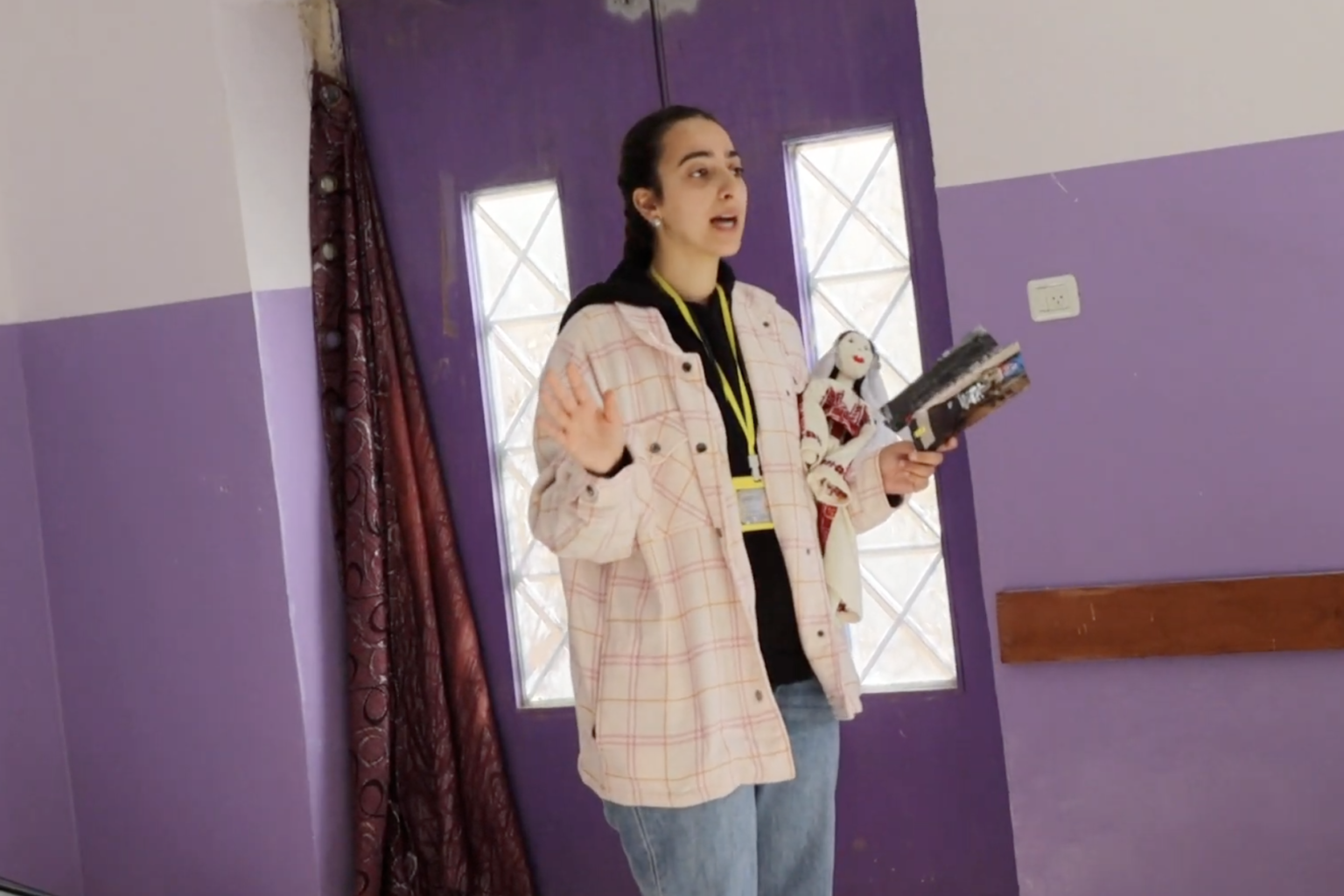
At the heart of the project are the Palestinian puppets, handmade by women across the southern West Bank, dressed in traditional embroidered clothes. These puppets are more than toys – they are tools for healing and cultural continuity.
Through a series of creative storytelling workshops, Ibtikar offers children the opportunity to express themselves and find relief by sharing their stories in creative ways through the traditional Palestinian puppets. The Palestinian puppets foster self-expression and are also a celebration of Palestinian culture. Over the last few months of implementing this project, Ibtikar was able to organise 12 sessions at 6 different schools, centres and libraries and reached 180 children across the West Bank.
Overcoming the First Hurdles
When Ibtikar started looking for schools to host the workshops they encountered their first challenge. The Palestinian Ministry of Education resisted the idea of hosting the sessions at the schools, unsure how storytelling aligned with their priorities. The team recalls:
“Decision-makers initially expressed reservations, arguing that the workshops did not align with their immediate priorities. This stance required persistent engagement, including multiple meetings, presentations, and advocacy efforts to highlight the project’s psychosocial and educational value.”
After two months of dialogue and highlighting the value of the initiative, they got the Ministry’s approval. This milestone not only allowed the project to proceed but also emphasised the importance of advocacy, and trust-building with partners.
Additionally, Israeli imposed mobility restrictions made certain school areas unsafe, forcing the team to adapt by rescheduling and relocating workshops to more secure locations.
These challenges underscored the complexities of working in an area of conflict, but highlights what can be achieved when local actors lead with persistence, passion, and a deep commitment to the well-being of their communities and the children.
A Glimpse Inside the Workshops
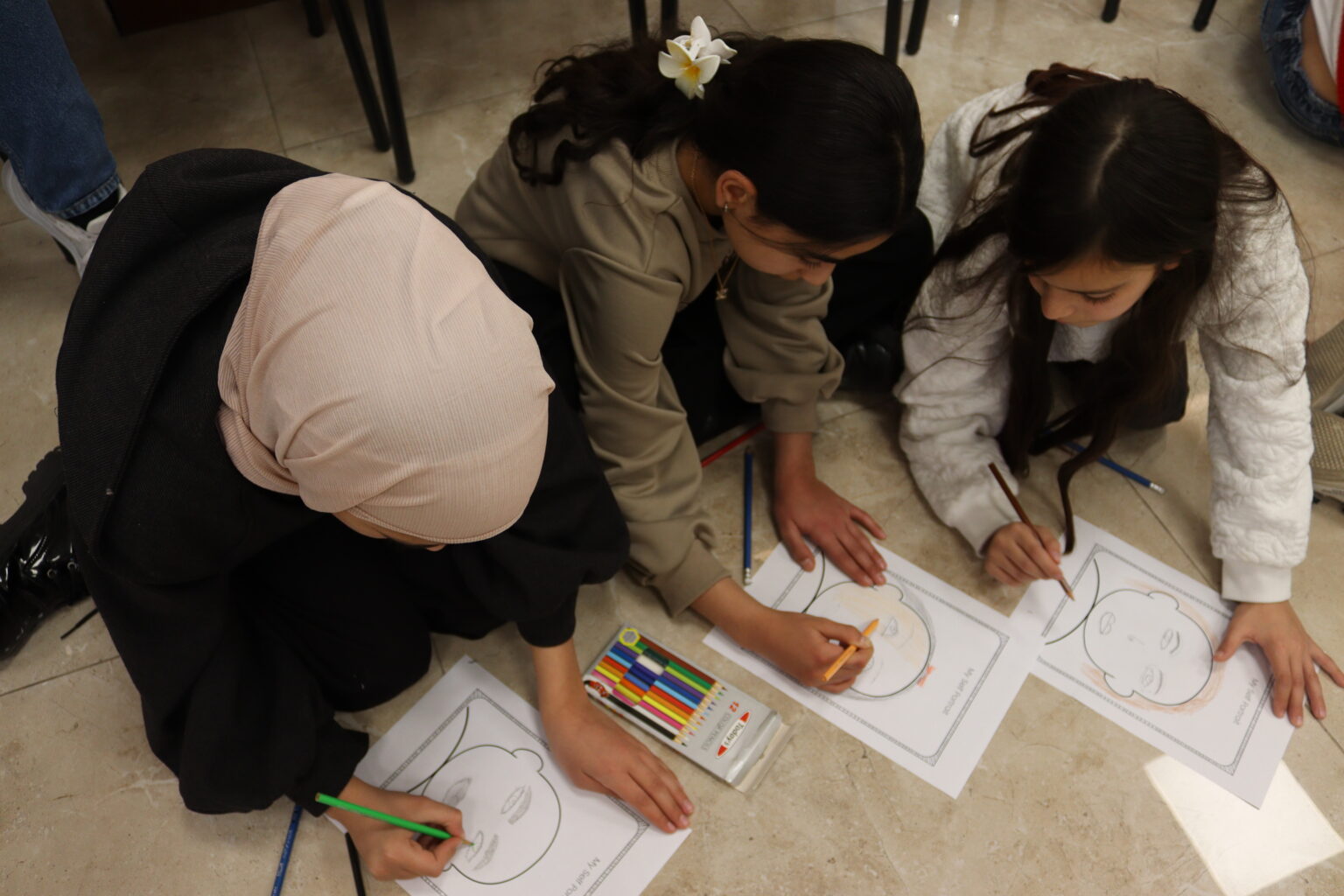
The two-day program that took place at six schools, welcomed around 30 children per session. The first day focused on building trust and helping the children become familiar with the space, the facilitators, and the puppets. They had the chance to dress the puppets and were gently guided into storytelling.
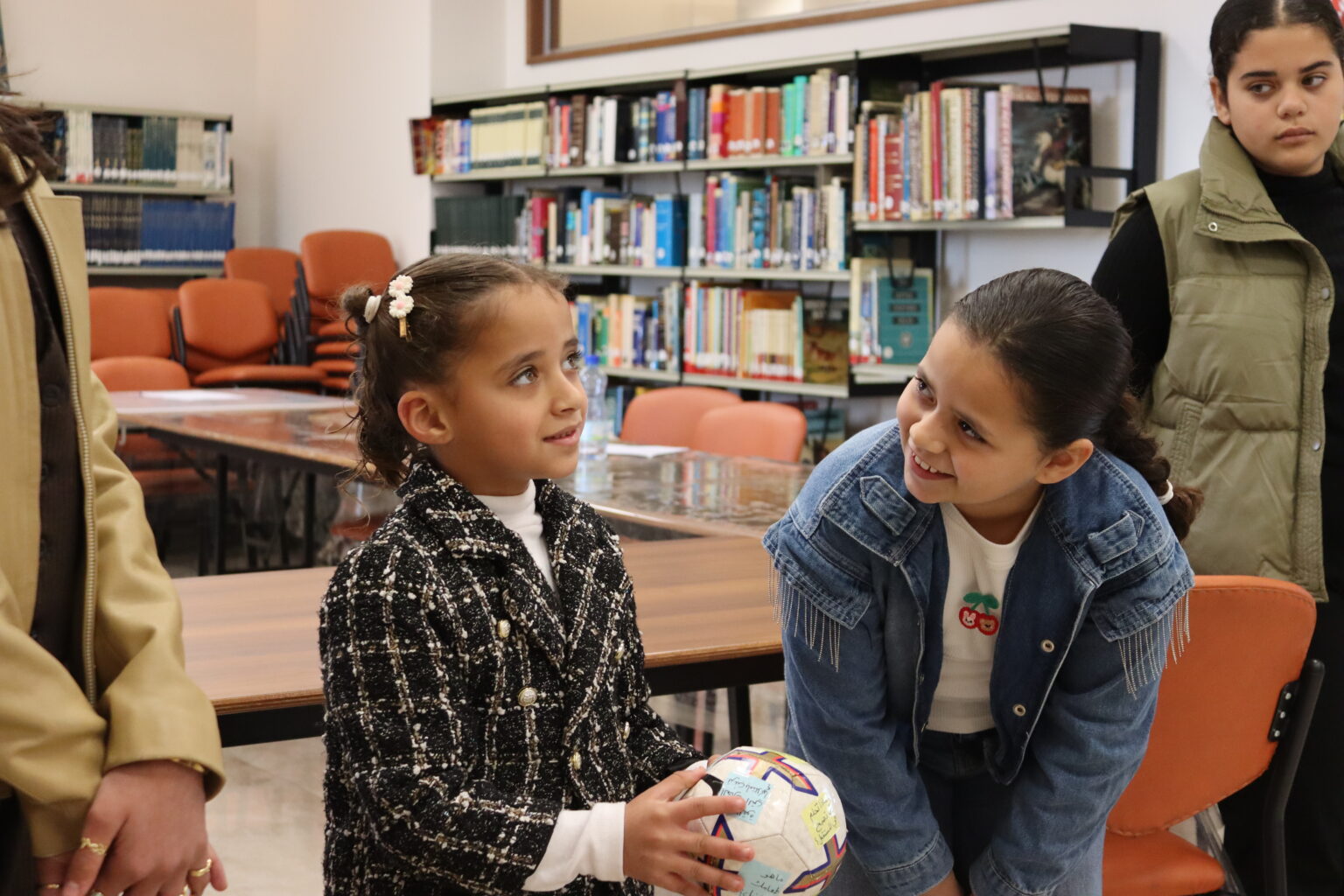
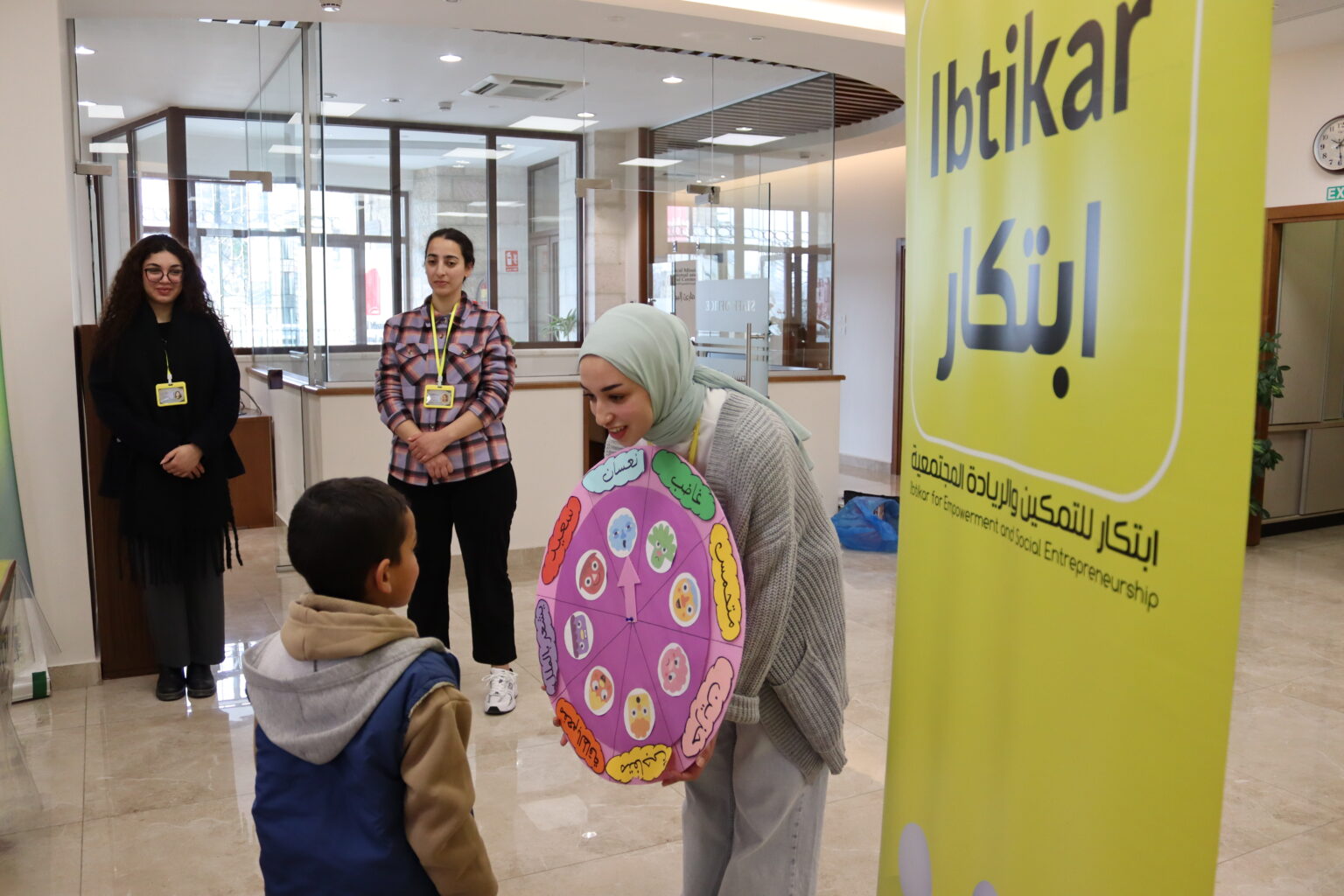
On the second day, the children explored their senses through imaginative play and took the lead by sharing their own stories, using the puppets to support their narratives. Each session ended with the “Emotional Wheel” which allowed the children to express how they felt about the session.
Through the two days, the children were introduced to storytelling principles, guided through exercises in emotional exploration, and encouraged to animate their own stories. The facilitators reported that the results were moving.
“The children demonstrated remarkable emotional engagement, using the puppets to express feelings they had previously struggled to articulate. This process not only fostered emotional resilience but also created a sense of connection among the participants.”
One particularly powerful session took place in Fatima al-Zahra’ School in Artas, a village frequently targeted by settler violence, deeply impacting the children who live in constant fear. The workshop gave children an outlet:
“This session provided 34 children with a much-needed platform to channel their emotions and share their experiences. Using puppets, the children creatively depicted their stories, fostering a sense of validation and emotional relief.”
Ibtikar points out the importance of such interventions especially in marginalised communities where children suffer from ongoing trauma and stress. While the sessions were deeply touching and impactful, they also reveal the depth of psychosocial challenges faced by children growing up in conflict and the desperate need to have permanent and ongoing projects and psychological support like this.
This need became even more apparent when the number of participants exceeded expectations: instead of the planned 150, a total of 181 children took part. Due to both the increased participation and the unexpectedly high emotional needs of children, Ibtikar adapted by organising additional sessions. The outcome was clear: safe, creative spaces like this are urgently needed. They are not a luxury, they are essential.
The strong engagement and evident impact of the project shows that more safe and creative spaces are urgently needed where children and young people can express themselves freely, process their emotions, and begin to develop tools for emotional regulation, especially in contexts with ongoing instability and conflict. As occupation in the West Bank persists and Gaza burns we are reminded that healing is a form of resistance. Every child deserves the chance to be heard, to imagine, and to feel safe, even if only for a moment.
Looking Ahead: Strengthening Support for Grassroot Peacebuilding
Ibtikar’s project was implemented with the help of the Financial Support to UNOY Members (FSUM), a programme that hopes to make small-scale funding more accessible. Reflecting on the experience, the implementation, and the funding process Ibtikar shared:
“This grant enabled Ibtikar to design and implement a creative, culturally-rooted, and psychosocially supportive initiative at a time when such interventions were most needed. UNOY’s flexibility, trust, and emphasis on well-being allowed us to adapt meaningfully to emerging challenges. We strongly encourage continuing to foster and expand this ‘care culture’ within the support offered to partners, as it plays a crucial role in amplifying the long-term impact of grassroots initiatives.”
This project serves as a powerful reminder of the importance of accessible, flexible funding that prioritises local leadership, care, and community-rooted approaches. By offering children a space to express themselves freely, process their emotions, and begin to develop tools for emotional regulation, Ibtikar’s project speaks to the heart of what meaningful peacebuilding looks like.
As attacks on Palestine continue and restrictions on movement, safety, and self-expression grow more severe, grassroots organisations like Ibtikar are navigating increasingly complex challenges. Supporting them with not only financial resources but also trust and adaptability is essential. After the successful implementation of this project, Ibtikar is seeking for further funding to sustain the initiative beyond the FSUM funding period.
We call on funders, institutions, and international partners to invest in long-term, responsive support for initiatives led by those on the frontlines. Only by doing so locally can we ensure vital, healing spaces for children, young people and communities.
Learn more about Ibtikar here and explore their collection of unique puppets at Sunbula’s Artisan Shop.