What is it like to attend a United Nations High Level event as a young person?
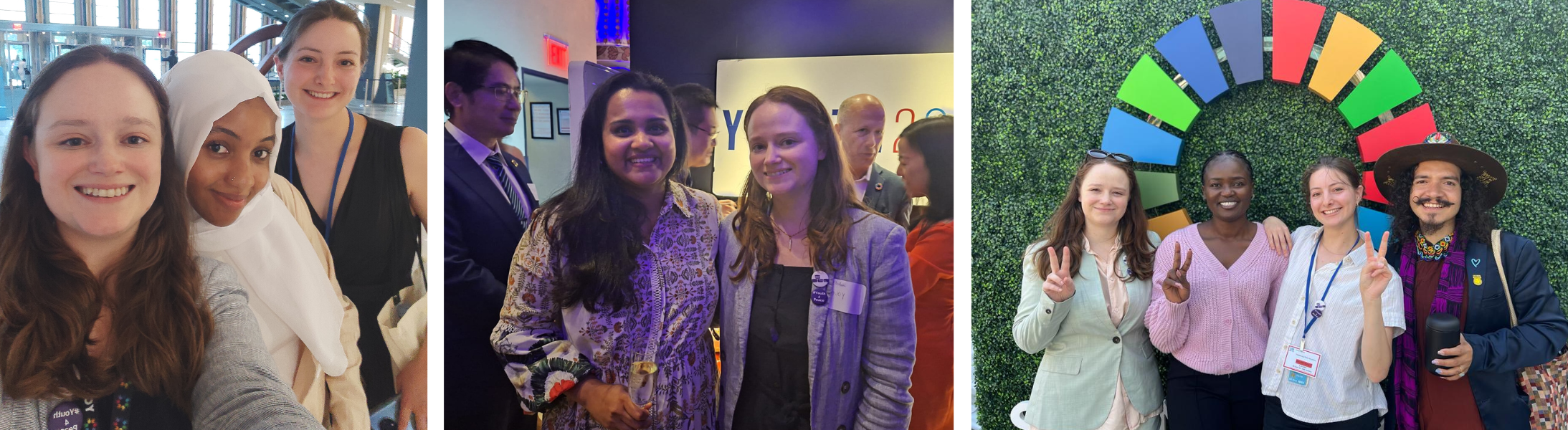
UNOY Co-Director Eliška (29) and Comms Coordinator Rachel (23) attended the UN SDG Summit and Action Weekend in September. This blog captures their experiences as young people attending a High Level event.
The UN presented the SDG Summit and Action Weekend as spaces that are accessible to youth, encourage their active participation, and recognize the role that they play in the implementation of the SDGs*. Eliška and I were hopeful that youth voices would be heard and respected in conversations on global goals that cannot be achieved without the ceaseless work of young people across the world.
However, during the week, we experienced that ‘youth participation’ at the UN doesn’t always live up to its claims of inclusion and meaningful participation.
tokenism of youth at side events
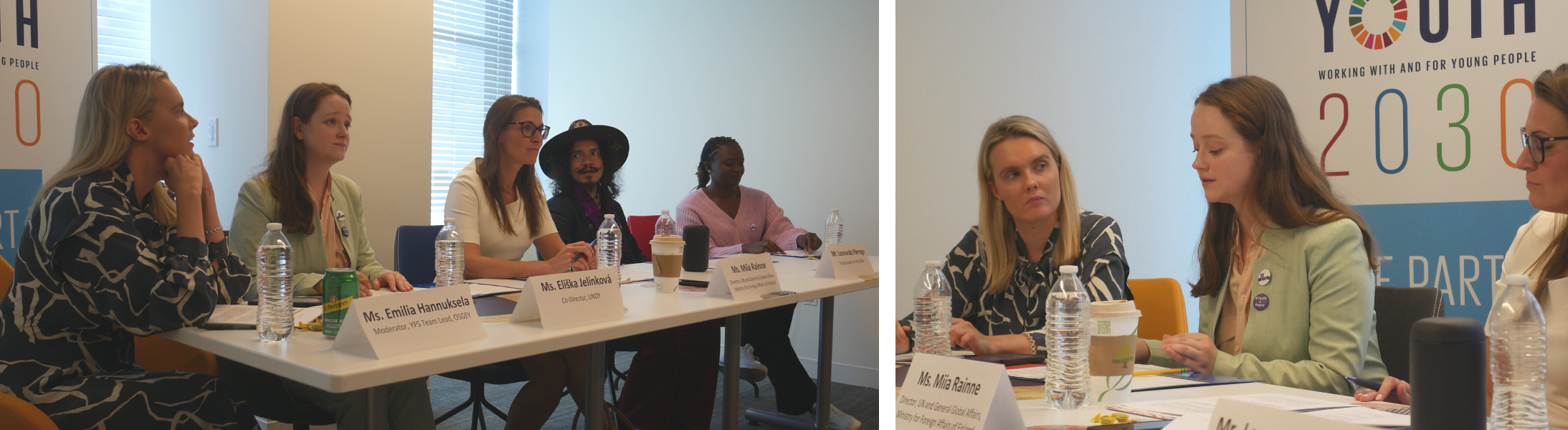
During the Action Weekend, UNOY co-organised two events; one on advancing the SDGs through the Youth, Peace & Security (YPS) Agenda, and the other on implementing and financing YPS.
At the first event, panellists reflected on the unequivocal interlinkages between the YPS Agenda and the SDGs. The overall consensus? The SDGs cannot be achieved if young people are excluded.
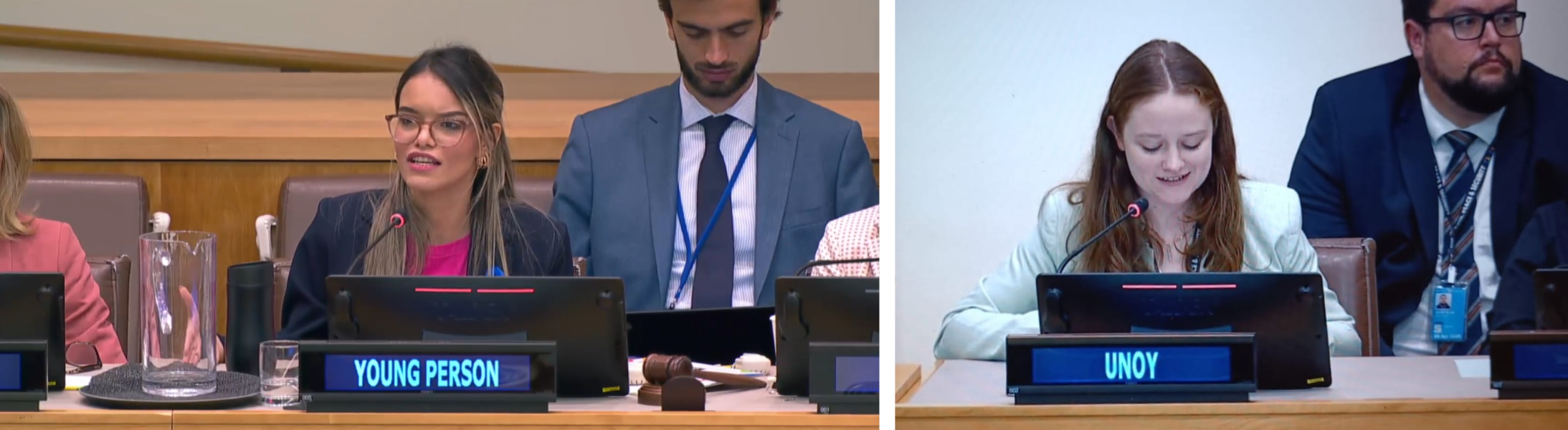
Besides Eliška, the only other youth panellist was Adriana Elizabeth, who represented refugee youth on behalf of UNICEF. She asserted the need for secure spaces where youth can raise their voices, and be recognised and respected as agents of change.
The need for such spaces was painfully obvious. Instead of her name, the name card in front of her read: YOUNG PERSON. Her fellow non-youth panellists treated her as such. Adriana questioned the lack of youth speakers, saying, “We hear all about the youth participation, but where are they this weekend? I haven’t seen them on panels.” Another panellist defended the lack of young speakers and retorted that she had actually sat next to a young person on a panel the day before.
The next day, Adriana was speaking at an event which overran and to save time, her final remarks were cut from 5 minutes to 1. She was the only one; other non-youth speakers were allowed to give their full statements.
Tokenistic inclusion of youth could not be any more blatant; Adriana’s identity was reduced to her representative role and her voice was disregarded. After the name card blunder was pointed out by youth allies on Twitter, Adriana finally was given a name card with her name on it at another panel a few days later. Why did it take so long for her to receive the same respect as the other speakers?
The financial cost of high-level events compounds this exclusion of youth. Events in New York are often physically inaccessible to young people due to high travel, accommodation and living costs. Most young people can only afford to attend if they are sponsored, in which case their participation is often limited and their voices are restricted because they need to adhere to an agenda determined by their sponsor.
Despite outright tokenism and dismissal, youth voices made themselves heard in events and online. In the UN closing plenary, African Youth Delegate Nadia Islam Tedoldi spoke with power: “Young people are the torchbearers of the SDGs and demand to be included as full-fledged partners at every step: inception, design, implementation, review and follow-up of the 2030 agenda.”
“Meaningful youth engagement” was definitely the most popular phrase of the weekend. However, does the UN really understand what meaningful means? As Nadia said so aptly, meaningful participation is equal inclusion and protection of young people at every level of decision-making.
Exclusion of young people and Civil Society Organisations from the SDG Summit
However, the youth voices that could be heard during the Action Weekend quietened when the SDG Summit started, the most globally visible space where decisions were actually made.
Our applications for ground passes for the Summit were approved a month before the event. However, one week before we arrived, we were informed that groundspasses for civil society organisations (CSOs) had been suspended. Now, our passes did not grant us access to the UN International Secretariat (or buildings in the block surrounding the IS), and we were forced to make last-minute alternative arrangements to ensure our physical access to UN spaces where UNOY would be co-hosting events.
The Summit is framed as a space that is welcoming to CSOs, but in reality, high level events are exclusionary of CSOs, especially youth-led civil society.
Eliška says:
“Each year, the space for CSO inclusion in the official programme during High Level weeks seems to shrink. Young people are innovative and create their own spaces but they haven’t made the journey to NY to only speak to their peers, but to engage in intergenerational dialogue with Member States and United Nations representatives. It is frustrating hearing ‘young people are the future’ each year yet their speaking time is always shortened, that is if they even manage to secure a visa in time.”
meaningful support of young people’s work
At our first side event, speakers established that young people are integral to achieving the SDGs. Our second side event raised the question; why is there so little financial support for youth-led efforts? Unpredictable funding for youth-led organisations limits their work.
If the UN really wants to amplify youth’s meaningful participation in the SDG goals, they must not only make space for their voices at events, but there must be a shift in funding processes. This shift must go beyond an increase in funding. Funding needs to be accessible, and young people must be included in the decision-making processes related to funding allocation to ensure accountability.
our Recommendations:
For the United Nations: recommendations that would make the High Level events better experiences for young people participating
- There is a need for honesty about the role that Civil Society Organisations can play in High Level Events in official communications
- This year, there was no information about the Summit on the official website until 3 weeks before the event. Giving participants access to information in advance enables meaningful engagement by giving them time to prepare and organise
- High level events should be made more accessible to participants who lack the finances to attend. There should be increased funding to support participants’ travel and accommodation, or more hybrid and remote events
- More spaces for intergenerational dialogue beyond panel discussions are needed so that youth can informally interact with other participants and speakers
Are you a young person attending a high-level event for the first time? Here are some tips:
- Apply for UN ground passes but be ready to make alternative arrangements if this access changes last-minute
- Seek support from the organisers of side events as the UN does not provide other official contact points for the Summit
You do not need to speak on a panel or co-host an event to make your voice heard. There are different ways you can be involved, including:
- Attending events in person and online to increase youth presence
- Amplifying the voices of youth speakers online by sharing their statements
- Questioning and interacting with organisations and member states online to hold them accountable to their commitments
Want to learn more about meaningful youth inclusion?
- Check out UNOY’s Checklist for Meaningful Youth Engagement
- If you are a UNOY member, look at UNOY’s Internal Advocacy package
- Learn to recognise exclusion by reading chapter 3 in the Progress Study on YPS
want to know more about financing young people’s work?
UNOY and The Office of the Secretary-General’s Envoy on Youth (OSGEY) launched a paper on funding for Youth, Peace and Security in the UN System. Read it here.
*See SDG Summit 2023 Concept Note & Action Weekend Narrative
Written by Rachel Viney & Eliška Jelínková