Intersectional Peacebuilding: An interview with Inclusive Bangladesh
Welcome to the first blog post in a series that explores multiple perspectives on what it means to employ gender transformative approaches
In this blog post, we will explore the intersectionality that exists between gender and the LGBTQIA+ community, and how a gender transformative approach is represented and understood at Inclusive Bangladesh.
We spoke with Tushar Baidya, project director at Inclusive Bangladesh.
Let’s dive right in!
1. Please introduce yourself and your organisation
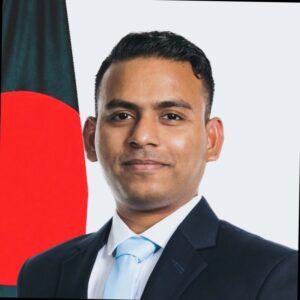
I am Tushar Kanti Baidya, but I prefer to be addressed as Tushar. My pronouns are he/him, and I identify as a cisgender male.
I am the project director at Inclusive Bangladesh, a transgender-led youth LGBTIQ+ organisation that works with LGBTIQ+ people of Bangladeshi descent in both Bangladesh and the United Kingdom.
The mission of Inclusive Bangladesh is to build an inclusive culture by ensuring human rights, promoting quality education, combatting hate speech and violent extremism, advancing interfaith dialogue, and promoting sexual and gender diversity with the active participation of youths from Bangladesh and the United Kingdom.
2. Can you give us a little bit of background on what it means to be a queer individual in Bangladesh?
It is extremely difficult to define ‘what’ it means to be a queer individual in Bangladesh, as the definition varies from person to person. Homosexuality, consensual same-sex relationships, and similar behaviours are still prohibited by law, religious values, and social norms in Bangladesh.
Members of the LGBTIQ+ community in Bangladesh are forced to conceal their gender and sexual orientation. Despite the fact that we are witnessing a massive outpouring of queer people and their open discussion of sexual orientation and gender on various social platforms, they continue to be victims of both mental and physical violence. Therefore, to be a queer individual requires immense courage and the willingness to reconstruct their own narrative.
Many of those who came out to the public proclaiming “we are here, we are queer” are the true face of the queer community, and this reflects what it means to be queer in Bangladesh.
3. In a country where being Queer is difficult, how do you ensure trust and safety when individuals come to your organisation?
In 2016, two LGBTIQ+ activists were murdered at one of their own residences, and numerous pieces of evidence indicate that the killers obtained the residential address and other security information by joining the queer group, attending various events, and acting as marginalised queer individuals. In the aftermath, the lack of trust between activists and other community members resulted in the exclusion of many, as the fear of leaking sensitive information grew. However, this should not be a significant obstacle because there are numerous mechanisms to mitigate the threat. While we respect the privacy of all individuals, building trust and ensuring safety are our primary means of inclusion. We believe that before a person can trust us, they must provide their identity information. To encourage this practice, we have enacted a stricter privacy policy that ensures all stakeholder information remains secure and is deleted after a predetermined period of time, ensuring that the information remains in the hands of its owner.
4. What does the term ‘gender transformative’ mean for your organisation?
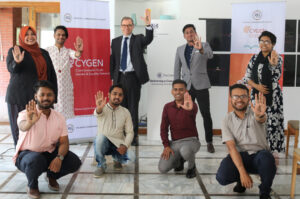
There is a prevalent narrative that transgender, intersex, and gender non-binary people do not want high-level positions in organisations that work for the betterment of the community, so their status quo does not change. At Inclusive Bangladesh, all key positions are occupied by transgender and non-binary individuals, whereas less than 5% of the team identifies as cis man or woman. This model of skill transformation not only produces positive results, but also assists those key individuals in transforming their lives.
When our organisation employs the “gender transformative” approach, we do so not only in policy but also in actual practice.
5. How and to what extent is youth at the centre of your initiatives? Why youth-led?
It is a common practice in our society, particularly in the development sector, to count young people at the very end of the process. As I began working independently, I became aware of my power and was able to see the changes I could make to the lives of others as an independent youth. This compelled me to make a promise to myself that I would never allow a similar incident to occur to another youth who desires to volunteer in their community.
Our goal for incorporating youths is quite straightforward: let the afflicted lead the change and give them their own voice.
6. One of your inspiring initiative has been Sudokkho LGBTQIA+ individuals. Can you speak in some more detail about this initiative?
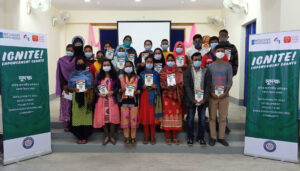
The project Sudokkho was the first project we initiated in 2015. Many young people in Bangladesh hold a bachelor or masters degree but are unable to enter the job market with their education. The inability to create a compelling CV, cover letter, locate job circulars, submit an application, and/or face the interview are among the primary causes. These concerns are prevalent among LGBTIQ+ individuals. As a result, numerous individuals remained unemployed and endured mental and physical abuse. We at Inclusive Bangladesh believe that financial independence is the first step toward achieving a voice of one’s own.
During Covid-19, when the job market was shrinking, we began training them in business management, and many of them started their own successful businesses. There are currently over 1,500 direct beneficiaries, over 3,000 indirect beneficiaries, and eight successful entrepreneurs as a result of this project.
Are you interested in learning more about Gender Transformative Approaches?
Check out this resource: A Practical Guide to Gender Transformative Approaches for Youth Peace Organisations
Or contact us at network@unoy.org
Don’t forget to check out Inclusive Bangladesh on social media to find out more or contact them at info.inclusivebd@gmail.com
Socials:
https://www.inclusivebangla.org/
https://www.facebook.com/inclusivebangla
https://twitter.com/inclusivebangla
Written by
Sushruta Kokkula, UNOY Network Officer
The header artwork used in this blog is the artwork of Sevda Semer. The artwork was found on The Greats: a free vault with carefully curated socially engaged visual content open to anyone to use or adapt non-commercially for free under a Creative Commons Attribution-NonCommercial-ShareAlike 4.0 International license.