5 reasons why international development organisations are failing and why leadership is the biggest reason
The international development sector is experiencing a monumental challenge.
Traditional donors who have financially supported development and aid programmes in the past are decreasing their funding or completely cutting down on it. Of course, one could rightfully argue that the sector has faced similar challenges before and survived them by being introspective, adaptive, and rebranding its programme outcomes accordingly.
However, the current challenge is different, though certainly long in the making. A growing number of both international and local staff involved in developing and implementing these development programmes are losing trust in them, due to the prevalent systemic inequalities that disadvantage local and young staff. With the catastrophic, relentless, and unfathomable levels of suffering in Palestine, Ukraine, Sudan, and elsewhere, development staff are burnt out.
For the sake of this blog, I will not focus on the intensified mental tug of war that development workers are currently facing – questioning whether these programmes are truly serving the needs of their participants.
Instead, I want to direct attention to how these organisations have been undervaluing the backbone of their operations: their local and young staff. Contemporary international development organisations take pride in “diligently following” diversity, inclusion, and equality considerations. Yet in reality, a complex interplay of race, nationality, gender, and class privilege dictates whether someone has a successful career in this sector. It is an open secret that even though most executive roles do not explicitly state they are reserved for White individuals from the Global North, they nonetheless occupy the majority of these positions, supervising their local peers who have been working for years in the very “fields” they call home.
“Privilege still dictates who rises and who remains unseen.”
Admittedly, in recent years, as part of the Grand Bargain, some development organisations have actively supported the decolonisation and localisation agenda by hosting dialogues and supporting research led by young practitioners and academics from the Global South. However, these efforts have remained limited in scope and are yet to take meaningful shape.
To address this issue, I suggest 5 key considerations that international development and youth peacebuilding organisations’ leaders should reflect on. It is important to note that this is not intended as an exhaustive list, but as points to stimulate further discussion and action.
Leaders of international development organisations need to be conscious of the positionality of local and young staff
They are aware that local staff are not only first responders in a conflict setting but also directly experience their life-threatening and worsening repercussions.
This awareness, however, needs to be translated into action. Following recent budget cuts, a significant number of staff in locally led youth peacebuilding organisations have been forced to work on a voluntary basis, facing heightened job insecurity and fewer employment guarantees.
Local staff should be provided with employment contracts that include strong job security provisions, mental health support, Rest and Relaxation (R&R) benefits, and access to private transport in high-risk environments, just as their counterparts from the Global North receive.
Leaders must be more reflective and evaluative in their decision-making
They should ask questions like: Why are we excluding local staff (and young volunteers) when planning public health emergency relief measures in their own country? Why are important discussions on the future of a country’s political systems conducted only in English and not in the regional language(s), thereby preventing local staff from meaningfully engaging? In other words, why are routine processes actively robbing local and young staff of participation in decision-making?
The case for ensuring local development practitioners have greater decision-making power is well supported by evidence. Peacebuilding programmes designed primarily by international staff, with local and young staff only involved in implementation, tend to be less successful and less sustainable than those in which local and young actors are actively involved in both the formulation and implementation processes. Taking a more inclusive approach and giving local and youth higher agency reflects the Youth, Peace and Security Agenda’s key pillars of participation and partnership.
It is time to rethink the hierarchy that values technical knowledge over contextual knowledge
International staff salaries are often justified on the grounds that they bring immense technical expertise, expertise that, in turn, helps secure funding. But even if this dichotomy were true, why should technical knowledge be valued more than local knowledge?
Evidence consistently shows that young staff and volunteers, when provided with agency, use creativity and adaptability to address the root causes of conflict. For instance, young people often lead community awareness on climate change and encourage openness toward technological solutions. In conflict settings, both state and non-state actors mobilise youth to instigate disputes, which uniquely positions them to facilitate mediation among their peers and to design youth-centred peacebuilding initiatives that resist manipulation.
So, why are they still expected to work in positions that offer minimal or no financial reward?
And how can we expect sustained youth engagement when their contributions remain undervalued?
Moreover, why is technical knowledge assumed to reside primarily with staff from the Global North?
Could local and young staff not acquire such knowledge if provided with adequate training? Why are they not trusted to make administrative and strategic decisions using the knowledge they already possess?
With fair training and opportunity, local practitioners can bring both technical and contextual knowledge to the table. Yet the system continues to undervalue them, treating their lived experience as secondary rather than central to effective programming.
And more importantly, what exactly counts as “technical knowledge”? Does it simply mean knowing the right donor jargon or subscribing to ideologies that align with Western governments’ geopolitical interests? This issue mirrors the broader criticism of the liberal peace agenda in peacebuilding and development, where only international staff are presumed to have the knowledge and authority to implement “good governance” mechanisms in conflict and post-conflict settings.
(Young) staff from the Global South must be believed when they say they feel undervalued or report instances of microaggressions.
Too often, there is an assumption that, by virtue of their mission, development organisations and their staff are automatically incapable of discrimination. This mindset invalidates the lived experiences of those who face bias due to their race, nationality, or age.
Leaders need to acknowledge that, like any other sector, this one is not free of discrimination and ageism. Establishing strong grievance mechanisms and creating safe spaces for staff to share their experiences helps reduce feelings of isolation and existential doubt about their work.
Additionally, to address international mistrust, leaders of these organisations must facilitate dialogue among young, local, and international staff including government and civil society actors, from the very beginning of every peacebuilding initiative. Only through honest and continuous communication can teams rebuild confidence and solidarity.
It is time to rethink what partnership and collaboration truly mean
Finally, it is crucial to reevaluate what partnership and collaboration truly mean in (youth) development programmes. Typically, international NGOs collaborate with local NGOs, where the latter are tasked with collecting field data and implementing programmes. Their feedback and data are then used to adjust programming, often at greater personal and security risks.
Yet, despite their indispensable role, local NGOs remain in an inferior positionin this so-called partnership, particularly youth-led peacebuilding organisations. Moreover, when peacebuilding programmes designed by staff situated in Western headquarters fail, local staff usually lack institutional mechanisms to demand accountability.
When coupled with unequal compensation, this arrangement looks less like collaboration and more like exploitation. Undoubtedly, in the last decade, there has been an emphasis on local and youth ownership of internationally funded projects in the peacebuilding sector.
However, minimum efforts have been made to understand what that actually means in practice, and whether current working relationships and structures are equitable enough to support such an ambitious agenda. Until this is addressed, the rhetoric of partnership will remain just that: rhetoric.
I want to end with an admission.
As a South Asian woman, despite my immense caste and class privilege, I have, in the past few years, contemplated leaving this sector more times than I would like to admit, largely because of going through a mix of similar experiences.
Yet, I still believe that senior leaders of international development organisations, both large and small, can and should address these issues. This requires not only recognising the networks, negotiation skills, and access that local and young staff bring, but also trusting them, and other colleagues from the Global South, with technical knowledge, rather than reserving it solely for those from the Global North.
It also means creating environments where local and Global South-experienced professionals are empowered to make crucial decisions and hold executive roles, while those at the early stages of their careers feel valued, receive equal opportunities to succeed, and are fairly compensated on par with their peers from the Global North.
“Because until the structures of leadership change, true equality in this sector will remain a promise, not a practice.”
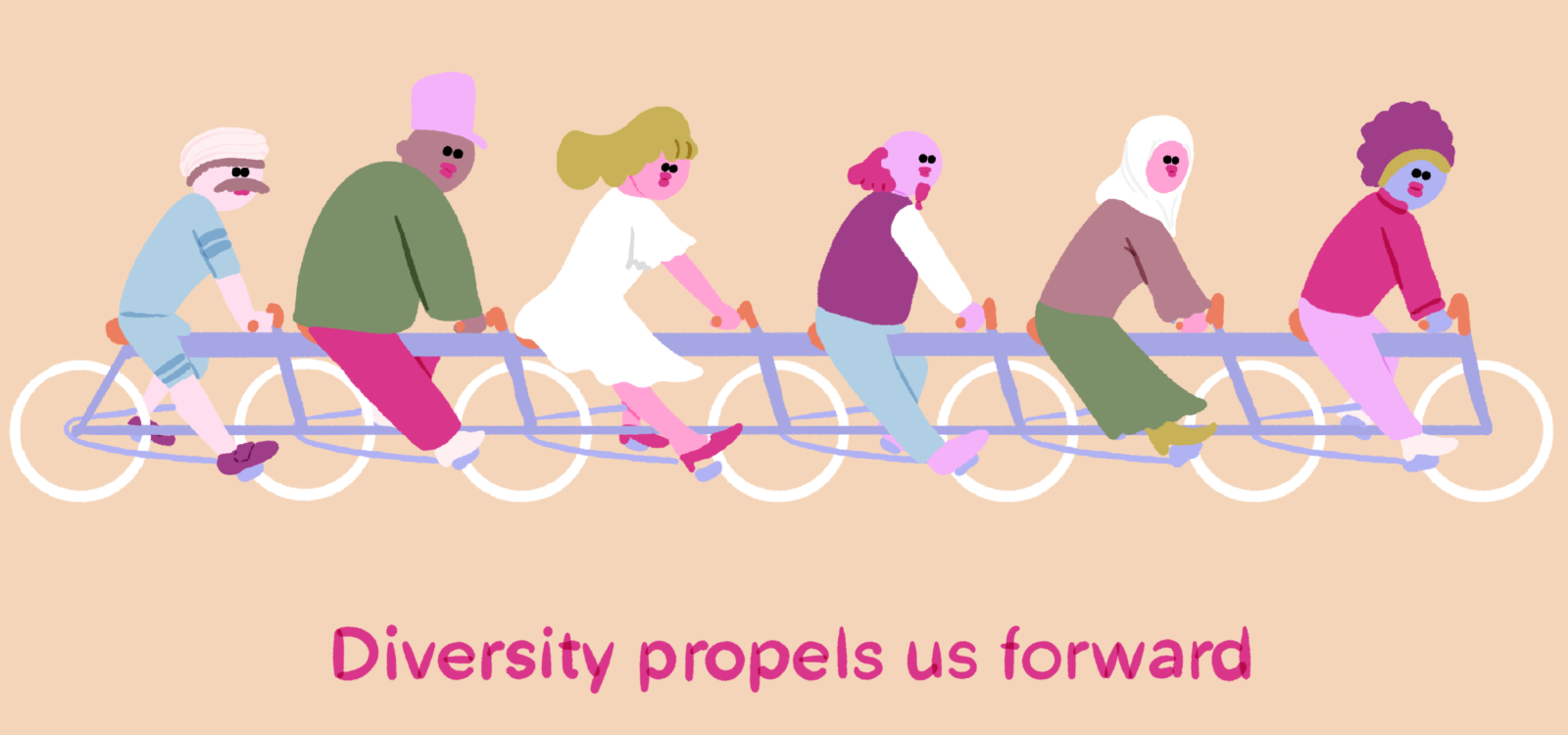
Illustration by Nicole Pavlov for Fine Acts | The Greats