3 Reasons Why We Need Wellbeing in Peacebuilding
This fourth and final pivotal protection blog explores mental health and wellbeing from a personal and non-practitioner perspective.
topic introduction
Mental health and wellbeing have captured our attention. Corporate brands, like Dove, are running self-esteem campaigns through their self-esteem project; Youth Excel have launched a number of grants competitions for organisations working on the intersections of mental health and psychosocial support (MHPPS) and peacebuilding, as well as a social media campaign with Youth Lead #HereWithYOUth; and an ever-expanding list of celebrities/influencers are helping to raise awareness around different mental health issues.
I’d say it’s relatively undisputed now that wellbeing and peacebuilding converge in a big way; and while there are plenty of organisations/institutions talking about it, not enough are allocating resources or meaningfully working on the intersection, especially in the spheres of development and Youth, Peace and Security (YPS). Here are 3 reasons why they should:
1. There is an unequivocal and overwhelming need
Did you know that:
- Mental ill-health is the leading cause of disability in young people aged 10–24 in all regions of the world?
- 50% of mental health problems are established by age 14 and 75% by age 24.
- Among people who have experienced war or other conflict in the previous 10 years, one in five (22%) will have depression, anxiety, post-traumatic stress disorder, bipolar disorder or schizophrenia.
- Young people are more vulnerable to risk factors that impact mental health, leading to high rates of mental disorders in adult life.
- Yet, young people are least likely to access mental health services due to under-detection, lack of awareness and help-seeking, stigma, and insufficient prioritisation in policy and funding.
2. Sustainable development and the YPS agenda depends on it
The protection threats and barriers that youth face often negatively affect their mental health and wellbeing, exacerbating the very elements that necessitated a global YPS agenda in the first place—such as the violence of exclusion, sociocultural pressures, false and harmful stereotypes (i.e. youth as victims or perpetrators of violence), and more. In fact, the most prevalent protection threats that young people face are sociocultural; 90% of survey respondents reported facing sociocultural barriers (Global Report on Protecting Young People in Civic Space), while an overwhelming majority of UNOY members reported sociocultural barriers as the most dominant type of protection threat.
The destructive potential of sociocultural pressures and threats on young people’s mental health and sense of self-worth is well documented. In 2021, psychological violence was reported in 4 out of UNOY’s 6 regions. For example, as cited in the Global Report on Protecting Young People in Civic Space:
A young minority woman from Northern Europe shared how, at the age of 18, she received death threats for a joint article that she wrote on the politics of migration in her country because she did not look white. Two other girls who joined her in writing this article, and who were white, did not receive any threats. “Racism in my country is increasing, including on social media. I am risking my own safety, my family’s safety, but also my mental health, because it hurts when you always hear that you should be killed because you are not white,” she shared.
So, while the YPS agenda was built around the sociocultural pressures and threats that defined it, these continue to manifest in intergenerational hostility; false and damaging stereotyping in the media and public life; and delegitimisation and rejection of their peacebuilding work. Ultimately, these sociocultural barriers are ostracising young people from participating in peace, security, and development efforts. It is more than understandable, then, that young people’s motivation to continue their peacebuilding and activism work might be harmed, and that mental health issues might ensue. In my view, the strength and success of the YPS agenda is invariably linked to the health and wellbeing of young people. In other words, it is in the best interest of institutions/organisations working on sustainable development and YPS to invest in young people’s mental health.
3. Health is at the heart of sustainable change
I believe that the rise and fall of movements for peace and justice are deeply connected to our collective and individual wellbeing. In fact, experts recognise that activist burnout is one of the biggest barriers impeding the sustainability of social justice movements. Burnout symptoms include the following (drawn from Amnesty’s Wellbeing Workbook):
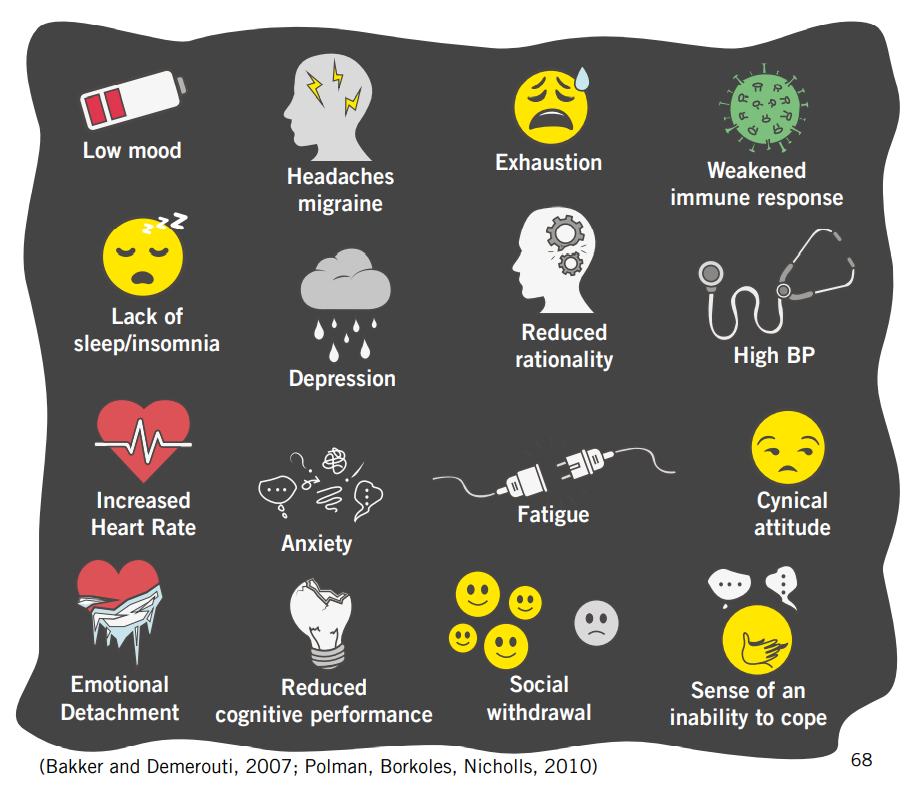
While immersed in the world of YPS and development, I have observed colleagues, members, and partners carry immense responsibility for situations beyond their control; navigate unpredictable and dangerous environments; manage extraordinary levels of stress; live and work each day with fear; plough through bottomless and high-intensity workloads; and I have personally experienced burnout, after which the process to a balanced and healthy state of being is a continuous one. For me, healthy systems and people underpin all of the YPS pillars: how protected we are, how meaningfully we participate, the strength of our partnerships, the capacity for prevention, and the success of disengagement and reintegration efforts.
So, for all of us and our agendas to thrive, we need holistic health, commitment to learning about and enabling healthier environments, and proper investment in and prioritisation of mental health and wellbeing.
Because
mental health and wellbeing
is
peace and sustainability
is
self and collective care
is
awareness and action
is
real change.
This dewdrop world—
Is a dewdrop world,
And yet, and yet . . .
~ Kobayashi Issa (1763-1828)
Translated by Lewis Mackenzie
Resources
- Black emotional & mental health toolkit: https://www.beam.community/tool-kits-education
- Free anxiety resources: https://www.anxietyuk.org.uk/get-help/free-anxiety-resources/
- Holistic security: https://www.frontlinedefenders.org/en/resource-publication/holistic-security
- YouthPower2 – Integrating Mental health and Psychosocial Support into Youth Programming (English, French, Arabic): https://www.youthpower.org/toolkit-youth-mental-health-and-psychosocial-support-toolkit
- Rethinking stress toolkit: http://sparqtools.org/rethinkingstress-instructions/#step1
- UNICEF Mental Health Toolkit for Young People: https://www.unicef.org/thailand/media/7211/file/Mental%20Health%20Toolkit%20for%20Young%20People.pdf
- World Health Organization – Helping Adolescents Thrive Toolkit (Arabic, Chinese, English, French, Russian, Spanish): https://www.who.int/publications/i/item/9789240025554
- Well-being workbook for youth activists [available in English, French & Spanish]: https://www.amnesty.org/en/documents/act10/3231/2020/en/
- Integrating Mental Health and Psychosocial Support into Peacebuilding: https://www.undp.org/publications/integrating-mental-health-and-psychosocial-support-peacebuilding
- Mental Health Innovation Network, 2019: https://www.mhinnovation.net/sites/default/files/downloads/resource/Youth%20Leaders%20Brief%20for%20Policy-makers_FINAL%202019%20%282%29.pdf
- Mental Health Foundation: https://www.mentalhealth.org.uk/explore-mental-health/statistics/children-young-people-statistics
- WHO, 2022: https://www.who.int/news-room/fact-sheets/detail/mental-health-in-emergencies
- Youth.gov: https://youth.gov/youth-topics/youth-mental-health/risk-and-protective-factors-youth
- Mental Health Innovation Network, 2019: https://www.mhinnovation.net/sites/default/files/downloads/resource/Youth%20Leaders%20Brief%20for%20Policy-makers_FINAL%202019%20%282%29.pdf
Pivotal Protection Blog Series, Youth Excel: Our Knowledge, Leading Change
Written by
Charlotte Davidi, Communications & Protection Lead at UNOY Peacebuilders
This article is made possible by the generous support of the American people through the United States Agency for International Development (USAID). The contents are the responsibility of Search for Common Ground and UNOY Peacebuilders and do not necessarily reflect the views of USAID or the United States Government.
The header artwork used in this blog has been remixed, but is the original artwork of Safwat Saleem for Fine Acts. The artwork was found on The Greats: a free vault with carefully curated socially engaged visual content open to anyone to use or adapt non-commercially for free under a Creative Commons Attribution-NonCommercial-ShareAlike 4.0 International license.